Ashes and Thrones - Chapter 3: Council of Knives
The ground shook.
The motion was barely perceptible—a subtle tremor, like something vast had shifted ten miles below. Not the kind of earthquake that toppled buildings or cracked foundations. Something quieter. Deeper. The kind of tremor that the earth itself might have noticed and dismissed, if the earth were paying attention.
In his quarters, the desk vibrated. The air smelled of ink and old paper, the musty scent of endless reports. Cael's hand stilled mid-sentence, pen hovering over resource reports. Numbers blurred. Cup of water rippled—concentric circles expanding from the center, each ring perfect, each ring carrying information about the force that had produced it. He watched the water until the rings faded and the surface went still.
Three seconds. Maybe four. Then stillness.
He stood. Walked to the window. New Haven looked normal—people going about their business, no panic, no screaming, no buildings collapsed. The morning light was gray and flat, the kind of overcast that made the settlement's stone buildings look like extensions of the bedrock they were built on. A woman was carrying a basket of bread across the central square. Two children chased each other around the fountain. A carpenter hammered something on the far side of the residential quarter, the sound reaching Cael's window a fraction of a second after the motion.
Normal. Peaceful. Oblivious.
But the tremor had been real. And everyone in this city who'd spent time near the Deep Forge knew what it meant.
The seals. Degrading. The Wurm Lords stirring. The countdown beginning to show physical signs that could not be hidden in reports and kept behind closed doors. The crisis moving from abstract calculation to tangible reality.
"You felt it too," Damien said. He'd burst through the door without knocking—a breach of protocol that told Cael everything about the scholar's state of mind. Pale. Shaking. Sweat on his temples despite the cold morning air. "That wasn't natural—the harmonic signature matches seal degradation precisely. Strain releasing along the tertiary fault lines. Pressure building in the resonance matrix." Damien pulled a wax tablet from his satchel, already scrawling numbers. "The Vael texts describe this as a precursor cascade. They're deteriorating faster than my models predicted."
"How fast?"
"Impossible to quantify from a single data point—the Vael texts describe degradation as non-linear, each event compressing the interval to the next. Could be years. Could be months." Damien ran the calculations a second time, stylus scratching against wax with the frantic precision of a man double-checking arithmetic he desperately hoped was wrong. The result didn't change. "But people felt this. They'll ask questions. They'll want answers."
Damien closed the door. Lowered his voice, though the thick stone walls made eavesdropping unlikely. "We can't keep this secret much longer. The evidence is becoming visible. Physical. Tangible. You can lie about schedules and supply chains and political strategy—people accept those lies because they're comfortable lies, the kind that make the world feel managed. But you can't lie about the ground shaking. Can't explain away a tremor that people felt in their bones."
"We're not ready. Haven't found enough artifacts. Haven't prepared solutions." Cael looked at the city. Three thousand people. Oblivious. Going about their mornings with the particular faith of people who believed someone else was handling the big problems—the existential threats, the impossible decisions, the mathematics of survival that no individual could carry alone. That faith was fragile. Beautiful. And utterly dependent on the lie he was telling them. "If we tell them now, Kael will use the panic to justify his power grab. The Confederation will fracture."
"And if we don't tell them? If another earthquake happens? If it's stronger? If buildings fall? If people die?" Damien's voice was sharp. Not with anger—with the particular urgency of a man who understood that lies had compound interest, that each day of deception made the eventual truth more devastating. "You can't hide an earthquake. Can't explain away physical evidence. People felt that. They'll remember. They'll talk. And when they compare notes—when the farmer in Ashwick mentions the tremor to the trader from Keldar and the trader mentions it to the merchant in Thornreach—the pattern becomes visible. Twenty settlements felt the same thing at the same time. That's not geology. That's a signal."
Every option led to disaster. His fingers drummed the desk once, twice, stopped. The old habit—the sailor's tic, the need to feel motion when everything else was paralyzed.
"We say it's normal. Geological activity. These lands have always been seismically active. Nothing to worry about. Natural occurrence." Cael met his eyes. "Another lie. Another secret. Another compromise. Add it to the list."
"And when the next one hits? When it's stronger?"
"We'll worry about that then. Today we buy time. Buy hope. Buy the chance to find artifacts before we have to explain why the world is ending." He heard the words and hated them. Hated how smooth they sounded. Hated how easy it was becoming to choose the lie over the truth, the expedient over the honest. "I'm not asking you to believe the lie, Damien. I'm asking you to tell it."
Damien opened his mouth. Closed it. Cael's expression was steel. This wasn't a request. It was an order—and Damien was scholar enough to know the difference and soldier enough to accept it.
"Fine. I can construct a plausible tectonic model—reference the volcanic activity along the Ashveil range, cite pre-demon seismic records. Make it peer-reviewed. Thoroughly boring. Unworthy of concern." His voice was bitter but precise. He was already constructing the framework—pulling geological references from memory, designing the narrative that would make three thousand people dismiss what their bodies had told them was important. "I'll need a week to write it up properly. Cross-reference with actual geological surveys. Make it detailed enough that nobody will bother reading past the first page."
Damien moved to the door. Stopped. His hand on the frame, knuckles white.
"But when the truth comes out—and it will—people will remember we lied. They'll remember we knew. And they'll judge us for it."
"I know. And I'll accept that judgment. But only after everyone's safe. Only after we've saved them. Only after the crisis is past." Cael turned back to the window. The woman with the bread basket had reached the other side of the square. The children had found a puddle to splash in. The carpenter's hammering continued—steady, productive, the sound of someone building something that might not exist tomorrow. "Go. Spread the story. Make it convincing. Buy us time."
Damien left. Leaving Cael alone with his guilt and the afterimage of ripples in a water cup.
***
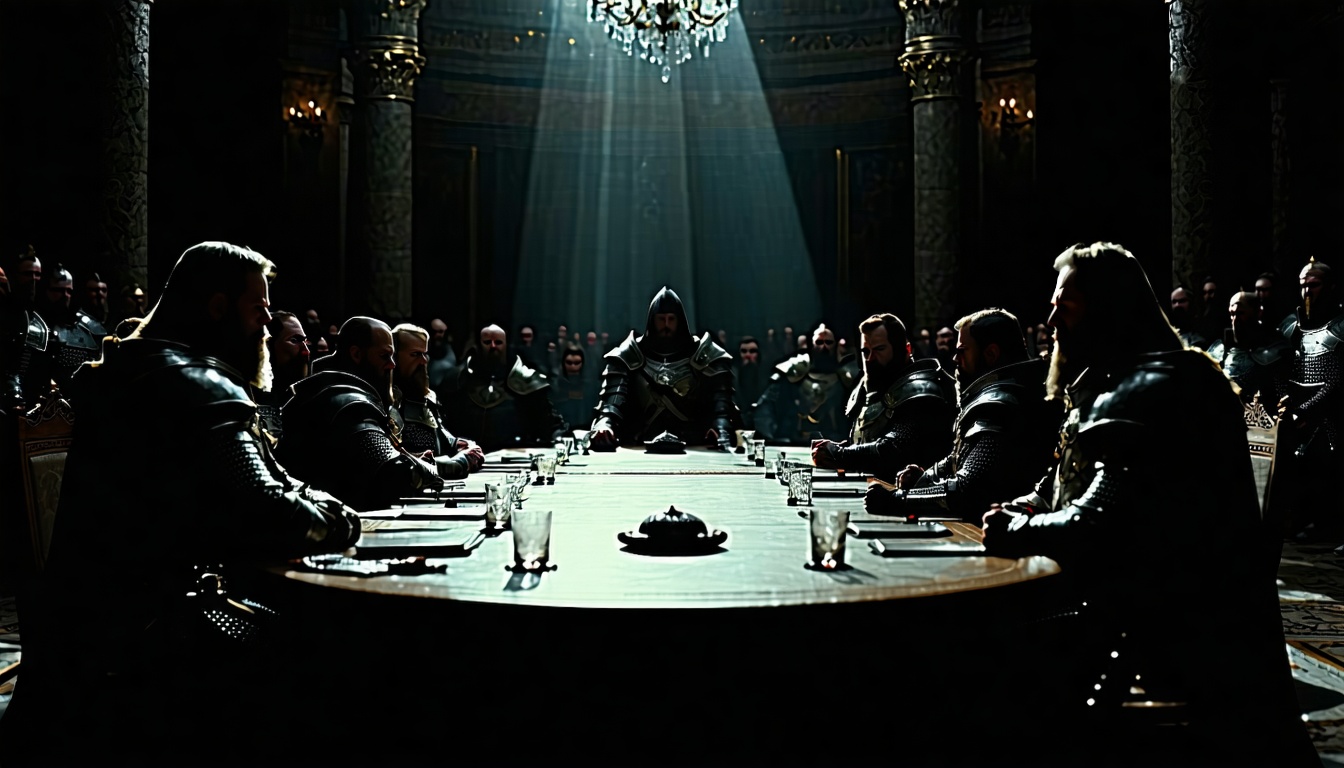
The council hall smelled of polished wood and tallow candles. Twelve seats arranged around a circular table—the Confederation's compromise between hierarchy and equality, where no chair was higher than another and every voice theoretically carried equal weight.
Mira stood at the back, listening to Damien explain: geological activity, tectonic shifts, perfectly normal for the Ashen Kingdoms, nothing to fear. He had written the report overnight. Ten pages of meticulous geological analysis, complete with historical comparisons, mathematical models, and footnotes referencing pre-demon surveys that most council members didn't know existed.
It was a masterpiece of deception. Thorough enough to be convincing. Boring enough to discourage questions. Technically accurate in every detail except the central conclusion.
The council was buying it. Nodding. Accepting. Moving on to other business—trade disputes, resource allocation, the eternal question of whether to expand the western fortifications. The mundane machinery of governance, grinding forward, oblivious to the apocalypse ticking underneath it.
But Mira had been in the caves. Had seen the Deep Forge. Had watched Tomas sacrifice himself to seal the Wurm Lords. She knew what lay beneath the earth. Knew what was coming. Knew the weight of the silence in the room when Damien finished his report and nobody asked the question that should have been obvious: why had this particular tremor occurred six months after the most significant seismic event in human history—the sealing of six Wurm Lords?
After the session, she cornered Cael in the corridor outside the chamber. The stone walls were thick enough to swallow their voices. Oil lamps threw uneven light.
"That wasn't geology." Mira's voice was quiet and level. The voice she used for facts, not arguments. "I watched Tomas die to power those seals six months ago. I stood in the Deep Forge while the earth shook and the Wurm Lords screamed. Don't insult me."
Cael didn't deny it. Didn't deflect. Didn't reach for the geological report or the carefully constructed lie. Just: "Yes."
"How bad?"
"Five years until catastrophic failure. Maybe less. We're searching for Progenitor artifacts to power the Engine without blood sacrifice. Keeping it quiet to prevent panic."
"You're lying to the entire Council about an extinction event." Mira's voice was clinical, not angry. Assessing. Running the same calculations Cael had run—the same terrible arithmetic of truth versus stability, transparency versus survival. "Who knows?"
"You, me, Damien, Garren. That's it."
"Four people keeping a secret from three thousand." She stepped closer. The lamplight caught the scar on her jaw—a souvenir from the underground, from a demon that had gotten too close before Garren put a sword through its skull. "The earthquake was felt across twenty settlements. People are already talking. Kael's people are definitely asking questions—his intelligence network is better than ours, and we both know it. How long before someone with the right knowledge puts together what Damien just called natural geology?"
Cael said nothing. She was right, and they both knew it.
"Give me a timeline," Mira said. "Not 'when we have solutions.' Not 'when the expeditions return.' A hard date. A perimeter I can plan around. Because when this breaks—and it will break—the difference between 'we told you as soon as we had answers' and 'we lied for a year' is the difference between trust damaged and trust destroyed."
"Three months." Cael met her eyes. Held them. "The first expeditions return in weeks. If we find artifact cores, we can present solutions alongside the problem—here's the crisis, but here's what we're doing about it. If we don't—three months. Then I tell the Council everything. Regardless of consequences."
"Three months." Mira weighed it. Three months of lying. Three months of watching Damien explain away tremors with geological reports no one would read. Three months of a secret that could end the Confederation faster than any Wurm Lord.
"I'll hold the line. Back the geological cover story. Because you're right—Kael would weaponize the panic before the tremor's echo faded. He'd be standing in our council hall within a week, offering 'protection' that looked suspiciously like occupation." She held up a hand before he could thank her. "But start planning the disclosure now. Not just 'we'll figure it out.' Who we tell first. How we frame it. What we offer alongside the truth so that people have something to hold onto besides fear. Because when time's up, we're telling the truth whether we have solutions or not."
"Understood."
"And Cael? The next time you decide to lie to the Council about an extinction event, tell me first. Not after. Before." Her eyes were hard. Not with hostility—with the particular intensity of someone who had just been forced to choose between friendship and honesty and was not happy about the choice. "I'm better at lies than you are. I might actually make them work."
She left. Cael stood alone in the corridor, listening to the muffled sounds of the council chamber behind him. Voices discussing trade routes. Resource allocation. The comforting mundanity of a civilization that didn't know it was standing on borrowed time.
Three months. A deadline that, for the first time, made the lie feel contained. Not right. But managed. The way a tourniquet wasn't right but kept you alive until someone could fix the wound underneath.
***
The tremor reached across all twenty Confederation settlements.
Not strong enough to damage buildings. Not violent enough to cause panic. Just enough to make people pause. To make them wonder. To make them ask questions.
"Did you feel that?"
"What was that?"
"Should we be worried?"
The official explanation came quickly. Geological activity. Tectonic shifts. Perfectly normal for this region. Nothing to fear. Scholars explained it was natural. Expected. Unworthy of concern. Damien's report circulated—dense, authoritative, deliberately impenetrable.
Most people accepted it. Went back to their lives. Forgot about it within hours. Because the lie was comfortable and the truth was not, and humans had an infinite capacity for choosing comfort when given the option.
But some remembered. Some wondered. Some doubted.
And in the south. In the settlements that had grown wary of Confederation leadership. In the territories where Kael's influence spread like roots through dry soil.
People asked different questions. Harder questions. Dangerous questions.
"Why did the tremor come now? Six months after the Unmaking Engine?"
"Are the seals failing? Is the world ending again?"
"Why won't the Confederation tell us the truth?"
Kael heard every question. Encouraged every doubt. His agents moved through the southern settlements with the particular efficiency of people who knew exactly which fears to amplify and which reassurances to undermine.
"Something is wrong," he told his advisors. "Something they're not telling us. And when the truth comes out—and it will—people will remember who was honest with them."
"You think the seals are failing?"
"I think the Confederation is lying. That's enough." He smiled—the smile of a man who understood that the truth didn't matter nearly as much as the perception of truth. "We don't need the truth to use their lies against them. We just need people to know they're being lied to."
"And when you have their trust? When they turn to you instead of Cael?"
"Then we'll be ready. With answers. With solutions. With the strength to do what needs doing." Kael looked south. At his territory. Twenty settlements. Fifteen thousand people. An empire in everything but name. And growing.
The tremor faded. The lie spread. The secret held.
For now.
***
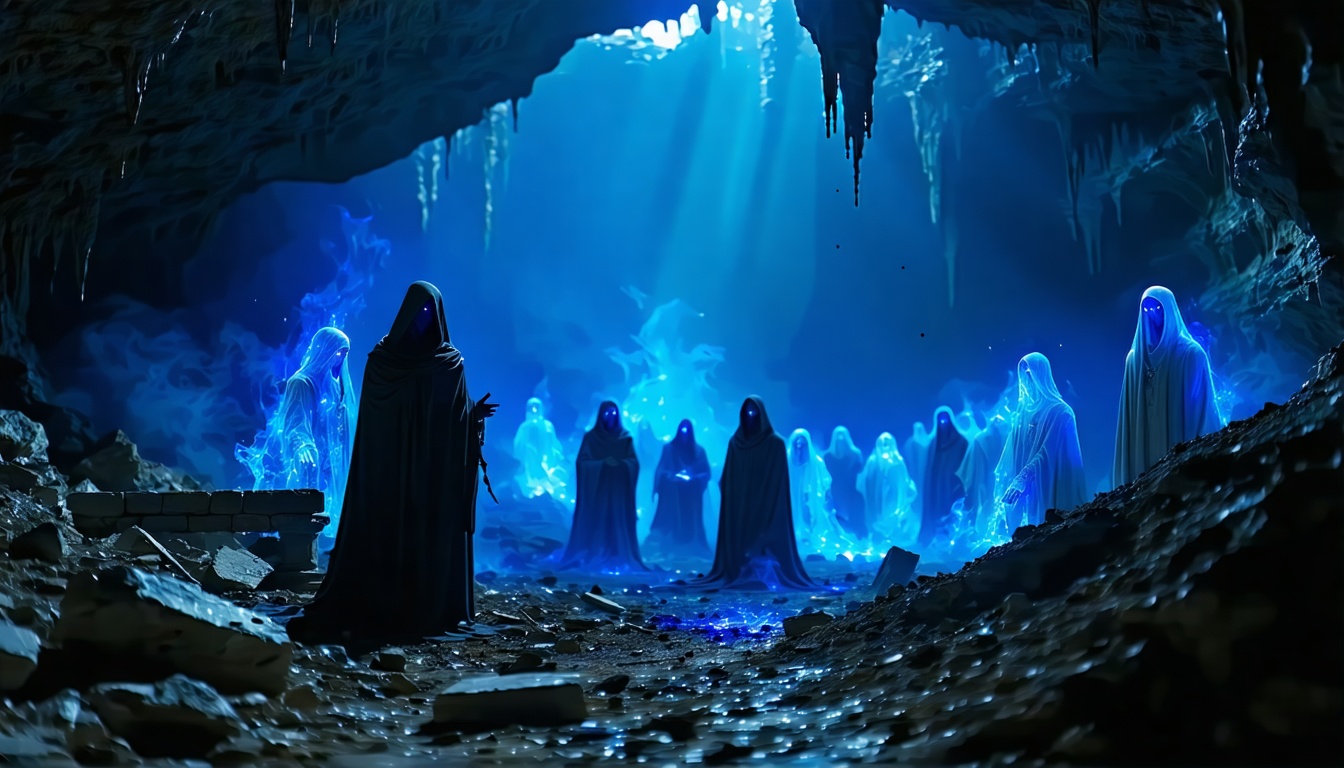
Deep below New Haven, the Deep Forge's temperature had dropped three degrees since the tremor.
The ancient thing noticed. Not consciously—it had no consciousness yet, not fully—but the way stone notices pressure. The way ice notices warmth. A shift in state. A preparation.
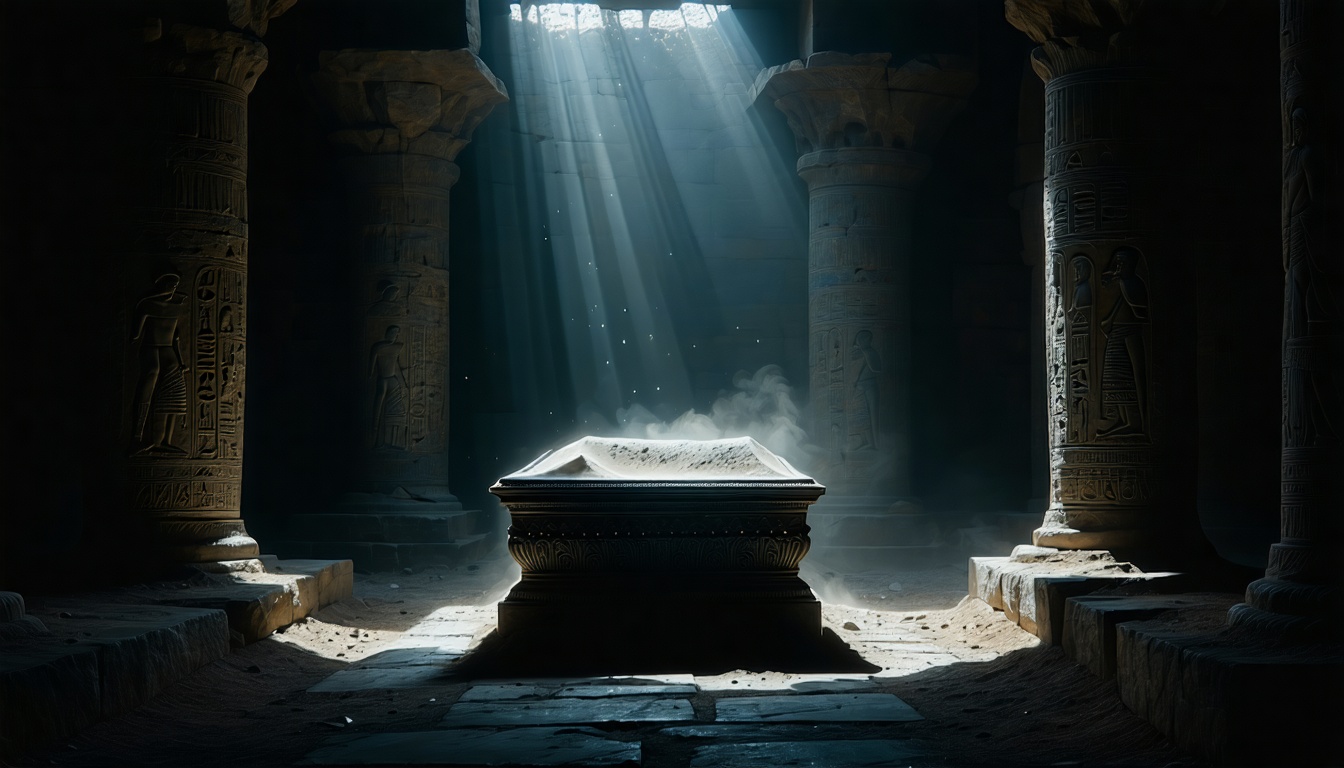
The walls of the forge sweated. Condensation that hadn't been there a week ago now beaded on the carved glyphs, making them glisten in the bioluminescent glow of the fungal veins threading the ceiling. The moisture tasted of iron and something older. Something that predated the stone itself.
The Progenitors had built it as a last resort. Not a weapon. Not a guardian. Something worse: a manager. Designed to activate when the seals degraded past the point of repair. To make the calculations no living mind would choose to make.
They had called it the Shepherd.
It didn't think yet. But the tremor had started a chain reaction in its crystalline lattice—a low hum below the threshold of human hearing, felt only as a faint ache in the teeth of anyone who might stand close enough. The hum would grow. The temperature would continue to drop. The condensation would freeze, and the ice would crack the oldest glyphs, and the cracking would release the stored instructions.
Soon. When Cael's expeditions came seeking artifacts.
They would find the Shepherd waiting. And learn that some solutions made the original problem look merciful.

Join the Discussion