Between Darkness - Chapter 3: Lucas Heritage

"The Dominion haven't changed their fleet formations in two hundred years."
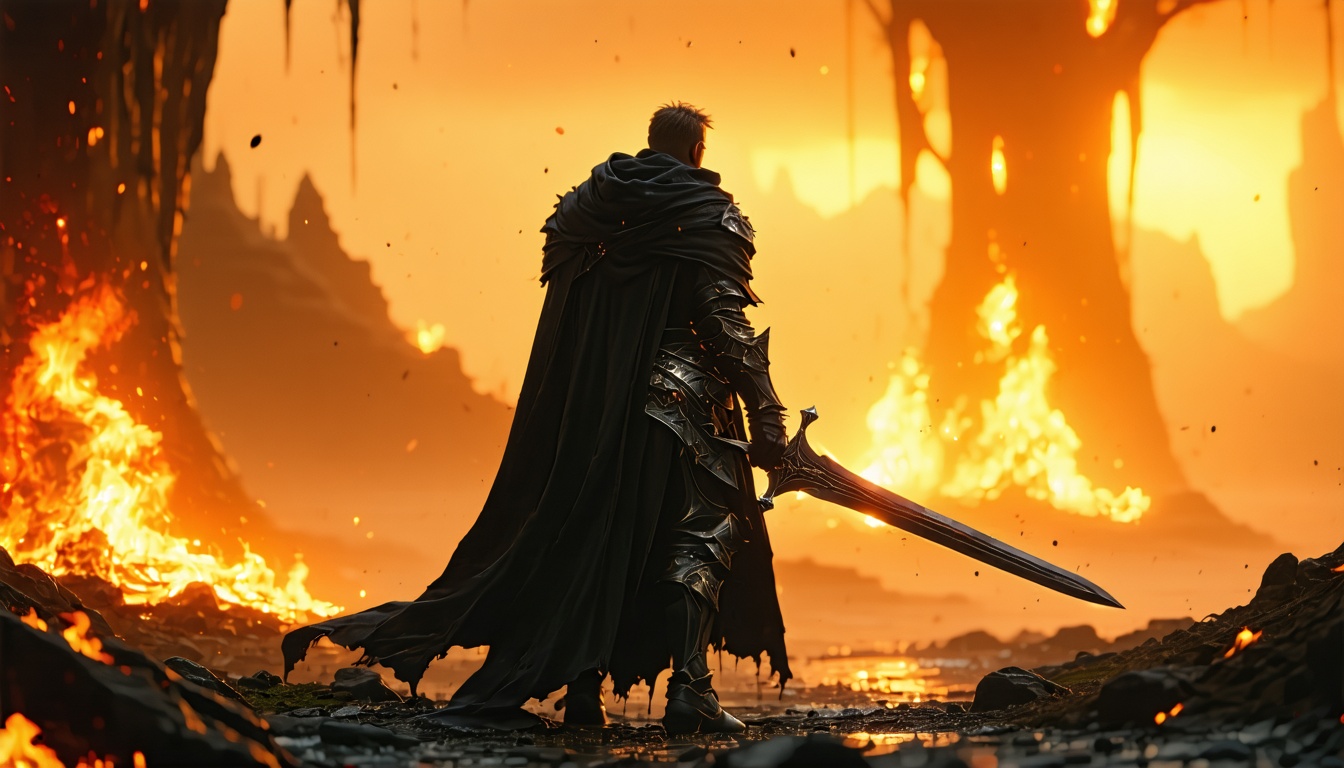
Lucas Chen stood before the tactical display in Central Command's war room, his walking cane braced against the deck as the station shuddered from a distant impact. The nerve damage in his right leg—a souvenir from the Sanctuary mission that had cost him six months in a medical tank and the ability to ever run again—flared hot down the back of his thigh. The cold made it worse. The war room was always cold. Budget cuts had rerouted climate control to the combat decks months ago, and nobody had bothered to reroute it back.
He shifted his weight onto the cane and ignored the leg. He'd been ignoring it for years. The leg wasn't going to kill him. The seven hundred ships outside might.
"Sir?" Lieutenant Commander Okonkwo looked up from her station. Sharp-featured, dark-skinned, quick enough to speak before she'd fully formed her objection. "Respectfully, that seems unlikely. No military force maintains identical tactics across two centuries."
"The Dominion does." Lucas gestured with his cane, tapping the holographic display hard enough to ripple the projection. His hand knew the weight of the cane the way a swordsman knew his blade—years of practice had turned a medical necessity into a pointer, a stabilizer, and on one memorable occasion at Arken Station, a weapon. He highlighted a formation pattern and dragged it beside a second one. "This envelopment pattern—the way they spread to cover escape routes before engaging the primary target. See how the flanking elements deploy at precisely thirty-degree intervals? My great-grandmother documented the same tactic during the portal wars. Same angles. Same timing intervals. Same order of commitment."
He tapped the display again, pulling up records that most officers didn't know existed. Ship movements from the current battle overlaid against Chen Li's hand-drawn diagrams from two centuries ago, digitized and cross-referenced by three generations of his family. The patterns were close enough to make Okonkwo lean forward in her chair.
Nearly identical. Two hundred years of technological advancement, and the Dominion still fought exactly the way they always had.
"Your great-grandmother?" Okonkwo's brow furrowed. "The portal closer?"
"Chen Li." Lucas let the name sit in the room. It had weight—two centuries of weight, pressed into the syllables like lead into a mold. "One of the twelve who sealed the dimensional breaches. She kept journals. Not the sanitized versions in the archives—personal observations, tactical analyses, behavioral studies of Dominion forces during the first contact wars. I inherited them."
His hand went to his jacket pocket without conscious thought. The journal was there. The original, not the digitized copy—yellowed paper, ink faded to brown, handwriting that cramped toward the margins when Chen Li was excited about a theory and expanded when she was working through something painful. He'd carried it since his grandmother placed it in his hands on her deathbed, wrapped in oilcloth, heavy with obligation.
Six generations of Chens. All waiting for the day those observations would matter again.
The room had gone quiet. Every officer present knew what the portal closers had done—sealed the dimensional breaches, trapping themselves between worlds. Neither alive nor dead. Frozen in the moment of sacrifice for eternity, their consciousness stretched across barriers they could never uncross. It was taught in schools. Memorialized in statues. The kind of heroism people put on posters but couldn't actually imagine experiencing.
Lucas could imagine it. He'd spent his entire life imagining it. Reading his great-grandmother's words and trying to understand what it meant to choose an eternity of consciousness as a living wall against darkness.
He pushed the thought aside. The leg throbbed. He leaned harder on the cane.
"The journals detail Dominion tactics from first contact through the final portal engagement," Lucas continued, keeping his voice in the practical register where it functioned best. Facts. Patterns. Things he could hold and test and verify. "Weapons specifications, formation doctrine, command hierarchies, behavioral responses under pressure. The Dominion believe in tradition. Their culture—if that word even applies—demands that earlier generations perfected everything worth perfecting. Innovation is heresy. They don't change tactics because they don't believe change is possible."
"That's arrogance on a scale I can't comprehend," Okonkwo said.
"It's the arrogance of a civilization that's never been seriously challenged." Lucas pulled up tactical overlays, his fingers working the console with practiced efficiency. The holographic display shifted, showing current Dominion formations beside Chen Li's two-hundred-year-old diagrams. Identical architecture. Different ships, same doctrine. "It's also a weakness we can exploit. Their command structure relies on harmony nodes—central ships that coordinate fleet movements through Hollowing-powered networks. Each node controls a sector. The sectors interlock. Destroy the nodes, the sectors lose coordination, and the formation fragments into independent units operating on pre-programmed contingencies."
He highlighted seven points in the current Dominion formation—bright gold markers hovering in the holographic red. "Same architecture Chen Li documented. Same node placement relative to the fleet body. Same communication protocols, same coordination timing."
"Kate Morrison hit several harmony nodes during the initial engagement," Admiral Voss's voice cut in through the comm system. She was still aboard the *Resolute*, directing from the front. Static degraded her words at the edges—the result of Hollowing interference with conventional communications. Her voice was hoarse. Damaged. Someone who'd been shouting orders and breathing smoke for hours. "It bought us time, but they adapted. Redistributed command authority."
"A temporary measure." Lucas pulled up Chen Li's journal entries from the third month of the portal wars—transcribed into clean text alongside scanned images of the original handwriting. "When forced to distribute command after node loss, they default to pre-planned contingency patterns. Pattern selection depends on the type and scale of disruption. They can't improvise—individual initiative contradicts their cultural programming. Every response is predetermined."
"So if we identify which contingency—" Okonkwo started, her fingers already moving across her console, pulling up fleet positioning data.
"We predict their movements. Know exactly where they'll be and in what formation before they've finished transitioning to the contingency." Lucas limped to her station, planted the cane, leaned over her shoulder. Close enough to smell the coffee she'd been drinking—cold, bitter, the recycled stuff that tasted like it had been through the filtration system twice. "Two hundred years of victory made them predictable. They're about to learn what that costs."
Understanding dawned in Okonkwo's expression—the particular brightening of eyes that good tactical officers got when a piece of the puzzle clicked into position. She was one of the best Lucas had worked with. Sharp mind, steady hands, the kind of officer who asked questions before shooting and questions after. But she'd never faced an enemy that didn't adapt, because she'd never needed to.
"Show me the full data set," Okonkwo said, fingers flying. "All contingency patterns you've identified."
Lucas shared the files—centuries of observations, compiled and annotated by generations of his family. Chen Li had started the project during the portal wars, documenting everything with the precision of someone who knew the information might be needed again. Her son had continued it, adding technological updates and cultural analysis. Lucas's grandmother had organized it into a searchable database. His father had verified it against recovered Dominion wreckage analysis.
Now Lucas was using it to fight the war his great-grandmother had only delayed.
The tactical display updated in real-time as new data fed in from the front. Human ships fighting, dying, holding ground through sheer stubbornness and training. The defensive line bending in the middle where casualties had been heaviest, bulging on the flanks where Dominion pressure had eased after Kate's attacks.
And one small shuttle icon weaving through the chaos—Kate Morrison, still in the thick of it.
Lucas's chest tightened. His hand found the journal in his pocket and pressed against it through the fabric.
Chen Li's journals had described another young sensitive—Maria Santos, sixteen when the portal wars began, barely eighteen when she died sealing the dimensional breaches. Chen Li had documented Maria's deterioration with clinical precision and personal anguish. The medical entries were annotated in a different ink—thinner, shakier, written later at night when objectivity gave way to grief. Nosebleeds progressing to internal hemorrhaging. Blackouts lengthening from minutes to hours. Moments when Maria's eyes went wrong—going dark, going deep, something else looking through them that wasn't Maria anymore. Loss of temperature regulation, food aversion, sleeping fewer hours until sleep stopped coming entirely.
Kate was following the same path. The biosign readouts confirmed it—numbers Lucas could read now, after months of studying Nigel's monitoring dashboards. The way Kate looked when she thought no one was watching. The careful distance she kept from heat sources because her body had stopped producing its own warmth. The way she tilted her head sometimes, listening to something no one else could hear.
The same symptoms. The same progression. The same direction.
Maria Santos had lasted eleven months after initial sensitization. Kate had lasted four years. Stronger, or more stubborn, or just built differently—Lucas didn't know which. But the destination was the same.
"Sir?" Okonkwo's voice pulled him back. "You've identified a contingency pattern?"
Lucas forced himself to focus. Kate's trajectory wasn't something he could alter from a war room console. But the battle was. And the battle was what kept Kate alive long enough for Nigel to find an alternative.
"Pattern Seven," he said, planting his cane and straightening. Pain shot through his leg—sharp enough to make him draw breath through his teeth—and he used it, let it anchor him in the present. "Used during the original portal wars when primary coordination was disrupted by sensitive interference. Defensive consolidation—they'll pull back to remaining heavy units, cluster for protection, and attempt to rebuild the command hierarchy before pressing the attack."
He traced the projected movements on the display—ships pulling back, clustering around surviving harmony nodes, reforming their interlocking sectors in a smaller, denser formation. Vulnerable during the transition. Strong once it completed. "The architecture they rebuild will be identical to what they had before. Smaller scale, same geometry."
"That gives us a window," Voss said through the static. "How long?"
"Six to eight hours. They'll need time to establish new node assignments and synchronize the contingency protocols." Lucas manipulated the display, marking optimal approach vectors and fire concentration points. His hand was steady on the console. "If we concentrate forces here—" he marked the junction between two reforming sectors "—and here—" a second mark at the Dominion's vulnerable dorsal approach "—we can hit them during the transition. Not decisive—we don't have the numbers for decisive—but enough to force another disruption, another contingency switch, another window."
"Keep them perpetually off-balance," Okonkwo said, nodding. "Don't let them establish stable command."
"Exactly. We can't beat seven hundred ships in a straight fight. But we can make it impossible for seven hundred ships to fight as one force."
Lucas pulled up projected casualties for the counter-strike. The numbers were bad—double-digit percentage losses in the strike force, almost certainly. But the numbers for any other strategy were extinction-level. He displayed them without softening them. These officers deserved honest math.
"And Kate?" Chelsea Park's voice joined the channel. Clipped. Professional. Containing something underneath that professionalism the way a pressure suit contained atmosphere. "She's been fighting for three hours straight. Her biosigns are in the red across the board."
Lucas closed his eyes briefly. The journal pressed against his hip through the pocket fabric. Chen Li's handwriting behind his eyelids.
"Kate's the only reason we're still in this fight," he said. Carefully. Choosing words the way a surgeon chose instruments. "Without her disrupting their Hollowing systems, the phase technology would have torn through our fleet inside the first hour."
"She's killing herself." Chelsea's voice was controlled, precise—the voice of someone delivering a damage assessment on their own position. "Every deployment accelerates the transformation. The scans from this engagement show three weeks of progression compressed into three hours. You know the numbers as well as I do, Lucas."
The war room went silent. The hum of the station's systems filled the gap. Distant vibration of weapons fire transmitted through the hull. Every eye turned toward Lucas—waiting for him to reconcile the two facts that refused to coexist: they needed Kate fighting, and fighting was destroying Kate.
"I know," he said quietly. "I know what each engagement costs her."
He limped to a secondary console, his cane marking time against the deck with each step. The sound was too loud in the silence. He brought up Chen Li's final journal entry on his personal display—small enough that only he could read it, the words scrolling across the screen in a digital rendering of handwriting he'd memorized decades ago:
*"I will hold the door forever. It is enough. They will remember what we were, and they will be free. That is all I ever wanted."*
Chen Li had written those words hours before the portal closing. She'd known what was coming. Not the sanitized version from the history books—the real thing. Consciousness persisting. Awareness trapped between dimensions. Holding barriers together through will alone while something vast and dark pressed against the other side, pressing forever, without pause, without mercy.
And now history was repeating itself. A different sensitive. A different war. The same trajectory toward the same impossible choice.
"Kate is aware of the cost," Lucas said. He closed the journal display. "She's made her choice every time she deploys. Our job—" he looked at Chelsea's frequency indicator, speaking directly to the woman who'd spent four years trying to keep Kate alive "—is to make sure her efforts buy us enough time to find another way."
"She's eleven." Chelsea's words were clipped. Not arguing—stating a fact that should change the calculus but couldn't, because the calculus didn't account for fairness or age or the cruelty of a universe that put its heaviest burdens on the smallest shoulders.
"I was younger than that when I made my choice," Kate's voice cut in, startling everyone. She'd patched into the command channel from the combat zone. Hoarse, exhausted—the voice of someone speaking through blood and damage. But steady. "Chelsea, I hear you. But this is my fight. Let me fight it."
Chelsea's breath caught on the channel. A sound like something breaking that chose not to. Then silence—the silence of someone who wanted to argue and recognized the futility, recognized that love couldn't override agency, recognized that the child she'd sworn to protect had grown past the point where protection meant safety.
"Kate," Lucas said, grounding his voice in practicality because practicality was the only mercy he could offer right now, "we've identified a Dominion contingency pattern. They'll consolidate for six to eight hours. You need to pull back. Rest."
"And then?"
Lucas looked at the tactical display. Red icons flooding through warp routes in waves that showed no sign of slowing. Civilian transports fleeing toward safety, some making the jump threshold, some not. Millions of lives still balanced on the calculations of military officers and the endurance of one damaged girl.
"And then we hit them again. Together."
The connection closed. Lucas stood alone with his thoughts and his cane and the journal pressing against his hip like a loaded weapon.
Kate would reach the same choice Chen Li had reached. He knew it with the cold mathematical certainty he'd inherited along with the journals. The Hollowing wouldn't stop claiming her, and the war wouldn't stop needing her, and something would have to give. The only variable was timing—how much of Kate would be left when the moment came, and whether that amount would be enough.
He just hoped Nigel could find another way before the equation resolved itself.
"Commander Okonkwo. Begin running simulations on Pattern Seven response. I want optimal strike positions calculated for when the Dominion finishes consolidating. Use Chen Li's contingency data as the baseline—adjust for modern ship capabilities but keep the formation geometry fixed."
"Yes, sir." Okonkwo was already working, her console alive with calculations.
Lucas turned back to the main display. Kate's shuttle icon was finally pulling back toward safer space—moving slowly, without the sharp maneuvering that indicated active engagement. He checked her biosign feed on his personal screen. Heart rate elevated, blood pressure spiking, neural activity showing the cascading interference pattern that Nigel had identified as Hollowing integration advancement.
The pattern Chen Li had documented in Maria Santos. The pattern that meant the corruption was taking root deeper than surface-level. Growing new structures. Building new connections. Reshaping neural architecture to serve a purpose Kate hadn't chosen.
*She looks just like Maria did in your journals, Great-Grandmother. Right before the end.*
He pushed the thought away. Gripped his cane until his knuckles whitened. There was still a war to fight, and grief was a luxury combat officers couldn't afford.
"Dr. Chen." Okonkwo didn't look up from her console. Her voice carried the tight tension of someone reporting bad news. "Morrison's shuttle—loss of altitude. Port thruster offline. Medical team on the *Hope's Haven* is scrambling to intercept."
Lucas's hand tightened on the cane hard enough to feel the grain of the wood through his palm. On the secondary display, Kate's shuttle icon pulsed twice—the universal telemetry indicator for systems failure—then steadied.
"Get me a line to the *Hope's Haven*," he said.



Join the Discussion