Echoes in the Void - Chapter 3: Ghost Town
"These toys were handmade," Chelsea said, lifting a small figure from the shelf.
The figure was carved from something that resembled wood—brown, fibrous, showing grain patterns—though no trees grew on this sterile planet. Someone had shaped it with care, smoothing the edges, painting details in faded pigments. A child's toy. A parent's love made tangible.
The craftsmanship spoke of hours spent in careful labor—a parent sitting in quiet moments after their child slept, carving features and smoothing edges with the patient attention that love demanded. She had seen it across a dozen cultures, a dozen worlds. The desire to create something beautiful for the people we cherish transcended species boundaries.
Whoever had made this figure was gone now. Absorbed, perhaps, into whatever force had claimed this settlement. But their love remained, preserved in this small wooden form that sat on its shelf as if waiting for a child who would never return.
The weight of that absence pressed against her scientific detachment. She had been trained to analyze, to document, to observe without emotional interference. But standing in this abandoned home, surrounded by the evidence of lives interrupted, the questions came unbidden: what final moments had the family experienced? Had they seen the end coming? Had they had time to hold each other, to speak words of comfort, to face the darkness together?
The questions had no answers. The settlement offered only silence and preservation, a museum of absence where every artifact told a story that no one remained to hear.
She set it back exactly where she found it.
They had returned to the settlement despite Rylee's initial order to pull back. The Void's response to their report was unequivocal: investigate further, document everything, await extraction team. Until that team arrived—six days at minimum—they were on their own.
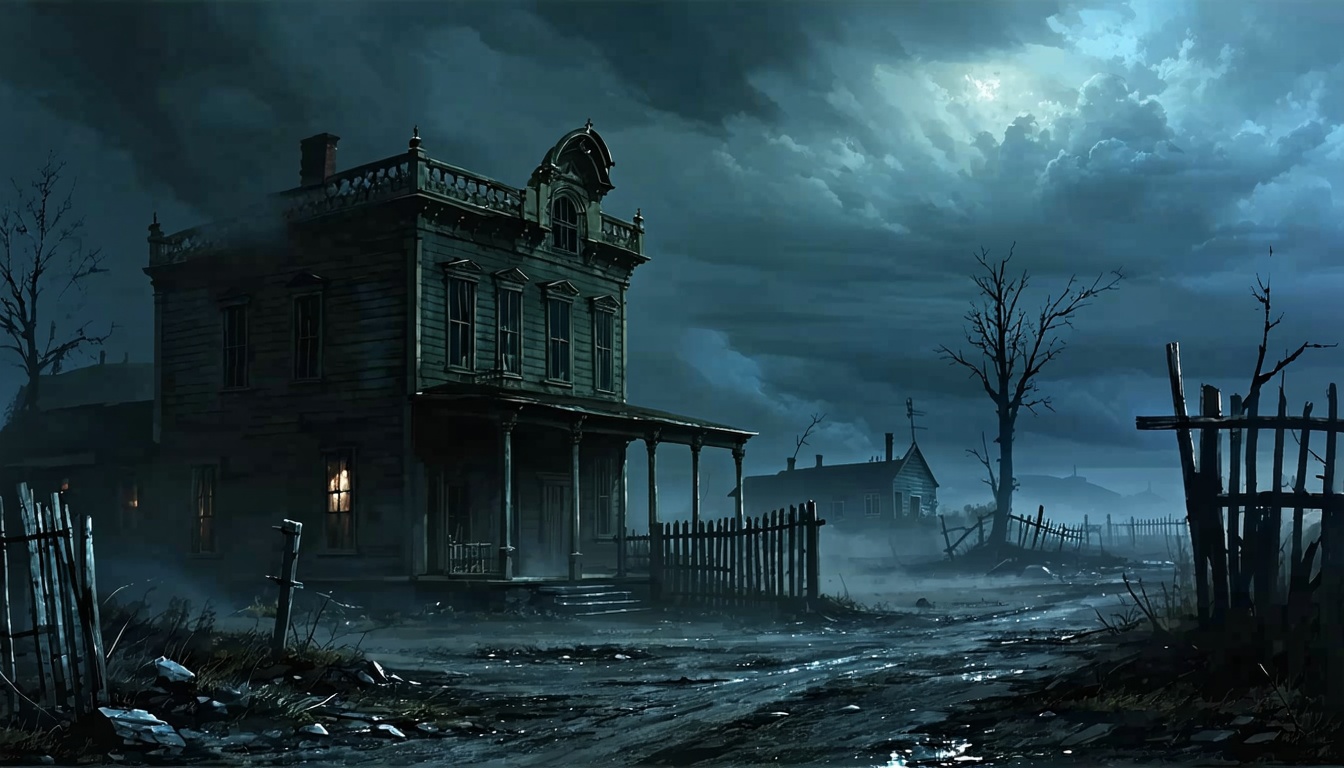
Chelsea stood in what was clearly a family residence. The common room around her held all the signs of domestic life: a cooking area with utensils arranged by size, an entertainment unit displaying static, soft furniture grouped around a low table. Dust coated every surface in a fine, undisturbed layer. The air carried a faint antiseptic quality—not chemical, not manufactured, but the unnatural absence of the organic smells that should have accumulated in an enclosed space over months. No mildew. No decay. Not even the dry, papery scent of settled dust. Just nothing, as if the atmosphere itself had been sterilized.
But not the dust of fourteen months. That was what bothered her.
She ran her scanner over the tabletop, checking particle density. The readings confirmed what she suspected: this dust accumulated over weeks, not years. Whatever preservation effect maintained the coffee's temperature and the food's warmth didn't extend to airborne particles. The dust fell, as physics demanded.
So where had it been falling from, in a world with no wind and no organic matter?
"Chelsea, status?" Rylee's voice crackled over the comm.
"Continuing residential survey, building seven-gamma. No occupants. Evidence of extended habitation consistent with family unit—two adults, one or two children based on personal effects."
"Copy. Nigel found something in the eastern complex. He also found Alpha Team's perimeter camp—empty. Same preservation state as everything else here. Their equipment is running, their logs are intact, and there's a meal on the portable stove that hasn't gone cold." A pause that carried more than silence. "No sign of struggle. No sign of where they went."
Chelsea processed that. Alpha Team had landed three days before them, established a perimeter, and then—joined whatever had taken the settlement's original inhabitants and Team 2 before them. Quietly. Without alarm. Without any evidence that they even knew it was happening.
"Understood. En route in thirty."
She moved deeper into the residence. The layout followed the settlement's standard pattern: common area at the entrance, private spaces toward the rear, utility functions along the periphery. Everything organized, everything clean, everything waiting for occupants who would never return.
The first private room was a sleeping chamber for adults. A double bed with linens pulled taut, storage units along one wall, a small desk with a terminal displaying that ubiquitous angular text. On the bedside table, two items: a timepiece of unfamiliar design, its display showing numbers in a format she couldn't parse, and a framed image.
Chelsea picked up the image. The frame was warm—not from ambient temperature, but with the specific warmth of something recently handled, as if someone had set it down moments ago.
The image showed a ceremony of some kind. Figures in ceremonial dress stood before an altar-like structure, surrounded by observers. The central figures appeared to be—
She stopped.
The figures in the image weren't human.
She knew this, on some level. The settlement's architecture, the angular text, the specimen in the cryo-chamber—all pointed toward non-human origin. But seeing them in a social context, in a moment of celebration or ritual, made the reality concrete in a way abstract knowledge couldn't.
They were humanoid. Bipedal. Two arms, one head, features arranged in roughly the same configuration as human faces. But the proportions were wrong—torsos too long, limbs articulated at additional joints, heads slightly larger with facial features that suggested different sensory priorities. Their skin, in this image at least, appeared pale blue-grey, with subtle mottling patterns that might indicate individuals.
"Marcus," she said, her voice low, "I'm transmitting an image to your recording buffer. Priority classification."
"Receiving now." A pause. "Chelsea, what am I looking at?"
"The residents. The actual residents, not Team 2. This settlement wasn't built by humans. It was built by... these. Whatever they are."
"Then Team 2 found an alien colony."
"Found it, occupied it, and vanished from it. Just like the original inhabitants apparently did." Chelsea set the image back on the bedside table, angling it exactly as she found it. "And now Alpha Team too. I'm proceeding to secondary chambers."
The second private room was smaller—a child's space, clearly. The bed was narrower, the furnishings sized for someone perhaps a meter tall, the walls decorated with images and artifacts that spoke of play and learning. More handmade toys filled a shelf above the bed. A collection of smooth stones sat in a dish by the window. A garment, small and brightly colored, hung from a hook by the door.
Chelsea stood in the center of the room, turning.
In every settlement she had surveyed, in every culture she had studied, children's spaces shared certain universal qualities. Protection. Comfort. Evidence of care. This room had all of those—the walls curved slightly inward, suggesting embrace; the lighting was softer than elsewhere in the residence; every object within reach was smooth, safe, chosen with thought.
Whatever species built this settlement, they loved their children.
She moved to the shelf of toys. Each one showed the marks of handling—paint worn by small fingers, edges smoothed by repetition, repair work where joints failed or pieces broke. Some were abstract shapes, geometric forms that tessellated in complex patterns. Others were clearly representations: animals, perhaps, with multiple limbs and elongated bodies. One appeared to be a vehicle of some kind, with miniature seats and functional wheels.
At the end of the shelf, partially hidden behind a stack of learning tablets, Chelsea found something that made her breath catch.
A human toy.
A small plastic figure, mass-produced, recognizably from human manufacture. The style was dated—she placed it at perhaps twenty years old, the kind of cheap novelty item that might have been common on corporate stations before the Void expanded. It showed a cartoon character in a style unmistakably human-made—colonial mass-production, early era, the cheerful face still readable beneath faded paint.
How did a human toy end up in an alien child's room on a planet that shouldn't exist?
"Chelsea?" Marcus's voice, concerned now. "Your vital signs are spiking."
"I'm fine. I found something. Transmitting image now."
She photographed the toy from multiple angles, documenting its position, its condition, its incongruity. Then she photographed the room again, capturing the alien toys beside the human artifact, the juxtaposition that raised more questions than answers.
"That's a Stellar Friends character," Marcus said. "The franchise ran for about fifteen years, peaked around 2180. Mass production, very common in inner systems. But that would mean—"
"Contact. Before the Void. Before any of this." Chelsea picked up the human toy, turned it in her gloved hands. "Someone brought this here. Someone from our side of the quarantine, long before Team 2 ever arrived."
"That's not possible. The Void has been impenetrable for—"
"I know what it's supposed to be. I'm telling you what I'm holding."
She set the toy back, positioned it exactly as she found it. Her mind raced through implications, each one more disturbing than the last. Humans reached this planet decades ago. Humans interacted with the alien species that lived here. And then—what? The aliens vanished. The humans vanished. Everything stopped, preserving itself in this uncanny stasis.
A sound.
Chelsea froze. Her hand moved to her sidearm before conscious thought caught up—a whisper of movement, fabric against fabric, the barest suggestion of breathing that wasn't her own.
"Hello?" Her voice sounded too loud in the absolute silence.
Nothing.
But something had changed in the room. The quality of the stillness was different now—anticipatory, like the held breath before a confession.
Chelsea scanned the space again. The bed. The toys. The stones in their dish. The garment on its hook. Everything exactly as she found it.
Except.
The storage cabinet in the corner, its door slightly ajar when she could have sworn it was closed.
She approached with weapon drawn but not raised. Her heart pounded against her ribs. Whatever she found, she needed to see it. Needed to know.
She pulled the cabinet door open.
A child stared back at her.
Human. Female. Perhaps seven years old, with tangled dark hair and eyes too large in a face gone thin from hunger and fear. She was wedged into the cabinet's narrow space, knees pulled to her chest, arms wrapped around herself in a posture of desperate self-protection. A sharp smell rose from the cabinet—unwashed skin, stale sweat, the sour undertone of a body running on fear and whatever scraps could be scavenged. Three months of survival compressed into that narrow dark space.
Not preserved. Alive. Chelsea's first thought was of the specimen in the cryo-chamber on the building's third floor—that shape behind frosted glass, something that had once been living, held in suspension between states. This child was nothing like that. This child had been surviving, not preserved. Fighting, not frozen.
"Don't—" The girl's voice cracked, unused. "Please don't."
Chelsea lowered her weapon immediately, raising her free hand in what she hoped was a universal gesture of peace. "I'm not going to hurt you. I promise. My name is Chelsea. I'm here to help."
The girl didn't move. Her eyes—dark brown, rimmed with the red of exhausted tears—studied Chelsea with an intensity too old for her face.
"You hear it too," the girl whispered. "The song."
A chill crawled up Chelsea's spine. "What song?"
"The one that's always there. Ever since they took Mom and Dad." The girl's hands tightened on her own arms, fingernails digging into skin. "It says you're finally here. It says it's time."
"Time for what?"
The girl shook her head, a movement that was more shudder than answer. "I don't know. But it's been waiting. Everything's been waiting. And now—" Her voice broke. "Now you're here and the waiting is over."
Chelsea forced herself to speak calmly despite the dread climbing her spine. "What's your name?"
"Kate. Kate Morrison." The girl's chin lifted slightly, a flash of defiance beneath the terror. "My parents were scientists. Team 2. They were supposed to study this place. But then the singing started and the others stopped moving and Mom and Dad..." Her voice trailed off into silence.
The Stellar Friends figure on the shelf—the human toy Chelsea had flagged as evidence of contact predating Team 2—clicked into place with a simpler, sadder explanation. Kate's parents had brought their daughter to this planet. Someone had tucked a familiar toy among the alien ones, making an alien child's room feel something like home for a human child who had nothing else to hold onto. Not twenty years of mystery. Fourteen months of a parent's love, sitting on a shelf in an empty room.
Three months. This child had been hiding alone for three months—stranded here since her parents' Team 2 expedition first landed, long before the Endeavor followed their distress beacon across the Void. The organism that absorbed the others should have found her easily—but somehow she remained hidden, as if she existed in a blind spot the entity couldn't quite perceive. As if something about her made her different.
"Kate, I'm going to get you out of here." Chelsea extended her hand. "I have friends outside. We have a ship. We're going to take you somewhere safe."
Kate looked at Chelsea's outstretched hand like it might be a trap. Then she uncurled from her hiding place and reached out.
Her fingers were cold—too cold for a living child—but they gripped Chelsea's hand with desperate strength.
"The song says it knows you," Kate murmured as Chelsea helped her to her feet. "It says you're all connected now. Like my parents were. Like everyone is, eventually."
"Chelsea?" Marcus's voice crackled over the comm. "Rylee's ordering all teams to rendezvous. Whatever Nigel found, it's significant."
Chelsea didn't answer immediately. She looked at Kate—at this child who should not have survived, this girl who heard songs that no one else could hear—and the weight of everything they didn't yet understand settled onto her shoulders.
"Copy. On my way." She paused. "And Marcus? I found something too. Someone. A survivor from Team 2."
Silence on the comm. Then: "A survivor?"
"A child. Kate Morrison. She's... she's been hiding here alone since the others vanished."
Another pause. When Rylee's voice cut in, it was carefully neutral. "Bring her to the rendezvous. We'll debrief together."
"Understood."
Chelsea squeezed Kate's hand. The girl squeezed back.
"Ready?" Chelsea asked.
Kate nodded, though her eyes remained fixed on something Chelsea couldn't see—her head tilted toward that song she had mentioned. The song that said they were all connected now.
"It's louder," Kate whispered as they moved toward the door. "Since you arrived. The song. It's so much louder."
Chelsea didn't know what that meant. But she knew it mattered.
She led Kate out of the residence, walking quickly through streets that pressed closer with each passing hour. The settlement surrounded her with its evidence of vanished lives: toys and tools and treasures, meals and messages and memories. Every building she passed held its own collection of abandoned moments.
Kate walked beside her in silence, her small hand gripping Chelsea's with fierce determination. The girl's eyes darted constantly—to shadows, to doorways, to corners where nothing moved but the air somehow thickened, as though presence accumulated in the spaces between buildings.
The central rendezvous point was a plaza of sorts—an open space where several thoroughfares converged, surrounded by larger structures that might have served public functions. Rylee stood at the center with Lucas flanking her. Nigel crouched near the plaza's edge, working with scanning equipment spread across the ground. Marcus arrived from the opposite direction, his recorder held at eye level, capturing everything.
All of them stopped when they saw Kate.
"This is Kate Morrison," Chelsea said. "Her parents were with Team 2."
Rylee approached with measured steps, her expression shifting through surprise, calculation, and something that might be compassion. She crouched to meet Kate's eyes. "Kate, I'm Commander Rylee Voss. We're going to take care of you. Can you tell us what happened here?"
Kate's gaze moved past Rylee, past all of them, to something only she could perceive. "They came from below," she said, her voice soft. "The song brought them. And when my parents tried to understand, the song took them too."
"From below?" Nigel's head snapped up from his equipment. "Kate, do you mean underground? There's something underground?"
Kate nodded. "The singers. They're always singing. And now—" She looked at Chelsea, her knowing eyes filled with terrible awareness. "Now they're singing for you."
Chelsea met Rylee's gaze. The commander's face was grim.
"What have you found?" Chelsea asked.
Nigel didn't look up from his equipment. "Subsurface structure. Massive, extending at least two hundred meters below ground level. I picked up the signatures while scanning the eastern complex—energy readings that don't match anything above ground." He paused. "That's also where I found Alpha Team's camp. Packed gear, two portable stoves still running, medical kit unopened. Their biosignatures just... stopped. Like a switch."
"The same as Team 2," Rylee said. It wasn't a question.
"The same as everything here." Nigel finally looked up. "Whatever this thing does, it doesn't leave marks. Doesn't leave anything at all except the moment before it happened."
A silence settled over the plaza. Rylee's jaw tightened once—the only visible sign of the cost she was adding to her mental accounting—then her expression sealed back into command.
"The subsurface structure," Chelsea said. "What kind of energy?"
"That's the problem." Nigel's expression carried something Chelsea had never seen in him before: genuine uncertainty. "It's not electromagnetic. It's not thermal. It's not nuclear or chemical or any other form of energy our instruments are designed to detect. The only reason I spotted it at all is that it's interfering with the geological sensors—creating dead zones in the scan patterns."
"Dead zones," Rylee repeated. "Like the interference at the pattern center?"
"Similar signature, smaller scale." Nigel pulled up his display, and the holographic map showed the settlement's location along one arm of the geometric arrangement he'd identified from orbit—seventeen sites, radiating outward from a central point two hundred kilometers northwest. "We're at a node. One endpoint of the pattern. What we're standing over right now is the same kind of structure as whatever sits at the center—smaller scale, but the same underlying signature. The pattern isn't decorative. It's functional. This is infrastructure."
"Infrastructure for what?" Marcus asked.
Nigel gestured toward the horizon. "For whatever's at the center. We're at the edge of something we can't see the shape of yet."
"Can we access the subsurface structure here?"
Nigel gestured toward a structure at the plaza's edge—larger than the others, with steps leading up to a wide entrance. "There's an access point through that building. Some kind of lift or transport mechanism. I can't tell if it's functional."
Rylee considered. The calculation played across her commander's face—the tightening around her eyes, the slight compression of her lips. The smart play was to wait for extraction, to let a larger team with better equipment handle subsurface exploration. But the smart play didn't always apply when you were six days from backup and sitting on top of something that might explain a planetary mystery.
"We investigate," Rylee decided. "Careful approach. Nigel and Chelsea take point—you understand this technology better than the rest of us. Lucas provides security. Marcus documents. I coordinate from above ground, maintain comm link, call for abort if anything goes wrong." She looked at Kate. "And Kate stays with me. She's been through enough."
Kate shook her head. "The song wants me to go down. It's been waiting for me to go down."
"Then the song can keep waiting," Rylee said firmly.
But Kate's eyes were distant, focused on harmonies none of them could hear. "It doesn't wait. It just... knows. It always knows."
"Define 'wrong,'" Lucas muttered.
"I'll know it when I see it."
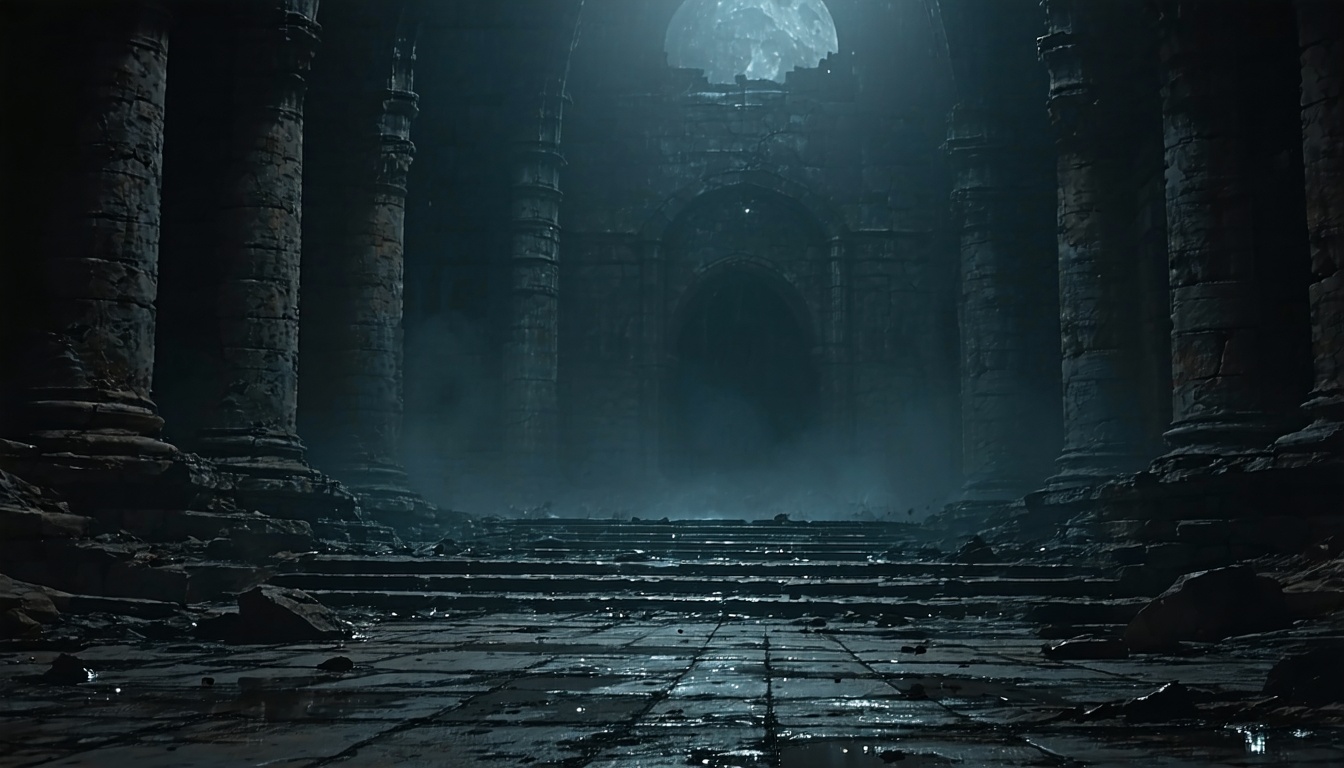
They approached the access building. The interior matched the civic scale of its exterior—high ceilings, wide corridors, spaces designed for gatherings rather than individuals. Nigel led them toward the energy signature, following his scanner through a maze of halls until they reached a circular chamber at the building's core.
The chamber contained a platform.
The platform floated.
Chelsea stared at it. The structure hovered perhaps half a meter above the floor, its surface smooth and dark, large enough to accommodate a dozen people standing. No visible supports. No obvious mechanism. It simply hung in space, defying gravity with casual indifference.
"That's not possible," she whispered.
"Lot of impossible things on this planet," Lucas said. "We making a collection?"
Nigel approached the platform's edge, scanner raised. "The energy readings are off the scale here. Whatever powers this, it's directly connected to the subsurface structure. I think—" He hesitated. "I think it's a transport. A lift, like I said. It goes down."
"How far down?"
"All the way."
Chelsea studied the platform, the chamber, the absolute stillness of everything around them. The family residence she had just left. The children's toys, alien and human side by side. The species that built this place, loved their offspring, then vanished without trace. The cryo-specimen on the third floor of the research building, suspended between states, waiting in its frosted chamber for analysis that might never come. Alpha Team's stoves still running with no one to tend them. And Kate, standing beside Rylee, hearing songs that no one else could hear.
The answers weren't on the surface. Whatever happened here—whatever was still happening, in the eternal preservation of meals and memories—the truth lay below. In the structure Nigel detected. At the heart of whatever forces held this dead world in suspension.
"I'll go," she said, before she could second-guess herself. "Someone needs to. I have the technical background to interpret what we find."
"Chelsea—"
"Commander, with respect, you know I'm right. Nigel understands the equipment, Lucas is our tactical asset, Marcus is our record. If we're sending anyone down, it should be the one who can read the data and get back to report."
Rylee held her gaze for a long moment. Something passed between them—acknowledgment, perhaps, of the calculations they were both making. Then she nodded.
"Five minute check-ins. Any anomaly, any threat, you call for immediate extraction. Clear?"
"Clear."
Chelsea stepped onto the floating platform. It didn't shift under her weight—didn't react at all, as stable as bedrock. The surface was warm beneath her boots, humming with energy she couldn't perceive directly but somehow knew was there.
She stood in the center and waited.
Nothing happened.
Then, softly, a sound emerged from the platform's surface—the first sound Chelsea had heard on this planet that wasn't created by her own team. It was musical, almost. A sequence of tones, rising and falling in complex patterns. It lasted perhaps five seconds, then faded.
Kate gasped. "That's it. That's the song."
The platform began to descend.
"Chelsea?" Rylee's voice was tight with concern.
"I'm okay. Going down. Whatever that sound was, it activated the transport." The circular opening above shrank as the platform sank into the structure below. Kate's face was the last thing she saw before the darkness swallowed her—the girl's eyes wide, her lips moving silently along with harmonies only she could hear. "Wish me luck."
"Come back."
Chelsea smiled, though no one could see it behind her helmet. "That's the plan."
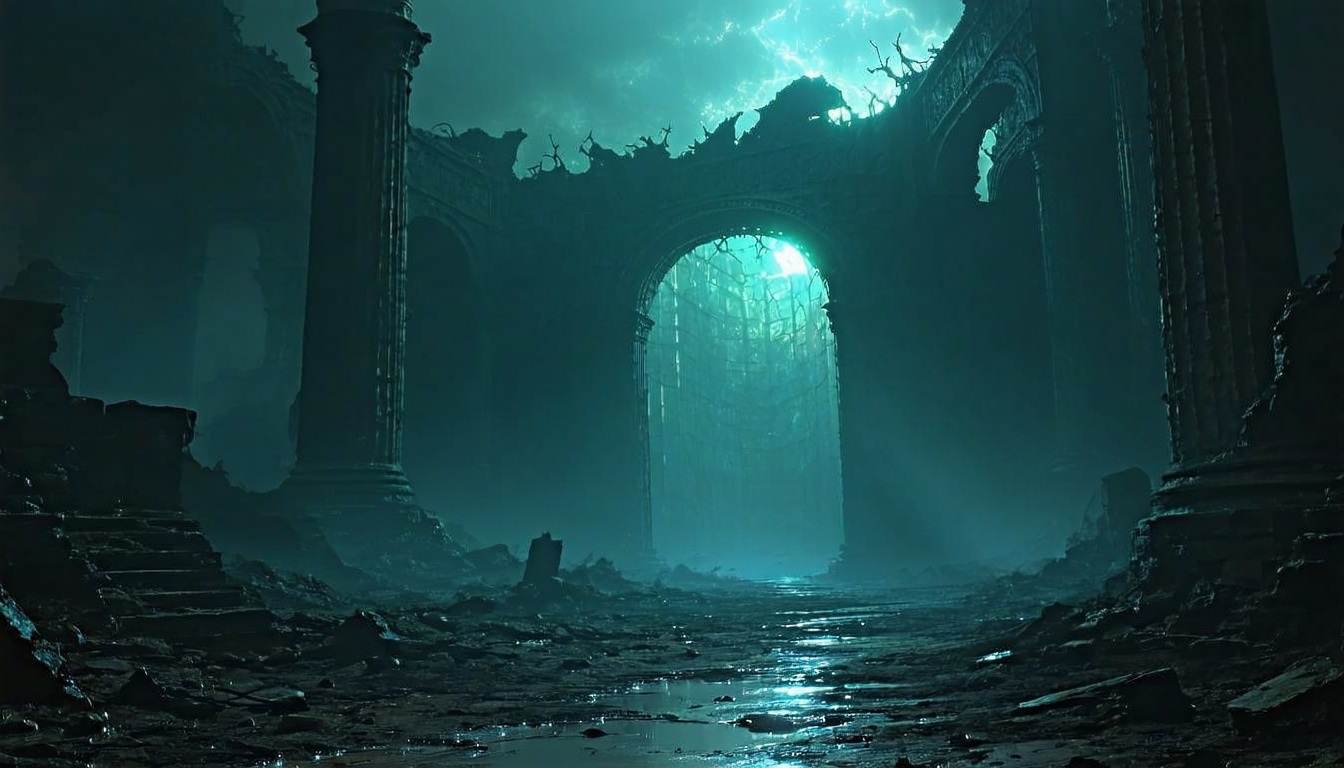
The light from above dwindled to a point, then vanished. She descended into darkness, carried by technology that defied every law she knew toward whatever truth waited at the bottom of this dead world. The air changed as she dropped—the sterile absence of the surface giving way to something denser, warmer, carrying a faint mineral sweetness that coated the inside of her nostrils. Not unpleasant. Not quite pleasant either. The smell of something alive in a place where nothing should be.
Around her, in the perfect silence of the shaft, that musical tone sounded again—fainter now, distant, as if something far below was answering.
Join the Discussion