Legacy of Iron - Chapter 1: The Eastern Expedition

"The Progenitors were divine," Theron said.
Cael watched from the chair beside the window, his position chosen with the deliberation he brought to every placement—visible enough that the Scavenger engineer couldn't forget who held authority in this room, removed enough that Elara could work without his shadow falling across the negotiation. He'd learned the art of strategic absence during the Karthian treaties. Sometimes the most powerful thing a leader could do was sit quietly and let his people be brilliant.
The diplomatic chamber smelled of fresh pine and old smoke—the Confederation built with whatever materials they could salvage. Stone walls from Progenitor ruins. Timber beams from the northern forests. Furniture cobbled together from a dozen different sources.
The Scavenger engineer sat across from Elara, his posture rigid, his tone clinical. He carried no scent of the road—no dust, no sweat, no horse leather. Just a faint antiseptic sharpness, like cleaned surgical instruments. Even his smell was optimized. Everything about Theron screamed precision. His uniform had no wrinkles. His movements were economical. Even the way he breathed was calculated.
Cael cataloged the observations the way he cataloged everything—as data, as leverage, as variables in an equation he'd been building since the Scavenger envoys first appeared at the eastern gate three days ago. Arriving fully provisioned and armed from a civilization that had sealed its borders for a decade. The timing alone had kept him awake for two nights. The Progenitor structures activating, and within weeks the Scavengers were here. Not a coincidence. Not opportunity. A response to something specific, and Cael intended to learn what.
The contrast with the makeshift chamber couldn't have been sharper. The Confederation built from necessity. The Scavengers built from design.
"Not metaphorically," Theron continued. "Literally. They ascended beyond biological limitation. Achieved technological transcendence. Left behind their works as gifts for humanity."
Elara set down her pen. Cael had appointed her Chief Diplomat three years ago, after she'd resolved the Valorheim-Karthis border dispute that three senior mediators had declared impossible. She'd been barely twenty-five—the youngest person to hold the title. Since then, seventeen interventions. Seventeen outcomes that stopped bloodshed. The Council had stopped questioning whether she'd succeed and started worrying about what would happen when they ran out of impossible situations to send her into.
He'd found her during the underground years. Two tunnel factions at each other's throats over water rights, and he'd been ready to enforce rationing at sword-point. Elara—barely eighteen, nameless, carrying nothing but her dead father's instincts—had asked for ten minutes. Got the factions sharing the well within six. Cael had looked at her afterward with the peculiar recognition of a commander who'd just discovered a weapon he didn't know existed. He'd appointed her liaison to the refugee councils the next morning.
Now he watched her work. The slight tilt of her head—reading Theron the way hunters read tracks. The careful neutrality of her expression, holding still while the Scavenger engineer called their civilization primitive. Cael recognized the discipline. He practiced the same control every day, holding his face steady while bearing the weight of thirty thousand lives. But where his control was forged in command, hers was forged in empathy—absorbing what people carried into her presence, waiting for the moment it mattered.
"You worship them," Elara said. Not accusatory. Observational. The first rule of diplomacy: never make people defensive about their beliefs.
"We honor them. Preserve their legacy. Maintain their systems." Theron's tone didn't waver. His dark eyes remained fixed on hers, assessing. "The Progenitors created infrastructure to support civilization forever. Power generation. Resource distribution. Automated manufacturing. Humanity's role is stewardship. Maintenance. Continuing their work."
Elara picked up her water cup. The ceramic was cracked—repaired with resin that darkened the glaze. Everything in the Confederation bore scars. Everything was mended, patched, held together through sheer stubbornness.
Cael watched the Scavenger's eyes track the cup. That was telling. Theron noticed the crack. Cataloged it. Filed it as evidence of Confederation inadequacy. Cael had seen that expression on the faces of every hostile emissary he'd ever hosted—the careful documentation of weakness. The difference was that most emissaries tried to hide it. Theron didn't bother. Either he was too arrogant to conceal his contempt, or too honest. Both were useful.
Elara took a sip. Buying herself a moment. Not to formulate an argument—she had a dozen ready. To read the temperature of the silence. Cael saw the fractional shift in her posture—something had registered. "And when you use their technology?" she asked. "For weapons. For control. For expansion."
"We optimize their systems. The Progenitors intended humanity to thrive through organization. Through hierarchy. Through efficient application of resources." Theron studied her. His gaze moved over her face like he was cataloging details for later analysis. "Your Confederation uses Progenitor artifacts pragmatically. Without reverence. Without understanding. That's blasphemy."
The word landed in the room like a dropped blade. Blasphemy. Not just wrong—spiritually wrong. Morally wrong. A violation of something sacred.
Cael filed the word. Not for its content—he'd heard zealots before, from blood mages who'd believed corruption was divine right to crusaders who'd burned villages in the name of purity. The content was interchangeable. What mattered was the architecture beneath it. Theron's reverence for the Progenitors wasn't ideology. It was identity. Strip it away and you stripped away the man. That made him dangerous and predictable in equal measure—dangerous because identity-driven conviction didn't yield to logic, predictable because it always broke along the same fault lines. And when Elara had said worship, something had shifted in Theron's composure. A hairline fracture, sealed almost instantly. But Cael had caught it from across the room. Reverence mattered to the engineer not as ideology but as something more personal. That crack could be widened. Not today. Not through argument. Through experience that his framework couldn't process.
"We use what we find to survive." Elara's voice didn't waver. "We don't worship it. We adapt it."
"You desecrate it." Something hard entered Theron's eyes—the first real emotion Cael had seen from him. "The Progenitors left precise systems. Designed for specific functions. Your people scavenge components. Repurpose them. Connect systems incorrectly. That's not adaptation. That's vandalism."
Elara's fingers tightened on her cup. Cael saw it—the micro-expression she didn't quite contain. Three years of diplomatic discipline and the word vandalism still got under her skin. He made a mental note: Elara's composure cracked when the Scavengers dismissed what the Confederation had built. Not when they threatened. When they dismissed. Her weakness wasn't fear. It was pride.
"That's survival," Elara said. "We didn't have functioning infrastructure. We had ruins. Broken systems. Demonic corruption. We made things work however we could."
"Through ignorance and improvisation. Creating unstable hybrid systems that violate Progenitor design principles." Theron leaned forward slightly. The movement was precise, controlled. "The Scavenger Collective maintains original systems. Preserves intended functionality. We are the Progenitors' heirs. You are scavengers who misuse their gifts."
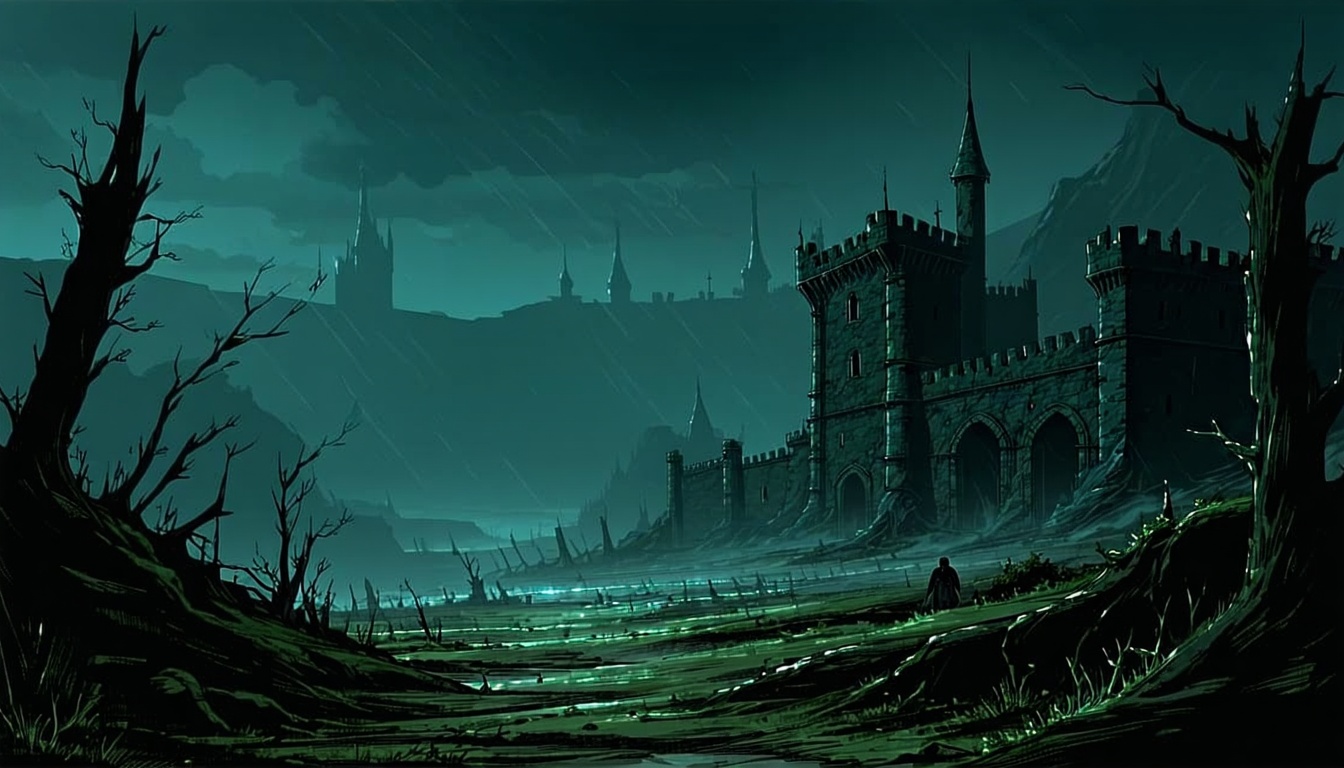
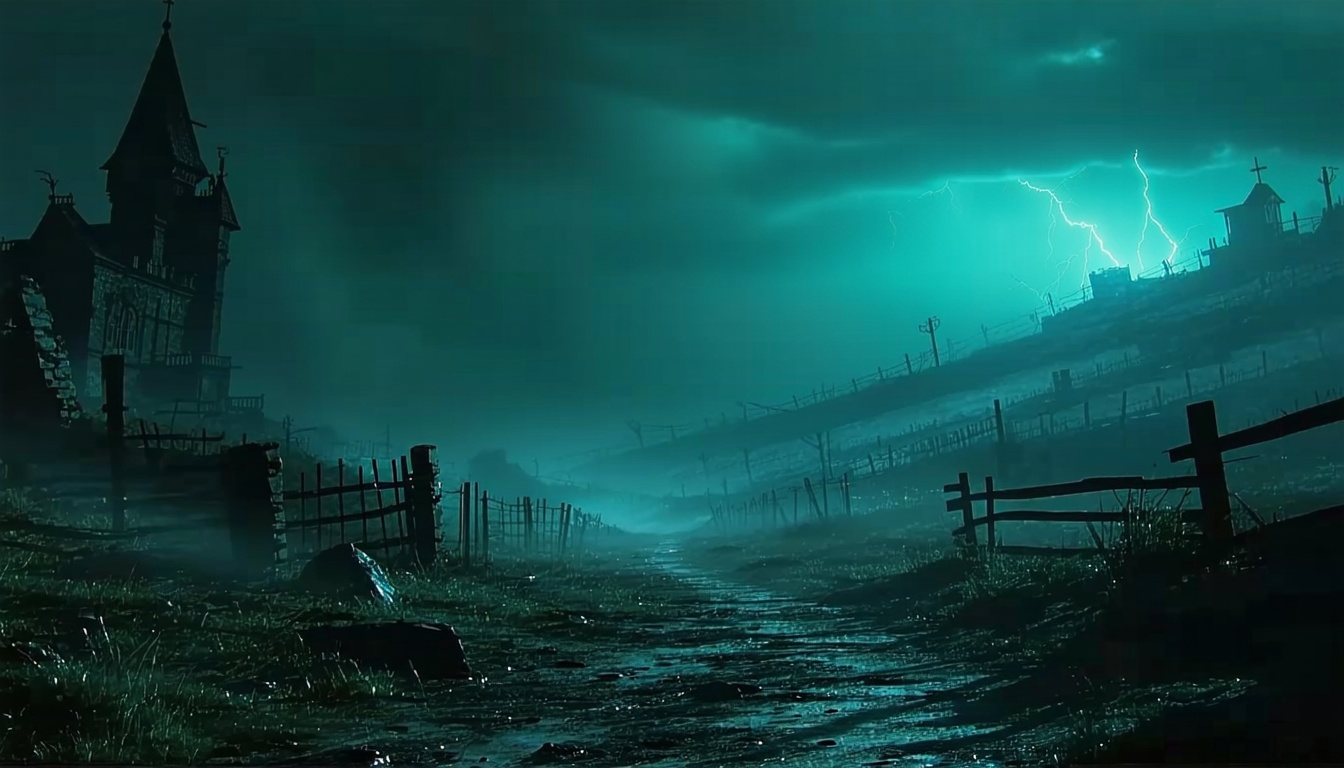
The sunlight streaming through the window caught dust motes in the air—or maybe ash. Hard to tell the difference some days. Beyond New Haven's walls, the Ashen Kingdoms stretched in every direction: grey-brown earth scarred by demonic corruption, dead forests reduced to skeletal trunks that clawed at the sky. On clear days you could see the ash drifts piling against the eastern ridgeline, slow grey waves that crept closer with each season.
Cael had built this city from nothing. From refugees and rubble and the stubborn refusal to accept that humanity's chapter was finished. Thirty thousand people. Five districts. Growing every month. He'd paid for every wall with decisions that kept him awake—which settlement got the supply convoy, which frontier outpost waited another month, which mother's letter he couldn't answer because the answer was that her son had died holding a breach. Twenty-three years of that weight. And this engineer sat in a room Cael had built and called it blasphemous.
He kept his face still. Commanders didn't display anger. Anger was a confession of lost control, and Cael had not survived twenty-three years by confessing anything to anyone.
Elara's jaw tightened. "The Progenitors sealed the Wurm Lords. Built the Deep Forge. Created the Unmaking Engine. We found those facilities. Activated those systems. Saved humanity from extermination. That seems like honoring their legacy."
Theron's expression didn't change. "The corruption events. Demonic manifestations. We documented them. The Collective sealed our territories. Maintained quarantine. Allowed contamination to pass without risking our infrastructure."
"You hid," Elara said. The words came out sharper than she intended. She took a breath, modulated her tone. "While demons killed millions. While civilization collapsed. You sealed yourselves in and waited."
"We preserved. Maintained. Continued the Progenitors' work through crisis." Theron's tone remained clinical, but his posture shifted infinitesimally. A slight stiffening of his spine. "Your people fought. Died. Collapsed. Then scavenged ruins and claimed victory. Which approach better serves the Progenitor legacy?"
Cael heard the question and turned it over like a stone, examining every facet. Theron believed what he was saying. Not as rhetoric—as truth. The Scavengers had sealed their borders and watched while demons killed millions, and they'd built an entire moral framework around the decision. Called it triage. Called it optimization. Called it the only rational choice. And the worst part—the part that settled into Cael's chest like cold iron—was that the argument held if you accepted its premise. If you measured civilization by preservation rather than principle, the Scavengers had won.
Twenty-three years of rebuilding. Tomas Grenn and fifty others dead powering the Unmaking Engine. Elena descending alone into the Deep Forge and sealing the Wurm Lords—an act of sacrifice that still woke Cael in the small hours, the memory of her face as the seals closed. They had paid for survival in blood, and the Scavengers had paid in nothing but patience.
The Confederation had fought. Lost almost everything. Barely survived. Rebuilt from ashes and trauma and desperation.
The Scavengers had made the cold calculation and thrived.
Both approaches had worked. The Scavengers' had worked better by every measurable metric except one. And courage was hard to measure.
"Different approaches." Elara held his gaze. "Neither better nor worse. Different."
"Incorrect." Theron stood. Walked to the window. His boots made precise clicks on the stone floor. He looked down at New Haven—thirty thousand people spread across five districts, growing every month. "The Scavenger Collective thrived. Maintained population. Preserved knowledge. Continued technological development. The Confederation survived. Barely. Lost most of your population. Forgot most of your knowledge. Regressed technologically. One approach is objectively superior."
Elara rose. Joined him at the window. Below, a construction crew raised a new building—timber frame, stone foundation. Workers calling to each other. Laughing. The sound of people who'd survived the impossible and refused to stop building. Beyond the construction, beyond the walls, the wasteland waited—cracked earth and ash-choked ravines stretching toward a horizon that shimmered with heat haze.
"Superior in preservation," Elara agreed. "Inferior in courage."
Theron turned. For the first time, his expression shifted. Slight narrowing of eyes. A tiny tightening around his mouth. "Courage without efficiency is waste. Your people died bravely. Died futilely. Died protecting a civilization that collapsed anyway. The Collective prioritized survival over glory. We endured. That's not cowardice. That's optimization."
"Optimization," Elara repeated.
"Is that what you call abandoning people to demons?"
"We call it accepting losses we couldn't prevent." Theron moved back to the table. Each step deliberate, measured. "Your civilization fought demons with inferior technology. Inadequate knowledge. Doomed tactics. The Collective assessed probability of successful intervention. Determined the cost exceeded potential benefit. Sealed our territories. That's not abandonment. That's triage."
Cael watched Elara absorb the blow. Her hands flattened on the table. The wood was rough under her palms—unfinished, unsanded. Everything in the Confederation was rough. Built by people too exhausted to polish.
He could see her working through it—searching for the crack, the human beneath the systems-thinking. She'd negotiated with blood mages who'd sacrificed children and crusaders who'd burned villages. Found common ground between people who'd done unspeakable things. But Theron didn't think in cruelty or kindness. He thought in systems. And systems didn't have wounds she could find, didn't carry pain she could mirror back.
"Triage," Elara said. "Millions died."
"Millions died regardless. Our intervention would have added Collective casualties without changing outcome." Theron sat. Folded his hands—neat, precise. "Your people chose differently. Both civilizations survived. The Collective survived optimally. The Confederation survived traumatically. Which better serves humanity's future?"
The afternoon sun slanted through the window at a lower angle. They'd been talking for hours. Hours of circling the same fundamental divide—and Cael had let it circle because the argument itself was the intelligence. Every word Theron spoke revealed the shape of the civilization behind him. Its values. Its fault lines. Its vulnerabilities.
What Cael was learning was worse than he'd expected.
The Scavengers hadn't just survived. They'd thrived. Their territory spanned the entire eastern continent, their settlements connected by maintained roads and supply lines that dwarfed the Confederation's scattered villages. Theron described this with the certainty of someone stating natural law: the Scavenger way was objectively superior. The Confederation was a failed experiment in chaos.
Elara leaned forward. "We need to find common ground. Territory. Resources. Cooperation. Fighting each other helps no one."
"Agreed," Theron said. "The Collective proposes integration. Your settlements join our infrastructure. We provide technology, organization, protection. You provide resources, labor, acknowledgment of Progenitor reverence."
Cael's hands tightened on his chair's armrests. Integration. A polite word for absorption. For the Confederation ceasing to exist as an independent entity. For everything they'd built—democracy, equality, choice—being dissolved into the Scavengers' hierarchical efficiency. He recognized the pattern. He'd seen it in Kael Thorne's rhetoric before the civil war—generous language wrapped around a blade. The art of making surrender sound like partnership.
"We're democratic," Elara said. "We won't submit to hierarchical control."
"Democracy without infrastructure is chaos. Your settlements barely coordinate. Your Council argues endlessly. Your military is scattered and disorganized." Theron's tone was matter-of-fact. "The Collective offers optimization. Efficiency. Stability."
"At the cost of freedom."
"Freedom without resources is starvation. Freedom without security is death. Freedom without infrastructure is regression." Theron met her eyes. "The Confederation built democracy on ruins. Noble. Idealistic. Unsustainable. The Collective offers sustainable civilization. The cost is hierarchical integration. That's not oppression. That's organization."
"Organization that requires us to abandon everything we built. Everything we fought for. Everything we chose." Elara kept her voice level. "We won't do that. Can't do that. The Confederation exists because we rejected hierarchical control that enabled demonic corruption. We chose democracy specifically to prevent concentrated power."
"And created dispersed weakness," Theron countered. "Your Council can't make decisions. Your settlements compete for resources. Democracy is ideal in stable conditions. You're in crisis. Crisis requires decisive leadership. Hierarchical authority. Optimized decision-making."
"You mean dictatorship."
"I mean competent governance." Theron stood. "The Collective will negotiate boundaries. Limited cooperation. But we will not tolerate Confederation expansion into surveyed Scavenger territory. We will not accept blasphemous misuse of Progenitor artifacts. We will not permit unstable democratic chaos to threaten our optimized systems."
Elara rose to meet him. Eye level. Refusing to be talked down to. "And if we don't agree to your terms?"
"Then the Collective will enforce territorial integrity. Through superior organization. Superior technology. Superior force." Theron moved toward the door. His hand rested on the handle—smooth, precise motion. "We prefer negotiation. But we will not allow primitives to threaten what we've preserved."
He left. The door closed with a soft click. Perfectly controlled, even in departure.
Elara stood motionless. Her hands were at her sides, fingers curled loosely—not fists, but the ghost of fists. The posture of someone processing a confrontation she'd kept contained for two hours.
"Primitives." The word came out barely above a whisper. She turned to Cael. "He means it. Every word. This isn't posturing."
"I know." Cael rose from his chair. His knees protested—hours of sitting still, maintaining the illusion of relaxed observation while every nerve ran calculations. "What did you read?"
Elara collected her notes. Papers covered in observations, cultural assessments, diplomatic annotations. "He's not the zealot. Kaelos—the older one, military—he's the true believer. Theron's a scientist. His reverence is learned, not felt. I caught a crack when I said worship. He flinched. He doesn't like the religious dimension of Scavenger ideology, but he's built his identity around the functional parts—maintenance, preservation, optimization. Strip away the theology and he could be reasoned with."
"And the third? Mara?"
"Pragmatist. She'll follow evidence wherever it leads." Elara paused. "She's the one who'll flip first. Theron second, if we give him enough data that contradicts his model. Kaelos never. He's locked in. But if two out of three can be moved—"
"Then the delegation's recommendation changes." Cael nodded. This was why he'd appointed Elara. Not just for her diplomacy. For her ability to read the architecture of other people's conviction and find the load-bearing walls. "How long?"
"Weeks, minimum. The philosophical divide is real. They genuinely believe the Progenitors were divine and that humanity's purpose is to maintain their systems. That's not a negotiating position. It's a worldview. You don't dismantle a worldview through argument. You dismantle it through experience that the worldview can't explain."
Cael moved to the window. Below, New Haven continued its constant construction—hammers on wood, voices calling, wagon wheels on cobblestones. The sound of a civilization refusing to stop growing.
"Something brought them here," he said. "They sealed their borders for a decade. Their nearest settlements lie three weeks' march east, beyond the Ashfall Barrens—where the air itself burns your throat and ash storms can strip skin from bone—and the dead rivers whose waters run black with demonic taint." He turned the timeline over in his mind, the way he turned everything—methodically, looking for the edge that didn't fit. "The Progenitor structures activated weeks ago. A delegation doesn't cross three weeks of wasteland in that time unless they were already moving before it happened. They'd been marching toward us while the structures were still dormant. Which means the Scavengers knew the activation was coming—had advance warning the Confederation never received." He let that implication settle. "Fully provisioned. Fully armed. Fully prepared with demands for integration. This wasn't a response to the activation. It was synchronized with it."
"The timing," Elara agreed. "Too perfect. Too calculated, even for calculators."
"They came because something changed. Something in those eastern structures. They know something we don't, and whatever it is frightened them enough to break a decade of isolation." He turned from the window. "That's leverage. People who are frightened need allies, even if they won't admit it. Theron offered integration. I'm going to offer partnership. And when whatever they're afraid of reveals itself, they'll discover that partnership is what they needed all along."
Elara studied him. The look she gave him was one Cael had seen before—the recognition of someone processing the gap between what he'd said in the meeting and what he'd been planning during the silence. "You sat there for two hours without speaking. You weren't just observing."
"I was doing both." He'd been building the strategic framework before Theron walked into the room. Before the Scavenger envoys arrived. Since the moment Kael had warned him about something waking in the east and the Progenitor structures had begun broadcasting for the first time in millennia. Cael didn't react to crises. He positioned himself ahead of them and let them walk into his preparations.
"The integration proposal is unacceptable," he continued, moving to the map table where the eastern territories were marked in rough charcoal. "Absorption into their hierarchy. The Confederation ceasing to exist. Everything we built—democracy, choice, self-determination—dissolved into their efficient machine." His finger traced the eastern frontier. "But outright refusal triggers their military option, and you're right that we can't match their conventional strength."
"So?"
"So I need time. Time to build relationships inside their hierarchy. Time to show Theron and Mara things their framework can't explain. Time to make cooperation feel inevitable before the crisis that's coming forces it to be necessary." He looked at her. "Can you do that? Keep the negotiation alive without committing to integration? Delay without appearing to delay?"
Elara's mouth curved—not quite a smile, but the shadow of one. The expression of a diplomat being asked to do what she did best. "I've been stalling hostile negotiations since I was eighteen. Theron's brilliant, but he's never dealt with someone who can make an impossible conversation last for weeks."
"Good. I'll work the other angles. Jorin for the technical assessment, Mira for the military contingency. Petyr's expedition is already moving east. If whatever the Scavengers are afraid of has a physical presence, Petyr will find it." He straightened. The weight of it settled into his shoulders—another crisis, another set of calculations that had to be perfect because the margin for error was measured in human lives. "The Scavengers view us as primitives to be absorbed or removed. We're going to show them something their optimization can't account for."
"Which is?"
"The same thing we showed the demons. The same thing we showed Kael. The same thing we show everyone who decides we're too weak to survive." He met her eyes. "That we're too stubborn to die."
Elara gathered her papers. At the door, she paused. "He'll come back. Theron. He'll want to continue the conversation."
"Let him. Every hour he spends talking is an hour he's not reporting to the Ascendancy bloc that integration should proceed by force."
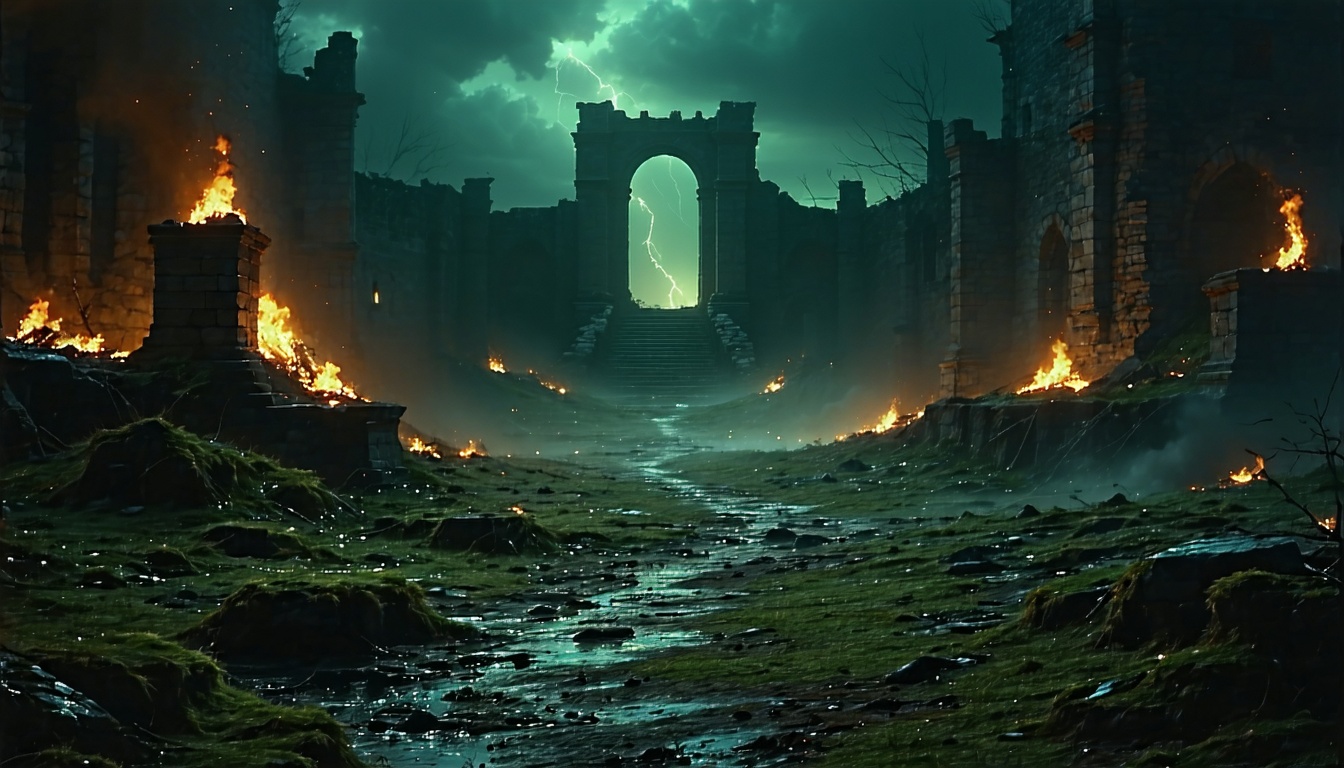
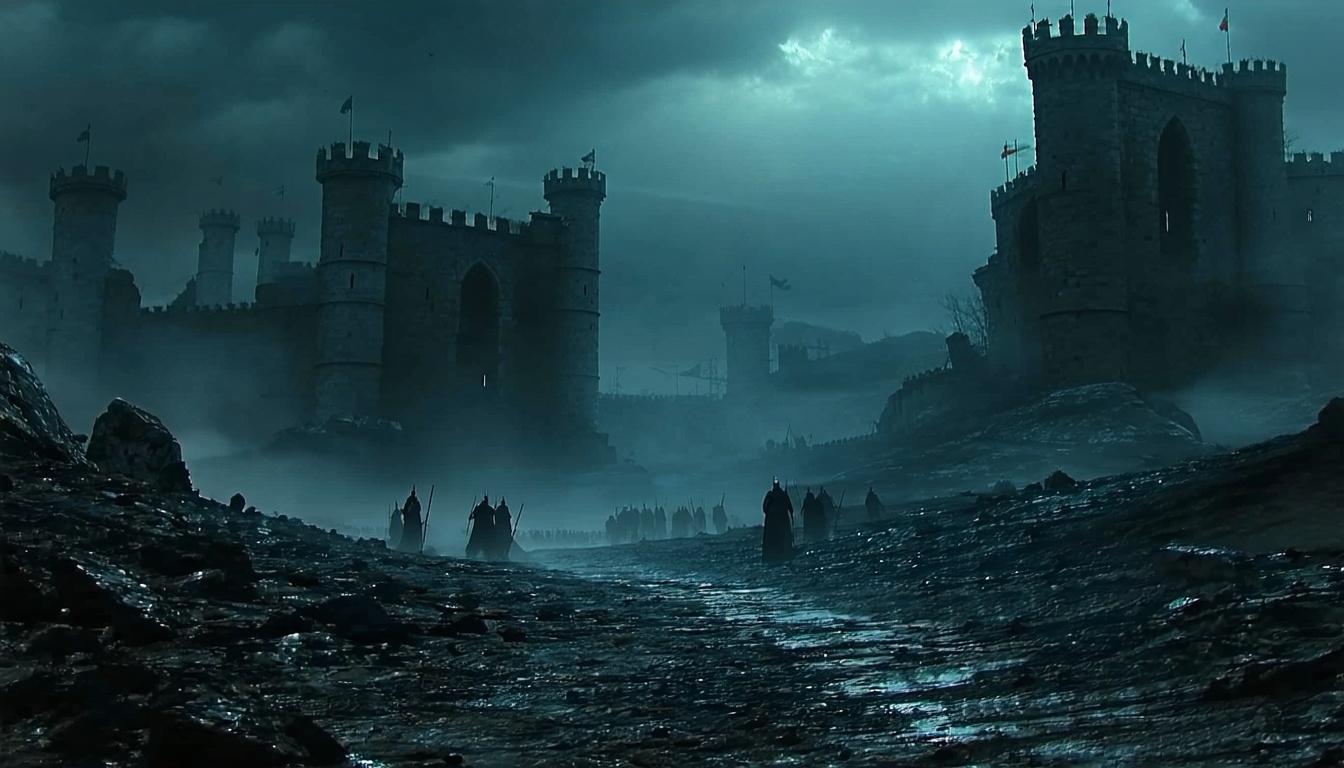
Cael turned back to the map. The cartographer had rendered the known world in patient detail—New Haven anchored in the river valley, the Thornwall range screening the northern passes, trade routes threading south to the coastal harbors where Confederation fishing boats worked the sheltered waters. West, the scattered inland settlements that sent grain and timber downriver. Familiar territory in every direction but one. To the east, the map went blank. Scavenger territory, marked with nothing but blank parchment and the word Unknown in a cartographer's careful hand. Beyond the Ashfall Barrens. Beyond the dead rivers. Beyond everything the Confederation had fought and bled and died to understand.
Something was out there. Something that had frightened a civilization powerful enough to threaten the Confederation's existence. Whatever it was, it was waking up.
He stood alone in the diplomatic chamber after Elara left. The cracked ceramic cup sat on the table. The rough stone walls bore the marks of their construction—Progenitor blocks fitted with hand-cut timber, everything functional, everything scarred, everything holding together through the stubbornness that had become the Confederation's signature.
The Scavengers had survived through optimization. Through calculation. Through preserving what they had and letting the rest burn.
The Confederation had survived through desperation. Through sacrifice. Through refusing to accept that some things were impossible.
Now they'd see which approach worked better when whatever was waking in the east forced both civilizations to choose.
Cael headed for the map room. He needed to brief the Council. Redirect the eastern patrols. Accelerate Petyr's expedition timeline. Draft contingency plans for military confrontation that he intended never to use because by the time the Scavengers realized they needed the Confederation, the alliance would already be built.
Three moves ahead. Always three moves ahead. Because the people who waited for crises to arrive died in them, and Cael had not survived twenty-three years of impossible situations by waiting for anything.
The Scavengers measured civilization in efficiency.
Cael measured it in what people chose to do when efficiency said they should give up.
He intended to show Theron the difference.

Join the Discussion