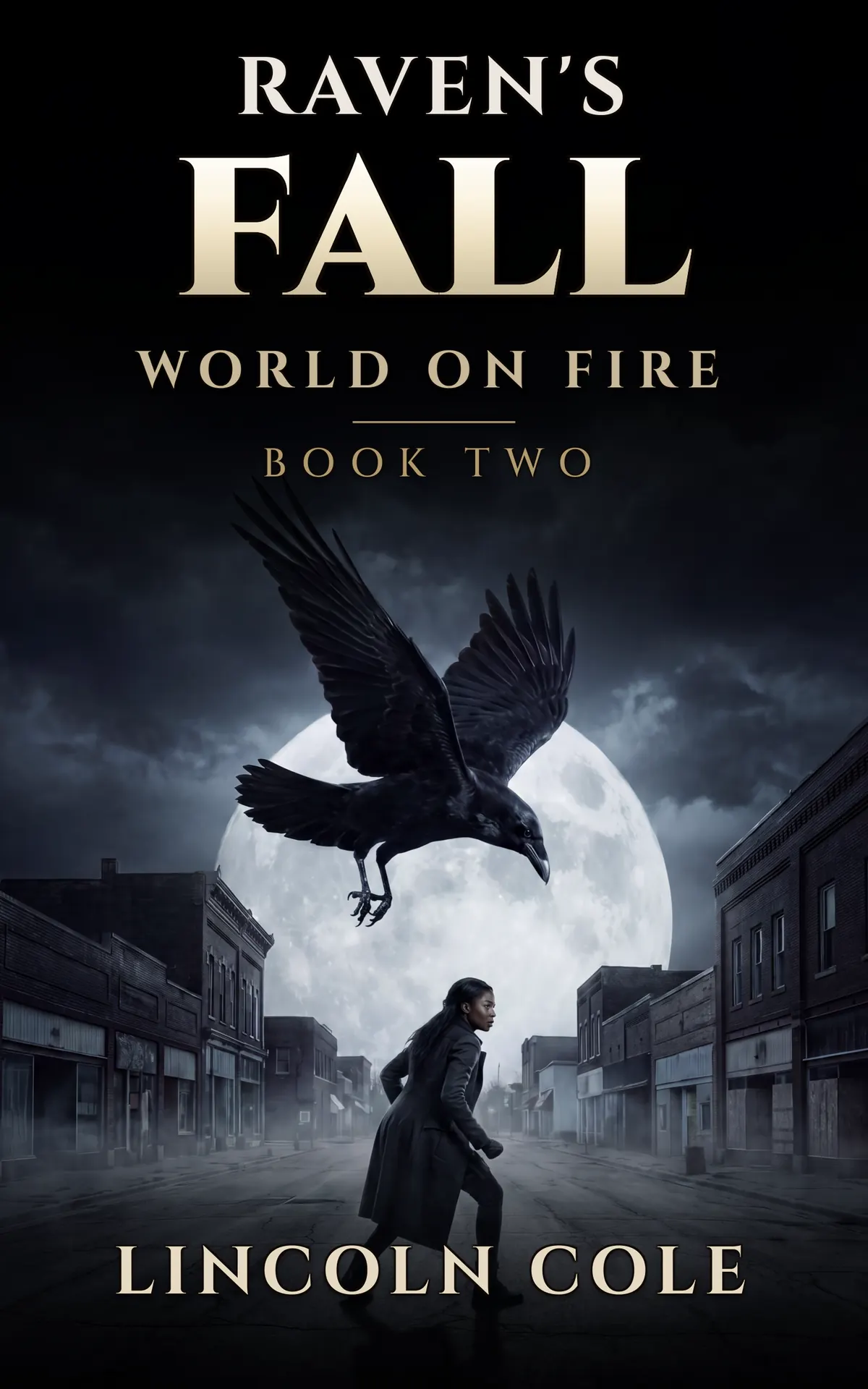
Raven's Fall
Faith is a weapon. Redemption is a sacrifice. Hell is coming.
Included with Kindle Unlimited. Also available in paperback and audiobook where noted.
Framed for supernatural attacks.
Hunted by her own organization. Running out of time.
When Abigail discovers that the Council she devoted her life to may be responsible for Arthur's death, she must make an impossible choice: trust the institution that raised her or follow the evidence into the heart of a deadly conspiracy.
With assassins on her trail and her allies turning against her, Abigail uncovers a web of corruption that reaches the highest levels of the Hunter organization. Every answer leads to more questions. Every friend could be an enemy. And the truth about what really happened that night threatens to destroy everything she thought she knew.
In a world where demons walk among us, the most dangerous monsters might be human. And clearing her name may cost Abigail more than her life—it may cost her soul.
The hunt is on. But who is hunting whom?
This is for you if…
- You read to find out what happens next and don't forgive a book that wastes your time.
- Tight third-person POV keeps you close to the people who matter — and far from the ones who don't.
- You're looking for a world to live in, not a single weekend read. World on Fire runs deep.
Start reading
The Frankfurt Hauptbahnhof tram platform stretched empty in the late-evening gloom, fluorescent lights humming overhead while the last commuters hurried toward their connections. Abigail stood near a ticket machine on Platform 3, her carry-on slung over one shoulder, studying the departure board. Twelve minutes until the airport tram. A clean route off the continent.
Too clean.
Nothing looked wrong. A pair of commuters scrolled through their phones on a bench. A janitor pushed a wheeled trash bin toward the far exit. An older couple shared a quiet conversation near the escalator. But the skin along the back of Abigail's neck had tightened, and she'd learned--through years of field work, through operations that had gone sideways in the space between one breath and the next--to pay attention when that happened. Sometimes the pattern was visible: a face that appeared twice in different contexts, a car lingering too long at a curb. Sometimes there was nothing concrete at all, just the accumulated weight of small details that hadn't resolved into anything specific yet.
She scanned the platform again. The commuters. The janitor. The older couple. All of them exactly what they appeared to be.
That was the problem. When everyone looked right, it usually meant whoever didn't belong was better at this than the average observer.
Abigail picked up her bag and walked away from the platform.
She didn't rush. Didn't glance around. She moved with the purposeful stride of someone who'd remembered a different connection, crossed through the main hall, and found a cafe with a wide window facing the platforms. She ordered a coffee she wouldn't drink and chose a seat in the back corner where the reflected light on the glass wouldn't silhouette her.
Then she watched.
The tram arrived on schedule. Passengers boarded--the commuters, the older couple, a few latecomers jogging with rolling bags. Through the cafe window, the platform lay in clear view, and the cafe directly across from it even clearer.
That was where she found them.
Colton sat at a corner table with a newspaper open in front of him that he hadn't turned in the three minutes she'd been watching. Anong stood at the counter, positioned so the mirror behind the bar gave her a clear line down the length of the platform. They weren't looking at each other. They didn't need to. Abigail recognized the formation--casual surveillance, rehearsed enough to pass as strangers sharing a public space. Standard Hunter protocol. She'd used it herself, years ago, before everything changed.
Her pulse stayed even. She cataloged distances and sight lines with the automatic precision of someone who'd spent years doing exactly this work. Colton's position gave him the platform exit. Anong covered the escalator approach. A clean pincer if their target walked between them.
The tram doors closed. Colton straightened and exchanged a look with Anong--quick, frustrated. They hadn't spotted their quarry among the passengers. Anong paid for her drink and left the cafe first, heading north toward the S-Bahn platforms. Colton followed thirty seconds later, newspaper folded under his arm, and disappeared into the thinning crowd.
Abigail sat in her corner for another twenty minutes. Her coffee cooled untouched. The station quieted around her, settling into the sparse rhythms of late evening--distant announcements, the rattle of a maintenance cart, the hum of escalators carrying no one.
She'd read the surveillance, identified the threat, avoided it without breaking stride. Clean tradecraft. The kind of thing Arthur would have approved of, back when his approval still meant something to her.
But something nagged at the edge of her awareness, small and persistent as a splinter. She'd walked away from the platform before she'd seen Colton or Anong. Before she had any concrete reason to abort a clean extraction route. She'd acted on nothing more than a tightening at the back of her neck, and it had been right.
Read in orderWorld on Fire · 2 of 4 available
View series →
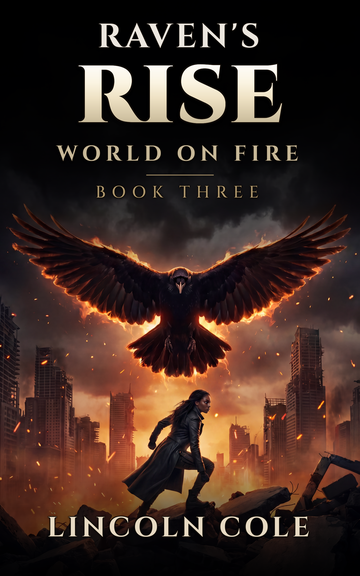
Finished with World on Fire?More worlds by Lincoln Cole
Last Light
9-book seriesA child marked by cosmic horror becomes humanity's only bridge to an entity that does not want to conquer - it wants to merge.Start the series →
The Ashen Kingdoms
5-book seriesIn a world where everything burns, they build from ashes.Start the series →
The Covenant Files
5-book seriesWhen faith fails, only the fallen remain to save us all.Start the series →
World of Shadows
3-book seriesBefore the fire consumed the world, shadows hid the truthStart the series →
Escape
2-book seriesFour nightmares. Seventeen iterations. No escape. The cycle is eternal.Start the series →
Graveyard of Empires
2-book seriesIn the graveyard of empires, the dead never rest—and neither do the secrets buried with them.Start the series →
Horizons Wake
2-book seriesTechnology doesn't just change the future—it damns itStart the series →
Time
2-book seriesStart the series →
Lincoln Cole also builds voice games for Amazon Alexa. Explore the Alexa games →
Continue the story
When legendary Hunter Arthur Vangeest sacrifices himself to save his daughter from demon possession, his team must storm Hell itself to rescue him before Surgat forces invade Earth. But as conspiracies within the Council destroy their organization and thousands of demons escape into our world, the ultimate question becomes: what price are they willing to pay to stop the apocalypse?