Raven's War - Chapter 1: The Hunter
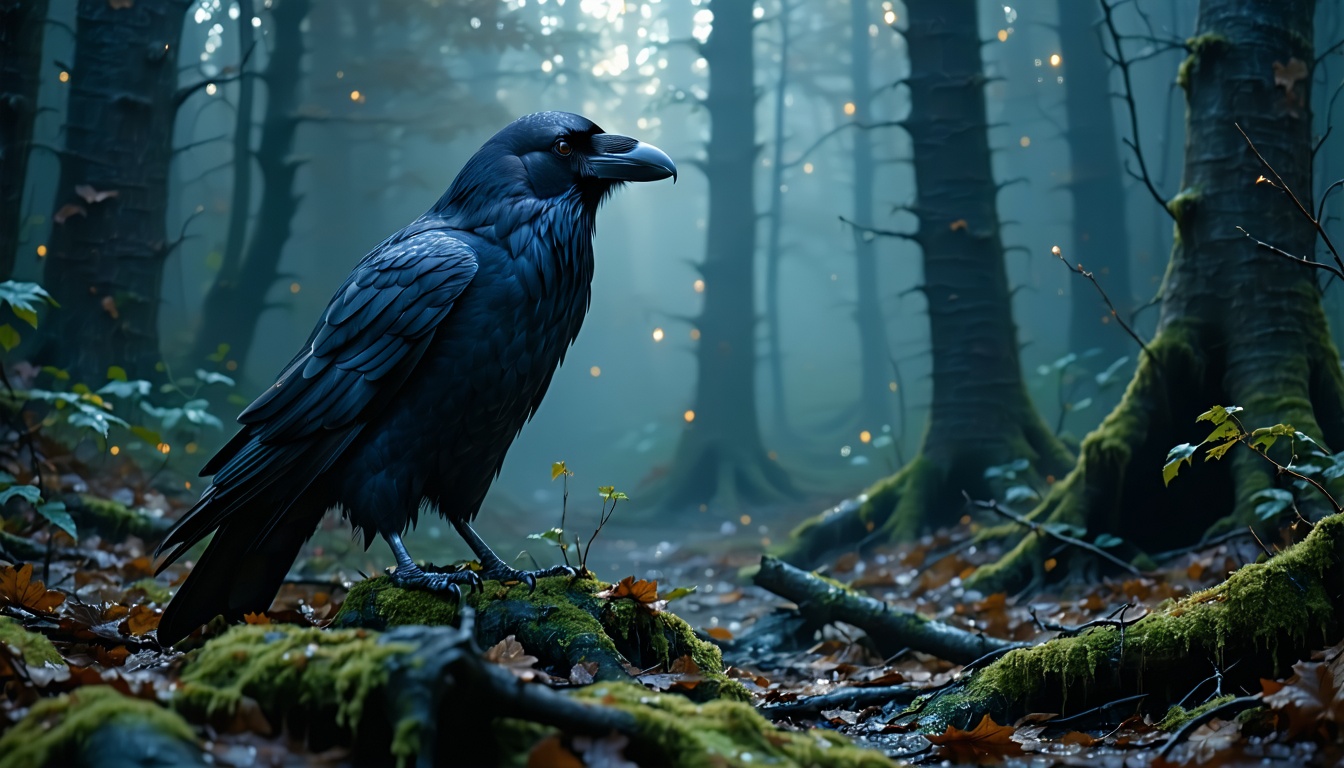
The sulfur hit her before she turned the corner.
Abigail pressed her back against the warehouse wall, breathing through her mouth. The stink was faint — low-tier, probably only a few days settled into its host — but unmistakable. Six months of hunting alone in Chicago had sharpened her senses to a razor. She didn't need the golden light behind her eyes to find them anymore. Her body recognized the scent the way a dog recognized a wolf.
She checked the alley. Empty. Rain slicked the asphalt and turned the streetlights into smeared halos. The warehouse district south of Bridgeport was all corroded steel and broken windows, the kind of urban decay that swallowed people without anyone noticing. Perfect hunting ground. For both of them.
She moved along the wall, silent, one hand trailing the cold brick. Her other hand rested on the consecrated blade sheathed at her hip. The blade was overkill for a low-tier, but discipline mattered. Discipline was the leash she kept around her own throat.
The warmth stirred in the base of her skull. Not the demon ahead — that was just prey. This was the other thing. The thing inside her. It pulsed like a second heartbeat, lazy and patient, and it whispered without words that she didn't need the blade at all. That her hands would be enough. That her hands would be better. And beneath the whisper, deeper than the warmth, something else pulsed — faint and vast and rhythmic, like a tide responding to a distant moon she couldn't see.
She clenched her fists until the nails bit into her palms and kept moving.
The warehouse door hung crooked on one hinge. She slipped through the gap sideways and let her eyes adjust. Darkness didn't bother her anymore — another gift she hadn't asked for. The interior materialized in grainy detail: concrete floor, support columns, a scatter of old machinery rusting under pigeon droppings. And in the far corner, a shape huddled against the wall.
The possessed man was muttering. His voice scraped like gravel in a pipe, two registers layered over each other — the human underneath and the thing wearing him like a cheap suit. He was young, maybe mid-twenties, dressed in work boots and a Carhartt jacket dark with rain. His hands twitched against his knees in patterns that had nothing to do with human nervous systems.
Abigail circled right, staying behind the columns. The demon was oblivious. Low-tiers were sloppy. They crawled through the cracked Ninth Gate half-formed and latched onto the nearest vulnerable mind, then stumbled around in their new bodies like drunks learning to walk. This one had probably been a construction worker, or a dockhand, or someone's son who made the mistake of being alone at the wrong hour.
She was fifteen feet away when he snapped his head up.
The eyes were wrong. Flat, black, reflecting nothing. The muttering stopped. He bared his teeth — the host's teeth, human teeth, but the expression behind them was ancient and hungry. Then the black eyes sharpened — a flicker of recognition that went deeper than instinct. The demon looked at her the way a foot soldier looks at an enemy general: not just fear, but the awareness of a rank it understood from the hierarchy it served.
"Hunter," the demon said. Both voices at once, the word splitting down the middle.
"Evening," Abigail said.
She drew the blade and closed the distance in three steps.
The demon threw the host's body sideways with inhuman speed, crashing through a stack of wooden pallets. Splinters sprayed across the floor. Abigail adjusted, pivoting on her back foot, and the blade carved an arc through the space where his chest had been. Too slow. She was being careful — the host was still alive in there somewhere, and she needed to exorcise, not kill.
The consecrated steel hummed in her grip. She pressed forward.
He came at her with the host's fists, wild, clumsy. She sidestepped the first swing and ducked the second, then drove the pommel of the blade into his solar plexus. He folded. She grabbed a fistful of his jacket and slammed him against a column. Plaster dust rained from the ceiling.
"This is the part where you leave," she said.
The demon snarled through the host's mouth. Spittle hit her cheek. Something hot and eager surged in her chest — an attack dog straining at its chain. For a terrible half-second, she wanted to let it loose. To reach inside the host's chest with something that wasn't her hands and rip the demon out like pulling a weed from wet earth. It would be so easy. It would feel so good.
She drove the blade through the host's shoulder instead.
The consecrated steel sank into possessed flesh and the demon screamed — a sound that had nothing to do with human vocal cords, a frequency that rattled the windows and set her teeth on edge. Black smoke boiled from the wound, thick as oil, reeking of sulfur. The demon's grip on its host weakened as the blade's blessing burned through the connection between parasite and prey.
Abigail twisted the blade.
"Out," she said.
The black smoke erupted from the host's mouth in a column, spiraling toward the ceiling before dispersing into nothing. Ash drifted down like gray snow. The host's eyes rolled back and he went limp against the column, sliding down to the floor. His chest rose and fell. Alive.
Abigail pulled the blade free and cleaned it on her jacket. The warmth receded — patient, banking, always there. She hadn't let it out. She'd used the blade. Discipline.
At least the tell was consistent. Predictable.
She crouched beside the man and pressed two fingers to his throat. Pulse fast but steady. He'd wake up in a few hours with a stabbing pain in his shoulder, no memory of the past several days, and a horror he'd never be able to name. She pulled a fold of cash from her pocket — two hundred dollars, most of what she had — and tucked it into his jacket. It wouldn't fix anything. She did it anyway.
She left through the same gap in the door. Rain hit her face and she tilted her head back, letting it wash the sulfur and sweat and ash from her skin. Three this week. All low-tier. All operating through subtle possession — behavioral changes, violent impulses, the slow rot of someone's personality until the demon was all that remained.
The city was sick.
Chicago had always been violent, but this was different. The police blotter read like a horror novel: a schoolteacher who beat his neighbor to death with a tire iron, a grandmother who tried to drown her grandchildren in the bathtub, a fourteen-year-old who walked into a convenience store and started swinging a machete. The news called it a mental health crisis. The epidemiologists called it an epidemic of rage. Twitter called it the collapse.
Abigail called it what it was. Thousands of demons, released when the Ninth Gate cracked wider, crawling into the world like cockroaches through a broken wall. They didn't announce themselves. They didn't possess people in dramatic Hollywood fashion — no spinning heads, no pea soup. They just slid in, quiet as a virus, and started turning people rotten from the inside.
Some nights she wondered if the cockroaches had a purpose. Not just mindless parasites but something directed — a flood with a current beneath it, all those low-tiers crawling toward the same invisible signal like ants following a chemical trail laid down by something older and vastly more patient than any of them.
And she hunted them. One at a time. Alone.
***
The safehouse was a studio apartment on the fourth floor of a building that should have been condemned three years ago. No furniture except a mattress on the floor, a folding table, and a metal chair. No pictures on the walls. No food in the refrigerator except protein bars and bottled water. The only personal item was a worn leather jacket hanging on the back of the door — Arthur's, from years ago, too big for her but she'd never been able to leave it behind.
She locked the three deadbolts and pulled the blackout curtain across the single window. The radiator clanked and hissed in the corner, putting out barely enough heat to take the edge off the November cold. She peeled off her wet jacket and hung it next to Arthur's, then sat on the edge of the mattress and stared at the wall.
The rain drummed against the glass. Somewhere below, a car alarm wailed and died. A siren rose in the distance, dopplered past, faded. This city never stopped bleeding.
She pulled the blade from its sheath and set it across her knees. Methodical now, automatic — the cleaning ritual she'd perfected over six months of doing this alone. Oil on the consecrated steel. A soft cloth along the edge. The blade was a good one, blessed by a priest in Buenos Aires who hadn't asked questions. It did its job. She took care of it. This was the closest thing to a relationship she had.
Dark humor as defense. She'd gotten good at it.
The amber-gold luminescence she couldn't extinguish cast faint reflections off the blade's surface. She turned her head and caught her reflection in the dead television screen across the room. Those too-bright eyes stared back at her. Permanent now. For the first three months after she'd left the team, the gold had faded between kills — dimming to amber, then brown, then something approaching the dark eyes she'd been born with. She'd measure it in the bathroom mirror each morning like checking a fever. A ritual of denial.
The eyes hadn't faded in seven weeks.
She set the blade aside and clenched her fists in her lap. The warmth was always there now. Not just behind her eyes — in her hands, her chest, her spine. Like standing too close to a bonfire. The power that Surgat had left in her when she'd absorbed the demon at Raven Peak, the corruption that flowed through the cracked Ninth Gate from something ancient and deliberate — not mindless, she'd come to suspect, not a force of nature. Something with a will. Something that chose where the corruption flowed the way a general chose where to deploy his armies.
The irony wasn't lost on her. She was getting stronger by doing the only thing that mattered. And every kill brought her closer to something she didn't want to think about.
The whisper came again, not words but impulse: You could cover this whole city. You could burn every demon out of every host in a single night. You could save them all. All you have to do is let go. The impulse carried a resonance she'd never been able to explain — as though it originated somewhere beyond her, transmitted through the corruption the way a voice travels through wire.
She dug her nails into her palms until they drew blood.
"No," she said to the empty room.
The room didn't answer. That was the worst part — the loneliness. Not the hunting, not the killing, not even the corruption eating her from the inside. It was the silence. Six months of silence. Six months of talking to no one except the demons she destroyed and the bartender at the diner on Halsted who called her "honey" and never asked why her eyes looked strange in certain light.
She pulled her phone from her jacket pocket and stared at the screen. Three contacts. A burner number for emergencies that rang through to Frieda's network. A disconnected line that used to be Arthur's. And Haatim's number.
She hadn't called him. Not once. Not because she didn't want to — God, she wanted to. She wanted to hear his voice, that precise, slightly formal way he spoke, the dry humor that crept in when things got bad. She wanted to hear him push his glasses up while he talked, the tiny squeak of the frames that she'd memorized without meaning to. She wanted to tell him she was sorry for leaving. She wanted to tell him the golden eyes were permanent now and she was scared.
She put the phone away.
She'd left to protect them. All of them, but him most of all. The corruption didn't just affect her — it radiated. She'd lived it in those last days before she'd gone: people flinching near her, dogs barking, Haatim sometimes looking at her with an expression that was equal parts love and unconscious fear. She was becoming something. She didn't know what. But she understood it was dangerous, and she understood Haatim would walk into that danger without hesitating because that's who he was, and she understood that walking into her danger might kill him.
So she'd left.
And now she hunted alone in a dying city and pretended that discipline was enough.
***
Sleep came in fragments. She dreamed of golden light filling a room until everything burned white. She dreamed of Haatim's glasses reflecting her eyes, and in the reflection the gold was so bright it was blinding, and he reached for her face and she pulled away because she couldn't bear it if her corruption touched him.
She woke at three in the morning, drenched in sweat, the corona she hadn't asked for casting shadows on the ceiling.
She sat up and pressed her palms against her face. The warmth pulsed behind her eyes — always there, always patient, always offering. In the dark, alone, it was hardest to resist. Not because the power was seductive, though it was. Because the loneliness made the power seem like company.
Her fingers found the phone on the mattress beside her. She pressed it against her ribs, screen dark, and held it there — Haatim's number three taps away, eight hundred miles past that. She put it down.
Her grandmother — some half-remembered family wisdom from when she'd had a family to remember things from — had called this the widow's hour. The time when the mind stopped pretending. Abigail's mind, when it stopped pretending at three AM, did something she'd observed but never managed to explain: it made lists. Not useful ones. Not *exorcisms completed* or *supplies needed*. Strange, specific ones. The names of every street in Bridgeport she'd hunted. The precise face of every host she'd pulled out from under a possession, even the ones she'd never know by name. The exact shade the corruption had been four months ago versus now — then: amber, warm, almost autumnal; now: cold-spectrum, the light at the edge of a welding arc. She'd built a mental color wheel of her own decay and updated it weekly.
When she was being honest with herself — and at three AM honesty arrived whether she invited it or not — she knew the lists were a way of insisting that she still had a mind worth cataloguing. That she was still capable of precision and particularity and the small, specific observations that separated consciousness from animal functioning. *I notice, therefore I am.* Descartes, probably, though she'd mangled it. Haatim would've corrected her. He would have corrected her very carefully and at some length and then made a joke about it to cover the fact that he found the whole thing terrifying.
She was not going to think about Haatim.
She thought about Haatim.
She made a list: *reasons not to call.* She got to seven before she ran out of reasons she actually believed.
She got up. Dressed. Checked the blade. Checked the three deadbolts. Checked the window.
Then she opened her phone and pulled up the tracking app she'd built from Frieda's intelligence feeds. Red dots on a map of Chicago — locations where demonic activity had been flagged by hospital reports, police blotters, and Frieda's network of informants who didn't know exactly what they were informing about. The dots were multiplying. Three months ago, there had been six active clusters in the city. Now there were nineteen.
She was one person. One woman with gold-lit eyes and a consecrated blade and a corruption she couldn't control, standing between a cracked gate and seven million people who had no idea what was crawling through the dark.
She scrolled south on the map. More dots. St. Louis, Memphis, Atlanta. She scrolled east. Pittsburgh, Philadelphia, Baltimore, New York. The whole eastern seaboard was lighting up. The demon release from the Ninth Gate was no longer a crisis. It was a condition. The new normal.
Below the map, Frieda's latest message sat unread from two days ago. She opened it. A photograph of a page from a book — old, handwritten, the text in Latin with Frieda's translation scrawled in the margin: *The lesser servants pour through every crack, but they do not choose their path. They are drawn by the will of the one who opened the way.* Frieda had added a single line beneath: *I keep finding references to something above Belphegor. Something the old Council texts called the Mal'akheth. More soon.*
Abigail stared at the message. The name should have meant nothing to her — another fragment from Frieda's endless research, another Latin footnote in a war that ran on footnotes. But when her eyes passed over the word *Mal'akheth*, the warmth behind her eyes pulsed. Not the lazy patient hum of the corruption at rest. Something deeper — the faint, vast rhythm she'd felt in the alley, the tide responding to its distant moon. For a single breath, the name resonated in a place she couldn't locate, as though some part of her recognized the sound before her mind could parse its meaning. And when the recognition faded, what it left behind was stranger than fear: a sense of something closing, the last note of a chord resolving toward a destination she hadn't agreed to travel toward.
She closed the message. Useful intelligence. She'd process it later. But the rhythm behind her eyes took longer to settle than it should have, and when it finally did, the silence in the room felt different. Heavier. As though something immeasurably far away had heard its own name spoken and shifted its attention toward the sound.
And somewhere out there — she checked herself. She didn't let herself track Haatim. She'd deleted that data months ago. If she tracked where he was, she'd go to him. And going to him meant bringing the corruption to his doorstep.
She closed the app and holstered the blade.
There was a nest in Pilsen that had been growing for two weeks. At least four low-tiers, maybe a mid-tier coordinating them — the signs of organization suggested something smarter was pulling strings. Not Belphegor himself, not for a neighborhood nest in Chicago, but something in his network. A lieutenant's lieutenant. The demons were territorial by nature, solitary, but these ones moved in formation, converging on a single block with a discipline that spoke of orders received and obeyed.
She paused at the door. In the reflection of the deadbolt's metal plate, her gold-bright eyes stared back. She didn't look away.
"One more night," she said. The same thing she said every night. A promise to herself that she'd stop before the corruption won. That she'd walk away if the warmth became too much, if the power started answering before she called it.
The lie tasted familiar.
She stepped into the rain and the city swallowed her.
Somewhere in Philadelphia, a man with wire-rimmed glasses sat in a converted warehouse surrounded by people who wanted to learn how to fight the darkness. He was building something from the wreckage of the old Council, something new and desperate and necessary.
She didn't know that. She didn't let herself think about it.
But when she closed her eyes between kills, when the rain washed the ash from her hands and the golden light hummed behind her skull, his face was there. Every time. Without fail.
She hunted alone because she loved him too much to let him see what she was becoming.
The warmth pulsed. She clenched her fists and walked into the dark.




Join the Discussion