The Bishop's Legacy - Chapter 3: Returning Home
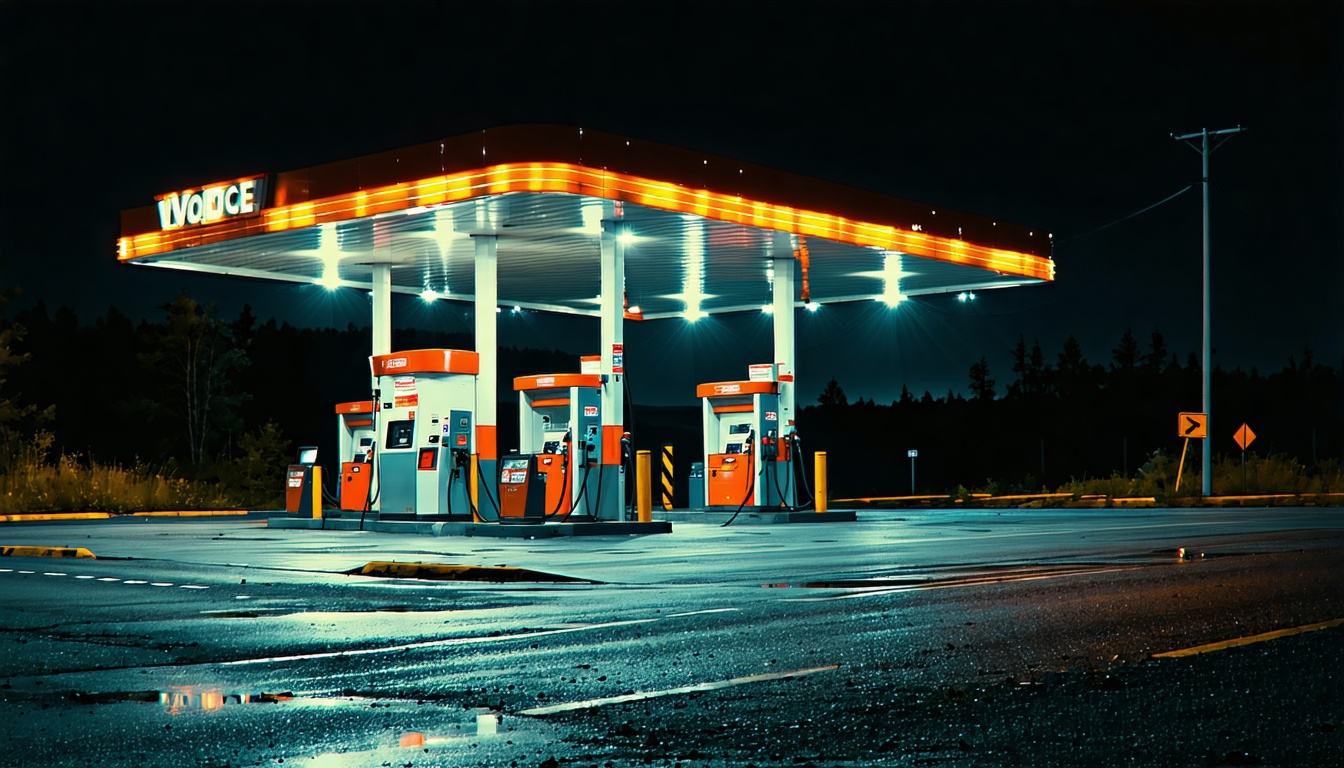
Arthur chose Athens, Ohio because the territory was familiar. A college town wedged into the Appalachian foothills southeast of Columbus along US-33, home to Ohio University and the kind of brick-street downtown where students and locals shared space without quite mixing. Close enough to the bigger cities where Jeremy might surface, remote enough that two strangers wouldn't draw attention. It could serve as a base of operations while they figured out what Jeremy was planning.
The drive south from Akron had taken them through the heart of Ohio, the flat suburban sprawl giving way to rolling hills as they crossed into Appalachian country. They passed through towns where Dollar General was the anchor store and church marquees outnumbered stoplights. The air changed too—heavier, damper, carrying the mineral smell of creek water and leaf rot through the car's vents. Rest stops grew scarce, replaced by gas stations with hand-painted signs, VFW halls advertising Friday fish fries, and gravel lots where pickups outnumbered sedans. Arthur's ribs had settled into a constant low throb that he stopped noticing somewhere around Zanesville, the way a person stops hearing a clock that has been ticking long enough.
If he was being honest, however, he also picked Athens because it was close to his home.
He had spent a sizable chunk of his youth in the rural hill country of southeastern Ohio. Being back here was simultaneously relaxing and painful: this was also the city where he'd lost his family.
He paused at an intersection in downtown Athens. Turning right would take them to the hotel, but even as the light shifted to green he let the car idle.
A minute passed. The light changed back to red.
"What's going on?" Desiree asked, leaning up from the backseat. "Do you need the map?"
"No," he said, his grip tightening on the wheel until the leather creaked. Behind them, a car started honking as the light changed back to green once more. His turn signal kept blinking at him and sweat beaded on his forehead.
"You said we were almost to the hotel, right?"
"Yeah," he said. "We are. That's not where we are going, though."
He flipped the turn signal to turn left instead. He had made up his mind about a visit he needed to make now that he was back in his old stomping grounds, and it was better to get it taken care of early than to drag it out.
"Where are we going, then?"
Arthur didn't immediately answer. This was a trip he had put off for the last several months, one he needed to make.
"Home."
***
"Where are we?" Niccolo asked as Arthur turned off US-50 and onto a gravel drive about fifteen miles west of Athens. The car jostled and kicked up a cloud of dust behind them as they went. He looked around, groggy, and turned to Arthur. "Are we almost to the hotel?"
Arthur didn't immediately reply: his palms were sweaty and the air pressed hot around him. He tugged at his collar, his lungs tight. His knuckles turned white as they gripped the steering wheel and he forced them to relax. Desiree's hand landed on his shoulder—she must have sensed his discomfort.
The gravel crunched under the tires the way it had a thousand times before. A million, even. It was a comforting sound, but also jarring in the memories it elicited. How many times had he come this way with his daughter in the backseat, her laughter filling the car?
He brushed the sweat off his forehead and breathed through his teeth until his hands stopped shaking.
"This is your home, isn't it?" Niccolo said, eyeing the house looming up ahead.
Arthur didn't answer. The town house came into view in the distance, next to the old red barn and paddock. He'd painted that house about a year ago, giving it a fresh coat that shined in the waning sunlight.
Both the barn and the fields were empty now and forgotten, the horses long since sold off.
Mitchell oversaw the farm while Arthur struggled to find his way back. While Arthur had been too broken to deal with the world around him and wanted nothing more than to crawl into a hole and die, Mitchell took care of the property for him. He never said so aloud, but he was thankful for his brother and would have lost the house—or worse—if not for him.
"This was my home," he corrected when Desiree asked as he parked in front of the porch. "Not anymore, though. Now it is a property I own. We can stay here for the next couple of days and save the hotel cost."
"Are you sure?" Niccolo asked. "I can pay for the hotel if need be and—"
"I'm sure," Arthur said. Not an ideal time for such a trip, but the longer he put it off, the more difficult it would become.
The time was now.
Still, he made no immediate move to exit the car, kept taking deep breaths and willing the emotions to subside. Memories of his family crowded in uninvited—Sarah's laugh, Emma's voice calling from the porch, the particular way the screen door slammed when small hands pushed it open.
No one spoke for another few minutes while Arthur continued staring at the front door of his country home. The blood on the kitchen floor. Sarah's hand reaching for their daughter. Emma's small body crumpled by the table leg where she'd tried to hide. The smell of copper and gunpowder that seeped into the floorboards no matter how many times Mitchell had them cleaned.
His chest constricted. His throat closed. Tears burned at the corners of his eyes and he gripped the steering wheel until his knuckles went white again.
"Could you maybe give us a tour?"
The question came from Desiree, and it jolted him back out of his memories. A long while must have passed in his reverie. He shook his head to clear the thoughts away, but they clung like cobwebs.
"Sure. A tour sounds like a great idea. Let's start with the barn," he said.
He brushed angrily at his wet cheeks and opened the car door. They all stepped out into the sunshine. The air was cool on his skin and it was nice being able to stretch his legs.
The yard had gone wild in the months since Mitchell's last visit. Crabgrass pushed through the gravel at the edges of the drive, and the flower bed Sarah had planted along the porch rail was a tangle of dead stems and volunteer weeds. She had kept marigolds there—bright orange ones that Emma called "sunshine flowers." Every spring the two of them would kneel in the dirt together, Sarah in her gardening gloves and Emma with her plastic trowel, planting bulbs and arguing over spacing. Now the bed was just dirt and brown stalks that bent in the breeze like crooked fingers.
Beyond the yard, the pasture fence sagged where two posts had rotted through. The grass inside stood knee-high, gone to seed. A rusted water trough sat near the gate, half-filled with black rainwater and dead leaves. The whole property had the look of a place that was waiting for someone to either come back or let it go.
The other two followed him as he walked across the gravel driveway to the old red barn. The barn door scraped open under his hands, the rusty railing grinding against the track. The smell of hay and wood hit him like a sucker punch to his heart. Emma had loved this smell. She used to bury her face in the hay bales and sneeze and laugh and sneeze again.
He stepped inside, moving out of the sunlight and into the shadowy interior of the barn.
Sunlight flitted in from overhead through cracks in the ceiling and walls, dust hanging in the air around them in little streams of light.
The hay loft overhead was starting to sag and one of the beams had almost completely rotted away. Termites would tear the place down eventually, but he wasn't sure if he even cared.
"This was where we raised horses," he said, his voice flat. He gestured at the barn around him. "When I was little, every stall was full."
He paused at the last stall, the one closest to the back wall. A rusted horseshoe still hung from a nail above the gate. Emma had found it in the field and insisted on keeping it—said it was good luck. He'd nailed it up for her, and she'd spent a full afternoon decorating the stall with crayon drawings of horses taped to the wooden slats. The drawings were gone now, but the nail holes remained, small dark punctures in the wood that marked where her artwork had been.
He ran his thumb across one of the holes. The wood was rough and splintered under his touch.
In the tack room at the back of the barn, a bridle still hung from its hook. The leather had dried out and cracked, the bit gone green with corrosion. Sarah's riding boots sat on the shelf below, covered in a fine layer of dust and cobwebs. She'd been the real rider in the family—grew up on a farm two counties over, could gentle a spooked horse with nothing but her voice and a steady hand on its neck. Arthur had married into the horse life. He'd come to love it, but it had always been her world first.
A child's riding helmet sat next to the boots. Pink, with a scratch across the left side from the time Emma fell off Biscuit and rolled into the fence post. She'd cried for ten seconds, then demanded to get back on. Sarah had checked her over, kissed the scrape on her elbow, and lifted her back into the saddle without a word. That was how they did things. You fell, you got back up. You got hurt, you kept going.
Arthur picked up the helmet. It weighed almost nothing. He turned it in his hands, feeling the smooth plastic under his fingers, the frayed chin strap that Emma had chewed on during long trail rides. He set it back on the shelf, exactly where it had been, and walked out of the tack room without looking back.
He turned away and headed back outside of the barn. He bypassed the empty paddock; the only place left: the house. Going in there wouldn't be as easy of a reunion, but he started walking that way the same. One foot in front of the other. Desiree and Niccolo trailed behind.
The interior of the house would be clean. No traces of the violence that happened there. Mitchell had long since fixed it up, hiring a professional cleaning crew that worked for the police to make sure nothing remained.
That almost made it worse, though. It was as though his wife and daughter had been scrubbed out of existence.
He climbed the front steps. The wood creaked under his weight—the same creak it had made the night he'd come home to find the door ajar and the lights off and the silence that screamed louder than any sound could.
His hand shook as he fished the key from his pocket and slid it into the lock. The deadbolt turned with a heavy click that echoed through his chest like a gunshot.
He pushed the door open.
The hallway was clean, as he expected. Mitchell had replaced the old carpet with hardwood and painted the walls a neutral cream that Sarah never would have chosen. She liked color—warm yellows and soft greens that made a house feel like someone lived there.
The air inside was stale and cool, undisturbed for months. Dust motes drifted in the light that fell through the front windows. Everything was tidy and impersonal, like a model home waiting for buyers. No photographs on the walls. No coats on the hooks by the door. No small shoes kicked off by the entryway.
Mitchell had removed everything. Every trace of the life that had been lived here, packed away into boxes that probably sat in his garage. Arthur understood why—his brother had been trying to make the place bearable. But standing in the stripped-down hallway was like visiting a grave that had been dug up and refilled with clean dirt.
He took a step inside. Then another. His legs moved on their own, carrying him down the hall toward the kitchen.
He passed Emma's bedroom on the left. The door was closed. He stopped in front of it, his hand hovering over the knob. Through the gap at the bottom, he could see that the light inside was dim—the curtains drawn, probably. Mitchell would have closed them. Mitchell thought of things like that.
His fingers brushed the knob. The metal was cold. He could picture the room behind the door: the twin bed with its purple comforter that Emma had picked out herself, the bookshelf crammed with picture books and stuffed animals, the glow-in-the-dark stars stuck to the ceiling that he'd spent an evening arranging into real constellations because Emma wanted to learn them. Orion. The Big Dipper. Cassiopeia. She'd lie in bed and he'd point them out, and she'd repeat the names in her serious little voice, committing them to memory the way children do—totally, without reservation, as though the knowledge would be important forever.
He let go of the knob. He couldn't. Not today. The kitchen was enough. The kitchen was already more than enough.
He kept walking.
The kitchen where he'd found them.
The floor was different here too. New tile, white and gleaming, replacing the old terracotta that Sarah had picked out from a catalog. He remembered her holding up the samples, asking him which one he liked. He'd said he didn't care, that they were all fine, and she'd thrown a sample at his head and told him to pick one or she'd choose the ugliest option to spite him.
He'd picked the terracotta. She'd smiled and said she was going to choose that one anyway.
Now it was gone. The blood had soaked too deep into the grout, Mitchell told him once over the phone. The cleaning crew got most of it, but shadows lingered in the seams that wouldn't come out no matter what they used. So Mitchell ripped it all up and put in the new tile himself.
Arthur stood in the center of the kitchen. His breath came in shallow pulls. The room smelled of nothing—no copper, no gunpowder, no Sarah's lavender soap or Emma's strawberry shampoo. Dust and emptiness and the faint chemical tang of new grout.
He looked at the table. A different table, too. But the same corner where Emma had tried to hide. He could see her there, curled up with her arms over her head, the way he'd taught her to do during tornado drills at school. She had been so brave. She had done exactly what her father told her to do, and it hadn't saved her, because her father hadn't been there to save her.
His knees buckled. He caught himself on the counter, both hands braced against the cold granite, and a sound tore out of him that he didn't recognize. Not a sob exactly—a raw, guttural keen ripped from the place in his chest where he'd kept everything locked away for three years.
He let it come. For the first time since the funeral, he didn't fight it. He stood in the kitchen where his wife and daughter died, and he let the grief crash over him without bracing against it. His shoulders shook. Tears fell onto the white tile. He pressed his forehead against the cool granite and breathed through his mouth in ragged, shuddering gulps.
Minutes, maybe. When the worst of it passed, he was left hollowed out, as though a boulder had been dislodged from inside him and carried away. Not healed. Not better. But lighter. As though the grief had been a stone he'd been carrying in his chest, and setting it down—even for a moment—had reminded him that it was possible to stand without it.
He straightened up and wiped his face with the heels of his hands. His eyes were raw and his throat ached.
"I'm sorry," he whispered to the empty room. To Sarah. To Emma. To the life that should have been.
Then he turned and walked back down the hallway.
Desiree wasn't on the porch.
She was standing in the open doorway, one hand raised and resting against the doorframe, the other pressed flat against her stomach as though holding herself together. Her body was angled forward—weight on the balls of her feet, shoulders tilted toward the hallway—but her legs hadn't moved past the threshold. She looked like someone who'd been reaching for a drowning person and stopped mid-extension, frozen between the impulse to help and the inability to follow through.
Her eyes were wet.
The moment Arthur appeared at the end of the hallway, she dropped her hand from the doorframe and stepped back onto the porch in a single, fluid motion—practiced, automatic, as though she'd done it a thousand times before. By the time he reached the door, she was leaning against the railing next to Niccolo, arms crossed, face composed. But her knuckles were white where they gripped her elbows, and her breathing was too controlled, too measured—the breathing of someone who had just pulled herself back from an edge.
Arthur didn't mention it. Neither did she.
He was grateful they hadn't followed him in. But some part of him—the trained awareness that had kept him alive in a dozen bad situations—filed away the image of Desiree frozen in that doorway. Hand raised, feet planted, unable to cross the threshold. It was the posture of someone who wanted to help and couldn't. Not wouldn't—couldn't. As though an invisible wall stood between the porch and the hallway, and she'd spent her whole life learning not to try to break through it.
His phone started buzzing. Arthur pulled it from his pocket, glad for the distraction. He glanced at the name on the little screen. Frieda. He flipped the phone open and held it to his ear.
"Yeah, Frieda?"
"Saint Thomas Church," she said without any preamble. "Get there."
"On our way," he said. "What are we expecting—?"
A click on the other end as Frieda hung up.
"Never mind," he said, putting the phone back in his pocket. The church was north of here, outside of Akron off Route 18, a couple of hours away. He turned and headed back toward the car.
"Come on," he said. "Time to go."
"Is it a lead?"
"Should be."
"Do you mind if I stay here?" Desiree asked. "My stomach has been queasy from the last couple of days driving and I would love a chance to lie down for a bit."
"Sure. The door is unlocked. The bedrooms should all be unlocked, though things might be a little dusty. I don't think my brother has been here in months."
"I'll probably lie down on the couch."
"Make yourself at home," he said. "We should be back soon."
***
"It must have been difficult. Being back there," Niccolo said as they drove.
Arthur's hands tightened on the wheel. "It wasn't what I expected."
"What do you mean?"
"Going inside. Seeing the kitchen." He paused, searching for the right words. "Mitchell replaced everything. The floors, the table, the paint. It looks like a completely different house. But I could still see them. I could see exactly where they were when I found them, like their shadows got burned into the walls."
Niccolo was quiet for a moment. "You never fully close a wound like that. Still, it's important that you faced it."
"I almost didn't. Part of me wanted to turn around the second I opened that door." His voice cracked on the words. "But I made myself walk to the kitchen. I stood where it happened, and I... I don't know. I fell apart for a minute. Maybe longer."
"That's not falling apart. That's letting yourself grieve."
"Is there a difference?"
"A great deal, actually. Falling apart is what happens when you refuse to grieve and it catches you unprepared. What you did in there, walking into that kitchen on your own two feet, that was a choice. A brave one."
Arthur didn't respond. He couldn't. Not right away.
They drove in silence through the rolling hills, the road dipping and climbing through stretches of forest where the trees closed overhead like a tunnel. Late afternoon light came through the canopy in shifting patterns across the windshield. Somewhere behind them, the farm was growing smaller, folding back into the landscape. But it didn't feel like leaving it behind this time. He was carrying it differently—not as a weight pressing down on his shoulders, but as a presence held close against his chest, painful and precious in equal measure.
"I buried people," Niccolo said after a while. His voice was matter-of-fact, the way priests spoke about the worst parts of their vocation. "More than I can count. Children, sometimes. Parents who outlived their sons and daughters." He adjusted his collar, the habitual gesture he fell into when choosing his words with care. "The ones who came back to the grave—not for the funeral, but weeks or months later, alone—those were the ones who healed. The ones who never returned carried it differently. Harder. Like a bone that set wrong because no one reset it."
Arthur glanced at him. "Is that what you think I just did? Reset the bone?"
"I think you let someone look at the break for the first time. That's the first step."
The silence stretched between them while the road unwound ahead. Arthur kept his eyes forward, but his mind was back in that kitchen. The white tile. The empty counters. The place where his daughter had tried to hide.
He had walked in there expecting to drown. Instead, the grief had broken over him like a wave and then receded, leaving him standing on solid ground for the first time in three years. Not healed—he wasn't fool enough to believe that. But the wall he'd built around his grief had cracked. The weight he'd carried in his chest since the funeral had split open, and underneath it he'd found a capacity he'd believed was gone forever.
The capacity to choose.
He'd spent three years reacting. Running from the pain, running toward danger, doing anything to avoid the silence of an empty house. But in that kitchen, he'd stopped running. He had stood in the exact spot where his world ended and let himself experience every wretched second of it, and the grief hadn't killed him. It had hollowed him out and left space where before there had been only stone.
Space enough, maybe, for someone new.
He pulled out his phone and dialed Frieda before he could overthink it.
She answered on the second ring. "Arthur? What's wrong?"
"Nothing new. We're heading to the church now." He paused. The words were strange in his mouth, fragile and too large at the same time. "Is Abigail with you?"
A beat of silence. Then, carefully: "She's right here. Hold on."
A rustle, and then a different voice. Quieter. Guarded.
"Hello?"
"Hey, Abigail. It's Arthur." He kept his eyes on the road. Niccolo glanced at him from the passenger seat but had the grace not to say anything. "I wanted to check in. Make sure you're doing okay."
"I'm fine." The word came out flat, automatic—the rehearsed answer of a child who had learned not to burden adults with the truth. Then, softer: "Frieda said you're going after the boy who hurt people."
"That's right."
"Are you going to be okay?"
The question landed harder than he expected. When was the last time someone had asked him that—not whether he could handle the mission, not whether the situation was contained, but whether *he* was going to be okay?
"Yeah," he said. "I'm going to be okay. Are you?"
Another silence. He could hear her breathing—slow and measured, as though she was deciding how much of herself to risk on this conversation.
"Frieda's nice to me," she said finally. Not an answer to the question, but it told him everything he needed to know about the question she was actually asking: *Is this real? Are you people going to keep me?*
"Good. She's good people." He gripped the wheel tighter. "Abigail, when this is over—when I can sit down with you face to face—we're going to figure things out. Together. I want you to know that."
"Okay," she whispered.
He heard Frieda say something in the background, and then Abigail said, "I have to go."
"Be safe."
"You too."
The line went dead. Arthur set the phone down and stared at the road ahead.
Niccolo waited a full mile before speaking. "That sounded important."
"It was."
The priest nodded and said nothing else. He didn't need to.
Arthur gripped the steering wheel and let the feeling settle. Not a grand declaration, nothing so dramatic. A quiet certainty deep in his chest, like a compass needle finding north. He would be Abigail's father. Not because he owed it to anyone, not to fill the void that Emily left, but because he chose it. He chose her. And when this was over, he would find a way to deserve that choice.
First, though, Jeremy Caldwell. Whatever the Bishop had set in motion, Arthur was going to stop it—not because the Cardinal ordered it, but because thirty children deserved someone who chose to fight for them. He was done reacting. Time to take the fight forward.
---


Join the Discussion