The Ninth Circle - Chapter 1: The Sharpening
The wet stone scraped against steel, and Arthur Vangeest tasted copper.
Not blood—not yet—but the phantom memory of it, rising unbidden from somewhere deep in his throat. His hands moved in practiced strokes down the blade's edge, the rhythmic scrape filling the afternoon silence. Scrape. Turn. Scrape. The sound was almost meditative, almost calming, if he could just keep his mind from wandering to darker places.
He couldn't.
The sword was a masterwork, forged in the old way by smiths who understood that demon-killing required more than sharp edges. Frieda had given it to him twelve years ago, after his first solo hunt—a lesser demon possessing a homeless man in Cincinnati. He'd been twenty-seven years old, cocky and certain of his own immortality, and Frieda had watched him nearly die before stepping in to finish the job.
"You'll need a proper blade," she'd said afterward, pressing the weapon into his trembling hands. "One that won't fail you when everything else does."
Everything else had failed him now.
Arthur's jaw tightened. His knuckles whitened around the sharpening stone. The blade didn't need honing—he could have shaved with it, could have split a falling hair lengthwise—but his hands needed something to do. Something other than reaching for the revolver in his pocket and putting a bullet through his own skull.
That thought came easier now. Too easy. It slipped into his mind like water finding cracks in stone, seeping through his defenses whenever he let his guard down. Two weeks since he'd found them. Two weeks since his world had ended in a spray of arterial blood and the stench of opened bowels. Two weeks of waking in the night, reaching for Eleanor's warmth, and finding only cold sheets and the memory of screaming.
His hands kept moving. Scrape. Turn. Scrape.
A jogger passed on the trail thirty feet away, sneakers crunching on gravel. She glanced at Arthur—a middle-aged man in a leather jacket, sitting alone at a picnic table, running a whetstone over what was clearly a medieval sword—and her pace quickened noticeably. Arthur didn't blame her. He knew what he looked like right now. He'd seen his reflection in the Chevy's rearview mirror: hollow cheeks, three-day stubble, eyes that had forgotten how to do anything but stare.
He looked like a man who had nothing left to lose.
Because he was.
"You're scaring the civilians."
Frieda's voice came from behind him, her footsteps silent on the grass. She'd always moved like a cat, even in heels. Arthur didn't turn around.
"Let them be scared," he said. His voice came out rough, scraped raw from disuse. He'd barely spoken in two weeks, except to ask questions about the cult's location and to demand updates on the raid planning. "Fear keeps people alive."
"So does eating. And sleeping." Frieda circled around the table and sat across from him, her leather suit creaking softly. She'd dyed her hair crimson for the operation—a tactical choice, she'd explained, because the cult associated black hair with their sacrifices—and the color made her look younger, fiercer. "When did you last do either?"
Arthur turned the question over. The answer was somewhere in the fog of the past fourteen days, lost among the blur of hotel rooms and whiskey bottles and the endless, grinding work of tracking the cell. He remembered eating something at some point. Probably.
"Does it matter?"
"It matters if you collapse in the middle of the assault."
"I won't collapse."
"Arthur—"
"I said I won't collapse." He met her eyes for the first time, and whatever she saw there made her flinch. Good. He wanted her to see it. He wanted someone else to understand what was burning inside him, even if he couldn't put it into words. "I'll hold it together long enough to finish this. After that..." He shrugged. "After that, it won't matter anymore."
Frieda's expression shifted. The professional concern of a Council member dealing with a compromised asset gave way to something rawer, something that looked almost like fear.
"What does that mean?"
Arthur went back to sharpening his blade. The stone scraped against steel, filling the silence between them.
"Arthur. What does that mean?"
"It means what it means."
She reached across the table and grabbed his wrist, stopping the motion of the stone. Her grip was stronger than it looked—Frieda had killed demons with her bare hands, had torn possessed bodies apart when weapons failed—and the cold steel of her rings bit into his skin.
"Look at me."
He did.
"Are you planning to survive this?"
The question hung between them like smoke. Arthur could lie. He was good at lying—it was part of the job, part of the armor you wore when you hunted things that could smell fear and doubt. But Frieda had known him for twenty years. She'd trained him, promoted him, trusted him with missions that would have broken lesser hunters. She deserved better than a lie.
"I'm planning to kill every cultist in that manor," he said carefully. "I'm planning to find the demon that murdered my family and send it back to Hell. Everything after that..." He pulled his wrist free from her grip. "Everything after that is God's problem, not mine."
"The Council would never approve a suicide mission."
"Good thing I'm not asking for approval."
Frieda sat back, her face unreadable. For a long moment, she simply watched him—studying him the way she might study a wounded animal, trying to determine whether it could still be saved or whether the kindest thing would be to put it down.
"Tell me about that night," she said finally. "The night you found them."
Arthur's hands froze on the blade. His stomach clenched, and he tasted copper again—but this time it wasn't a phantom. This time it was real, blood from where he'd bitten through the inside of his cheek.
"No."
"Arthur—"
"I said no." His voice came out harder than he intended, sharp enough to cut. "You don't get to ask me that. Nobody gets to ask me that."
"You haven't talked about it. Not to me, not to the Council therapists, not to anyone. You came back from Ohio, filed a two-sentence report, and started planning this raid. That's not healthy."
"I don't need healthy. I need them dead."
"And after they're dead? What then?"
Arthur didn't answer. He couldn't answer, because the truth was that he hadn't thought that far ahead. His world had narrowed to a single point of focus: the manor, the cult, the demon. Everything beyond that was white noise, static, the meaningless chatter of a universe that had stopped making sense the moment he'd opened his front door and smelled blood.
Two weeks ago. God, it felt like yesterday. It felt like a thousand years.
He'd been in West Virginia when it happened, three hundred miles away, tracking a lead on the cult's supply chain. The lead had been good—it had eventually brought him here, to this park, to this moment—but it had also been bait. A distraction. While he'd been chasing shadows through the mountains, the Ninth Circle had sent a team to his home in Ohio.
His wife. His daughter. His everything.
Arthur remembered the drive back. Fourteen hours gripping the wheel until his fingers cramped, his phone pressed to his ear as he called Eleanor's cell again and again and again. No answer. Just voicemail, her warm voice asking him to leave a message, promising she'd call back as soon as she could. He'd left seventeen messages before he stopped. The last one was just him breathing, unable to form words, knowing already what he would find when he got home.
The door had been unlocked. That was the first wrong thing—Eleanor was meticulous about security, about keeping their home safe while Arthur was away. She knew what he did for a living, even if she didn't know the details. She knew there were things in the world that wanted him dead.
The smell had hit him in the entryway. Copper and iron and something worse, something organic and rotting. The smell of a slaughterhouse. The smell of Hell.
He'd found Eleanor in the living room.
What was left of her.
Arthur's hands started shaking. He gripped the sword's hilt until the leather wrapping creaked, focusing on the pressure against his palm, the solidness of the weapon. Real. Present. Now. Not fourteen days ago. Not in that house. Not standing in the doorway of his daughter's bedroom, seeing what they'd done to her, seeing the symbols carved into her skin—
"Arthur."
Frieda's voice cut through the memory. He blinked, and he was back in the park, afternoon sunlight filtering through the trees. Tears tracked his cheeks. When had he started crying?
"I'm fine," he said automatically.
"You're not fine." Frieda's voice was gentle now, almost tender—a tone he'd rarely heard from her in two decades. "You're drowning, and you won't let anyone throw you a line."
"There's no line to throw. They're dead, Frieda. They're dead, and I wasn't there to stop it, and no amount of talking is going to change that."
"No. But talking might help you live with it."
"I don't want to live with it." The words came out before he could stop them, raw and honest and terrible. "I don't want to live with it. I want to kill the things that did this to them, and then I want to stop. I want it all to stop."
Frieda was quiet for a long moment. When she spoke again, her voice came careful, measured—the voice of someone defusing a bomb.
"The Council has therapists who specialize in trauma. People who understand what we do, what we face. I could arrange—"
"I don't need a therapist."
"Then what do you need?"
Arthur looked down at the sword in his hands. The blade gleamed in the sunlight, sharp enough to cut through bone, through flesh, through the barrier between life and death. He thought about Eleanor's smile, the way her eyes crinkled when she laughed. He thought about Grace's small hand wrapped around his finger, the weight of her in his arms when he carried her to bed.
"Justice," he said. "I need justice."
"Revenge isn't justice."
"Close enough."
Frieda sighed. She reached into her jacket and pulled out a manila folder, sliding it across the table toward him. "The latest intelligence on the manor. Satellite imagery from this morning, plus updated headcounts from our surveillance team."
Arthur took the folder, grateful for the change of subject. He flipped it open and studied the photographs: aerial shots of an old estate, half-swallowed by the forest, its roof sagging in places where decades of neglect had taken their toll. The Ninth Circle had chosen their hideout well. The manor was miles from the nearest town, accessible only by a single dirt road that wound through dense woodland. Perfect for keeping secrets. Perfect for conducting rituals that required screaming.
"How many hostiles?"
"Thirty, give or take. We can't get an exact count without tipping them off." Frieda leaned forward, pointing to a section of the photograph. "The main entrance is here, front of the building. Our surveillance suggests most of the cult's activities are concentrated in the east wing—that's where they've done most of their renovation work. We think that's where they're keeping the prisoners."
"Prisoners, plural?"
"Four or five, based on the supply runs we've tracked. Young women, mostly. A few children." Frieda's jaw tightened. "They're buying groceries for more mouths than their own numbers would require."
Children. Arthur's grip tightened on the folder, crumpling its edges. Grace had been seven years old. Seven years old, with her mother's brown eyes and her father's stubborn streak, and they'd carved symbols into her while she screamed for him to save her.
"What about possessed hosts?"
"At least nine that we've confirmed. The cult's leader—a man named Marcus Webb—has been possessed for decades. He's the one running the show, orchestrating the rituals. The Council believes he's in direct contact with Mal'akheth."
The name sent a chill down Arthur's spine. Mal'akheth. The Unmaker. A demon prince who'd been worshipped by death cults since before the fall of Rome, whose name appeared in the oldest demon-hunting texts as a warning rather than an entry.
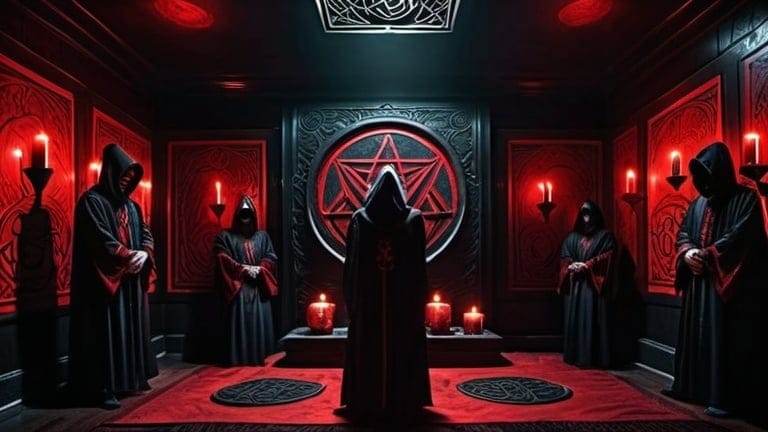
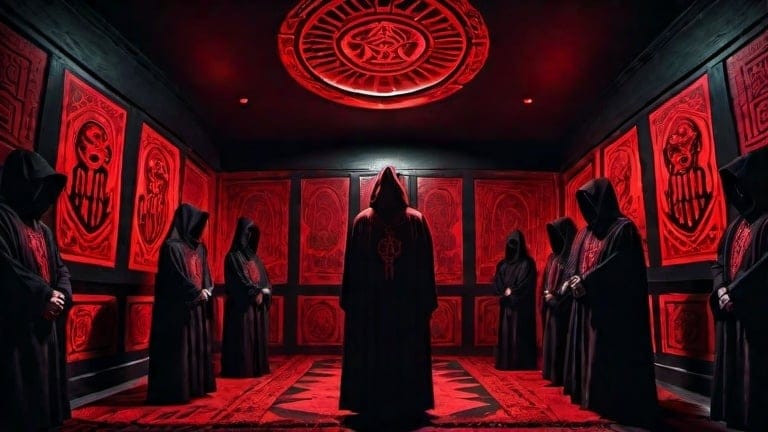
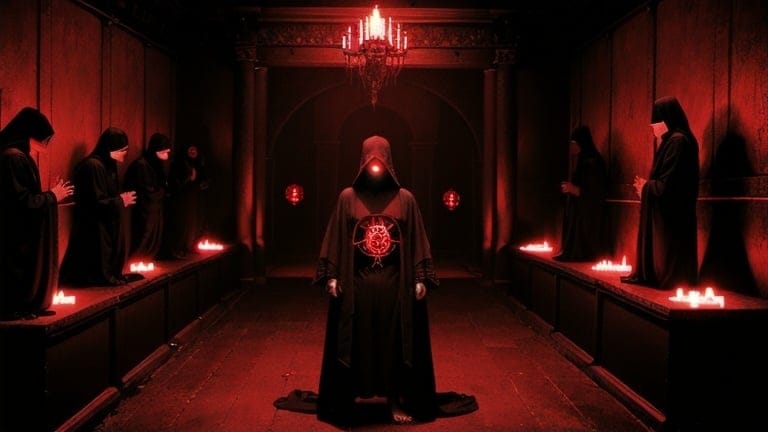
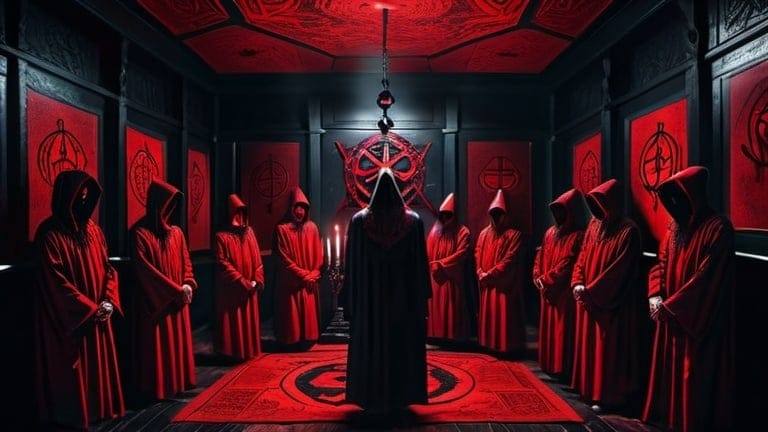
The Ninth Circle's theology held that existence itself was a wound in the void—a mistake that had persisted too long—and that Mal'akheth was the surgeon sent to close it. Their rituals had a specific architecture: nine sacrifices performed at nine geometric points, each death feeding what they called the Opening, a tear between the physical world and the endless dark beyond. They didn't want possession. They didn't want corruption. They wanted a door wide enough for Mal'akheth to step through bodily—not borrowed flesh, but raw demonic presence unleashed into reality. Webb had spent forty years perfecting the ceremony. Tonight, if Arthur didn't stop him, they would finish it.
He wanted to unmake reality itself.
"Has the Council confirmed that Mal'akheth was responsible for..." Arthur couldn't finish the sentence. He couldn't make himself say the words.
Frieda understood anyway. "We found his sigil at the scene. The nine circles, burned into the floor around..." She hesitated. "Around the bodies. It was a message. A declaration."
"A declaration of what?"
"War. Against you specifically." Frieda's eyes met his. "You've been hunting the Ninth Circle for three years, Arthur. You've disrupted their operations, killed their members, destroyed their resources. They decided to send a message."
"By murdering my family."
"Yes."
Arthur nodded slowly. He'd assembled this already—had pieced it together in the fog of those first terrible days—but hearing it confirmed brought a strange kind of clarity. This wasn't random violence. This wasn't collateral damage. This was personal. The Ninth Circle had reached into his life and torn out its heart specifically to hurt him, specifically to break him.
They'd almost succeeded.
"Someone inside the Council gave them my home address," Arthur said. It wasn't a question. "Someone told them about Eleanor and Grace."
Frieda's expression flickered—guilt, perhaps, or something close to it. "We're investigating. I have my best people working on it."
"Any leads?"
"Nothing solid. Whoever the traitor is, they've been careful. They know our security protocols, know how to cover their tracks." She paused. "I want you to know that finding them is my top priority. After this raid is finished—"
"After this raid is finished, I'll find them myself."
"Arthur—"
"Someone in the Council sold out my family. Someone I know, someone I've worked with, someone I've trusted with my life. When I find out who it was, I'm going to kill them. Slowly. And nothing you say is going to change that."
The words hung in the air between them, cold and final. Frieda opened her mouth to respond, then closed it again. What could she say? Arthur was beyond the reach of reason, beyond the appeals to duty and protocol that might have swayed him before. He was a weapon now, aimed at a target, and he wouldn't stop until that target was destroyed.
Or until he was.
"The other Hunters are en route," Frieda said finally, returning to safer ground. "Charles and Mildred Greathouse are flying in from Switzerland. Dexter Colson is coming up from Brazil. They should arrive within the hour."
"Good people."
"The best. I wouldn't send anyone less on an operation like this."
Arthur thought about the team. Charles Greathouse was a rock—solid, dependable, unflappable in a crisis. His wife Mildred was quieter, more analytical, but Arthur had seen her take down a possessed berserker with nothing but a silver knife and sheer determination. And Dexter Colson... Dexter was a legend. Nearly sixty years old and still hunting, still fighting, still refusing to acknowledge that his body was slowly failing him. If anyone understood what Arthur was feeling right now, it was Dexter. The old man had buried three wives and two children over his long career. He knew what it meant to keep fighting when you had nothing left to fight for.
"The Church has issued engagement protocols," Frieda continued. "Standard rules of engagement apply. We're authorized to use lethal force against possessed hosts and any cultists who resist. Non-combatants are to be subdued and handed over for interrogation."
"Non-combatants."
"People who surrender. People who weren't directly involved in the cult's activities."
Arthur said nothing. He knew what the Church wanted—information, intelligence, names and locations that could help them dismantle the rest of the Ninth Circle's global network. But he also knew what he wanted, and it had nothing to do with interrogations or protocols or the careful gathering of evidence.
He wanted them dead. All of them. Everyone who had ever worn the cult's robes, ever chanted their prayers, ever lifted a finger in service to the demon that had murdered his family. He wanted to paint the walls of that manor with their blood and walk out over their corpses.
"Arthur." Frieda's voice was sharp. "I need to know you're going to follow the rules of engagement."
"I'll do what needs to be done."
"That's not an answer."
"It's the only answer I have."
She stared at him for a long moment, her jaw working. Finally, she nodded—not in acceptance, but in resignation. "Fine. But I want you to know that if you go off-script, there will be consequences. The Church doesn't take kindly to unsanctioned killings, even when the targets are cultists."
"Let me worry about the consequences."
"I'm not just talking about your career, Arthur. I'm talking about your soul." Frieda leaned forward, her eyes intense. "The things we do in service of the Council—the killing, the violence—it takes a toll. I've seen it break better men than you. And if you go into that manor with murder in your heart instead of justice..."
"There's no difference."
"There's all the difference in the world."
Arthur shook his head slowly. He didn't have the energy to argue philosophy, not now, not when the manor was so close, not when he could almost taste the revenge he'd been dreaming about for two weeks. Let Frieda worry about souls and morality and the weight of sin. He'd stopped believing in any of that the moment he'd seen what was left of his daughter.
"When do we move?"
Frieda checked her watch. "Three hours. That should give the rest of the team time to arrive and gear up. We'll stage here, in the park, and approach the manor from the south. The cult doesn't maintain any sentries in that direction—they're relying on the terrain to protect them."
"Arrogant."
"Desperate. They know we've been tracking them. This is their last stronghold, their final holdout. If we take them down tonight, the Ninth Circle loses its foothold in North America entirely."
"Good."
Arthur stood, sliding his sword into the sheath on his back. His body protested—two weeks of neglect had taken their toll, leaving him stiff and slow and dangerously weak—but he ignored the aches. He'd fought through worse. He'd fought through demon poison like fire in his veins, through broken ribs and dislocated shoulders and wounds that should have killed him a dozen times over.
Fourteen years of active hunting had compressed him into something lean and specific—reflexes trained past conscious thought, combat forms burned so deep into muscle that his body moved without waiting for his mind. He knew where to put a blade for fastest effect, how to read the tells of a possessed host in the first two seconds of contact, how to position himself in a room so that the angles stayed favorable. The knowledge hadn't saved Eleanor and Grace. But tonight, it would end the people who'd murdered them.
A little fatigue wasn't going to stop him now.
"Where are you going?"
"To prepare."
"You've been preparing all day."
"Not enough." Arthur picked up his bag from beneath the table—a worn leather satchel containing the tools of his trade. Blessed silver. Holy water. Iron chains forged in sanctified fire. Everything he'd need to send a demon prince back to Hell. "I'll meet you at the staging point in two hours."
"Arthur, wait."
He paused, half-turning to look at her.
Frieda's expression was complicated—a mixture of frustration and worry and something that looked almost like affection. They'd known each other for twenty years, had fought side by side against horrors that would drive most people insane. She'd been there when he got married, had held Grace as a newborn, had shared Christmas dinners and birthday celebrations and all the small moments that made a life worth living.
She'd also been there when he got the phone call. When his legs had given out and he'd collapsed in the middle of a briefing, screaming his wife's name.
"Be careful," she said. "Please. Whatever happens in that manor... try to come back. The Council needs you. I need you."
Arthur wanted to say something reassuring. He wanted to tell her that everything would be okay, that he'd follow the rules and take prisoners and come home safe to fight another day. But the words wouldn't come. They stuck in his throat like broken glass, sharp-edged and painful.
"I'll see you at the staging point," he said instead.
And then he walked away, into the trees, to find a quiet place where he could sharpen his sword and remember his dead and prepare himself for the last battle he would ever fight.
---
The stream was cold against his ankles, snowmelt from the mountains that hadn't yet warmed to summer temperatures. Arthur stood in the shallows, letting the water numb his feet, and tried to empty his mind.
It wasn't working.
The meditation techniques he'd learned at the Council academy—the breathing exercises, the visualization, the careful construction of mental walls against intrusive thoughts—they all required a foundation of calm that he no longer possessed. Every time he closed his eyes, he saw Eleanor. Every time he let his guard down, he heard Grace screaming.
So he didn't close his eyes. He stood in the stream and stared at the water rushing past and let the cold seep into his bones.
His phone buzzed in his pocket. He ignored it. It would be Frieda, probably, checking up on him. Or one of the other Hunters, confirming their arrival time. Or maybe another message from the Council therapist, gently suggesting that he "process his trauma" before engaging in "potentially triggering field operations."
He'd stopped reading those emails after the third one.
The water churned around his legs, white foam catching on the rocks. Arthur watched it flow, hypnotized by the endless movement, and let his mind drift back to easier times.
Eleanor had loved hiking. It was how they'd met, actually—both of them on a trail in the Smokies, both trying to outpace a summer rainstorm. She'd beaten him to the shelter by ten minutes and had been insufferably smug about it, teasing him about his pace as he stumbled in soaking wet and out of breath.
"You need to work on your cardio," she'd said, offering him a granola bar from her pack. "And your rain gear. That jacket's completely useless."
"It's supposed to be waterproof."
"It's supposed to be a lot of things. Doesn't mean it is." She'd grinned at him, rain dripping from her dark hair, and something stirred in his chest. Something he hadn't known in years of demon-hunting, of violence and death and the slow erosion of his humanity.
Hope. She'd made him feel hope.
They'd dated for six months before he told her about the Council. Not everything—some things couldn't be shared with civilians, no matter how much you loved them—but enough. Enough for her to understand why he disappeared for weeks at a time, why he came home with scars he couldn't explain, why he sometimes woke screaming from nightmares he wouldn't describe.
"So you hunt demons," she'd said, processing the information with the calm practicality that he would come to love about her. "Like, actual demons. From Hell."
"Yes."
"And there's a secret organization that trains people to do this."
"The Council of Chaldea. We've been operating since the third century."
"The third century."
"Give or take."
Eleanor had been quiet for a long moment, staring at him with those warm brown eyes. Arthur had braced himself for rejection—for fear, or disbelief, or the slow withdrawal that usually followed these conversations. Most people couldn't handle the truth about what lurked in the shadows. Most people preferred the comfortable fiction that the world was ordinary and safe.
But Eleanor wasn't most people.
"Okay," she'd said finally.
"Okay?"
"Okay. You hunt demons. I can work with that." She'd reached across the table and taken his hand, her fingers warm against his. "Just promise me you'll be careful. Promise me you'll always come home."
He'd promised. God help him, he'd promised.
And then he'd failed. He'd failed her, failed Grace, failed everyone he'd ever loved. He'd been three hundred miles away, chasing shadows, while a demon carved symbols into his daughter's skin and painted the walls with his wife's blood.
Arthur's hand went to the ring on his finger—a simple gold band, warm from his body heat. Eleanor's ring was in his pocket, recovered from the crime scene. He couldn't bear to look at it, but he couldn't bear to leave it behind either. It stayed with him always, a weight against his thigh, a reminder of everything he'd lost.
His phone buzzed again. This time he pulled it out, glancing at the screen.
FRIEDA: Other hunters arrived. Meet at staging point in 90 minutes.
Arthur typed a brief acknowledgment and slid the phone back into his pocket. Ninety minutes. Ninety minutes until he walked into that manor and ended this one way or another.
He stepped out of the stream, his feet numb from the cold, and made his way back toward the park.
---
The staging point was a small clearing about half a mile from the main road, invisible from the air and accessible only through a narrow deer trail. By the time Arthur arrived, the other Hunters were already there: Frieda in her crimson-dyed hair and tactical leather, Charles and Mildred Greathouse checking their weapons with the efficiency of long practice, and Dexter Colson leaning against a tree, his weathered face unreadable.
"Arthur." Charles stepped forward, hand extended. "I'm sorry about Eleanor and Grace. They were good people."
Arthur took the hand, feeling the strength in Charles's grip. "Thank you."
"If there's anything we can do—"
"You can help me kill the things that murdered them."
Charles nodded slowly. "That we can do."
Mildred approached more cautiously, her eyes searching Arthur's face. She'd always been perceptive—too perceptive for comfort—and she was reading him now, cataloging the signs of his breakdown.
"How are you holding up?"
"Well enough."
"That's not what I asked."
"It's the only answer I have."
Mildred's lips pressed together, but she didn't push. Instead, she handed him a small leather pouch, heavy with its contents.
"Extra ammunition. Blessed silver rounds, consecrated in Vatican City. They'll punch through almost any demon's defenses."
"Thank you."
Dexter pushed himself off the tree and walked over, his movements slower than Arthur remembered. The old man was pushing sixty now, and every year showed in the careful way he carried himself—the slight limp from a demon's claw that had torn through his knee twenty years ago, the tremor in his left hand from nerve damage that had never healed properly.
But his eyes were still sharp, and when he looked at Arthur, there was no pity in them. Only understanding.
"How many are you planning to leave alive?"
The question caught Arthur off guard. He'd expected platitudes, sympathy, the gentle handling that everyone else had been giving him for the past two weeks. Not this blunt inquiry.
"Frieda says we need prisoners for interrogation."
"That's what Frieda says." Dexter's weathered face cracked into something that might have been a smile. "I asked what you're planning."
Arthur met the old man's eyes and saw his own grief reflected there. Dexter had buried three wives—two to demons, one to cancer—and had spent fifty years fighting a war that could never truly be won. He knew what it meant to keep going when everything inside you was screaming to stop.
"I'm planning to do what needs to be done," Arthur said.
Dexter nodded slowly. "Good. Just remember that you can't unfill a grave. Once they're dead, they're dead. Make sure you can live with that."
"Living isn't really my priority right now."
"I know." Dexter clapped him on the shoulder, his grip surprisingly strong. "That's what worries me."
Frieda called the group together, and they huddled around a tactical map spread across the hood of Charles's car. The manor was outlined in red, with entry points marked in blue and suspected enemy positions indicated by small black dots.
"Here's the situation," Frieda began. "The manor has three main entrances: front door, rear loading dock, and a service entrance on the east side. We'll split into two teams. Charles and Mildred, you'll enter through the rear. Dexter, you're with me on the east side. Arthur..." She paused, her eyes meeting his. "You'll create a diversion at the front."
"A diversion."
"Draw their attention, keep them focused on the main entrance while we sweep in from the flanks. Once we've secured the perimeter, we'll converge on the ritual chamber in the basement."
Arthur studied the map, his tactical mind working despite the fog of grief. The plan was sound—classic flanking maneuver, dividing the enemy's attention while the main force struck from unexpected angles. But there was something else in Frieda's eyes, something she wasn't saying.
"You want me at the front because you think I'll go off-script."
Frieda didn't deny it. "I want you at the front because that's where you'll do the most good. The cult knows your face, Arthur. They know you've been hunting them. When they see you at their front door, they'll panic. They'll make mistakes."
"And if I decide to push through instead of staying put?"
"Then I'm trusting you to exercise good judgment." Frieda's voice hardened. "I'm trusting you to remember that there are innocent lives at stake inside that manor—prisoners who need rescuing, not avenging. Can you do that?"
Arthur thought about the little girl he'd heard screaming in his nightmares. The one the cult was preparing for sacrifice, just like they'd prepared Grace. He thought about the families those prisoners had, the people who were waiting for them to come home.
"I'll do what needs to be done," he said.
It wasn't the answer Frieda wanted, but it was the only one he could give.
The sun was setting by the time they finished planning, painting the sky in shades of red and gold. Arthur stood apart from the group, checking his weapons one last time. Revolver, loaded with blessed silver. Sword, honed to a razor's edge. A boot knife forged from Damascus steel, consecrated in holy water. Enough firepower to take down a small army.
Or to die trying.
"Arthur." Mildred appeared at his elbow, her voice soft. "I want you to know... whatever happens in there... we're with you. All of us."
"Thank you."
"I mean it. Charles and I, we've talked about it. If you need to... if the Church's rules become a problem..." She hesitated. "We'll back you up. Whatever you decide."
Something shifted in his chest—something close to gratitude, the first warmth he'd felt in two weeks. The Greathouses were good people. They'd been part of his life for nearly a decade, had stood beside him through hunts that should have killed them all. Knowing they had his back, even now, meant more than he could say.
"I appreciate that."
"Just... try to come back, okay? The Council needs experienced Hunters. And Charles would miss our poker games."
Arthur almost smiled. "Tell Charles I'll owe him twenty bucks when this is over."
"I'll hold you to that."
Mildred squeezed his arm and walked back to her husband. Arthur watched them for a moment—watched Charles put his arm around her waist, watched them lean into each other with the easy intimacy of long partnership—as the hollow ache in his chest deepened.
That had been him, once. That easy comfort, that unthinking trust. Eleanor had been his anchor, his reason for coming home after every hunt. Without her...
Without her, there was nothing to come home to.
Arthur turned away and started walking toward the manor.
It was time to end this.
---

Join the Discussion