The Vatican Children - Chapter 3: Training Day
Dawn came gray over the ridgeline. Coffee already brewed on the counter, and the guest room door stood open—a second mug drying on the rack.
Arthur had risen before dawn and spent the first hour at his desk, reviewing the dossier he'd assembled on Bishop Glasser. Property records from three dioceses, financial disclosures with unexplained gaps, parish directories cross-referenced against flight manifests out of Rome—the trail remained fragmentary, but patterns had begun to emerge. Two shell companies kept surfacing in the bishop's real estate transactions, and Arthur had circled them in red. When he carried his coffee into the living room, he found Niccolo sitting on the couch, and it pleased him more than he would like to admit. Though confident that he could track down the bishop one way or another, having someone around brought a welcome benefit. Usually, Arthur worked alone—years of investigative journalism had taught him that fewer people meant fewer leaks—yet he had to admit that, sometimes, it was good to have help.
This case had burrowed under his skin in ways most assignments didn't. When Frieda had dropped Bishop Glasser's file on his desk six months ago and Arthur started pulling threads, the same patterns emerged—shell companies, parish transfers, children. Always children. Niccolo Paladina, a few years older than Arthur, brought a calm maturity that added decades to his bearing. He had become, in many ways, Arthur's newfound conscience—his voice of reason—in the new life Arthur tried to create for himself.
The priest sat on one of the couches with a Bible open on his lap. He appeared exhausted, wrapped in blankets dragged from his room. Though still going, the fireplace had burned down to almost nothing.
When Arthur came into the room, Niccolo glanced up and folded the book closed on his lap. They stared at each other until the silence became awkward.
"Would you like some tea?" Arthur asked, heading to the kitchen. He filled up a kettle and set it on the stove. To light the burner, he had to use matches.
"No, thank you."
"Coffee, then?"
"No."
"You should get some caffeine," Arthur said. "Doesn't look like you got much rest, and we'll have a long day."
"I thought you said we didn't have any leads to follow up on."
"We don't. Not yet. But we won't leave this cabin until I have confidence you can take care of yourself and won't panic at the first sign of trouble."
Arthur grabbed a loaf of bread from the cupboard and sliced off a few pieces. Hard and stale, but better than nothing. He heated them on the gas burner—the generator wasn't running, so no toaster—and brought them into the living room along with two cups of coffee and a jar of grape jelly. He sat down across from Niccolo.
"Eat."
"I'm not hungry."
"I don't care. Eat." He waited until Niccolo reluctantly picked up some bread. "Have you ever fired a gun before?"
"I told you, I'm not—"
"The tranquilizer dart guns I acquired are similar to normal pistols, though lighter and with only three darts. They're also extremely expensive, so I expect accuracy from you if you're to carry one."
"I don't intend on carrying one."
"And I don't intend on you leaving this cabin without one. You might as well accept it and learn how to shoot."
Niccolo leaned forward and stared at Arthur. The priest's jaw tightened, and a vein stood out along his temple. "We will let Desiree train as well."
"Excuse me?"
"Everything you teach me about these tranquilizer guns, you will teach her as well. I don't appreciate getting manipulated or lied to, and you brought her here because of me."
"No," Arthur said, shaking his head. "That is not happening."
"You said she can't defend herself, so teach her. Since you brought her here, you will show her how to protect herself when you show me."
"You have a flaw in your logic," Arthur said. "If I show her how to use one of these guns, she can use them on us."
"Then, I suppose it's a good thing you're not killing people anymore, isn't it? You'll wake up with a really bad headache."
Arthur sat back, a breath of surprised laughter escaping before he caught it. His hands stilled on the armrest. The priest had outmaneuvered him—turned Arthur's own logic into a moral lever and pressed. Teaching Desiree to defend herself would also make it easier to send her back out into the world, when the time came.
"Fine."
"Make no mistake, the only reason I'm still here is because you told me you intended to change your ways and that you were done murdering. You were a murderer, and there is no changing that. What you've done is terrible, and maybe even unforgivable in God's eyes. The Bible teaches us, however, that no person falls beyond redemption. I don't know if I believe you are redeemable, but that lies between you and God. I will work with you, Arthur, provided your change is real and permanent. However, the very second I decide that it isn't, I will work to stop you and make you pay for all your crimes."
Arthur leaned back in his chair. "Fair enough."
***
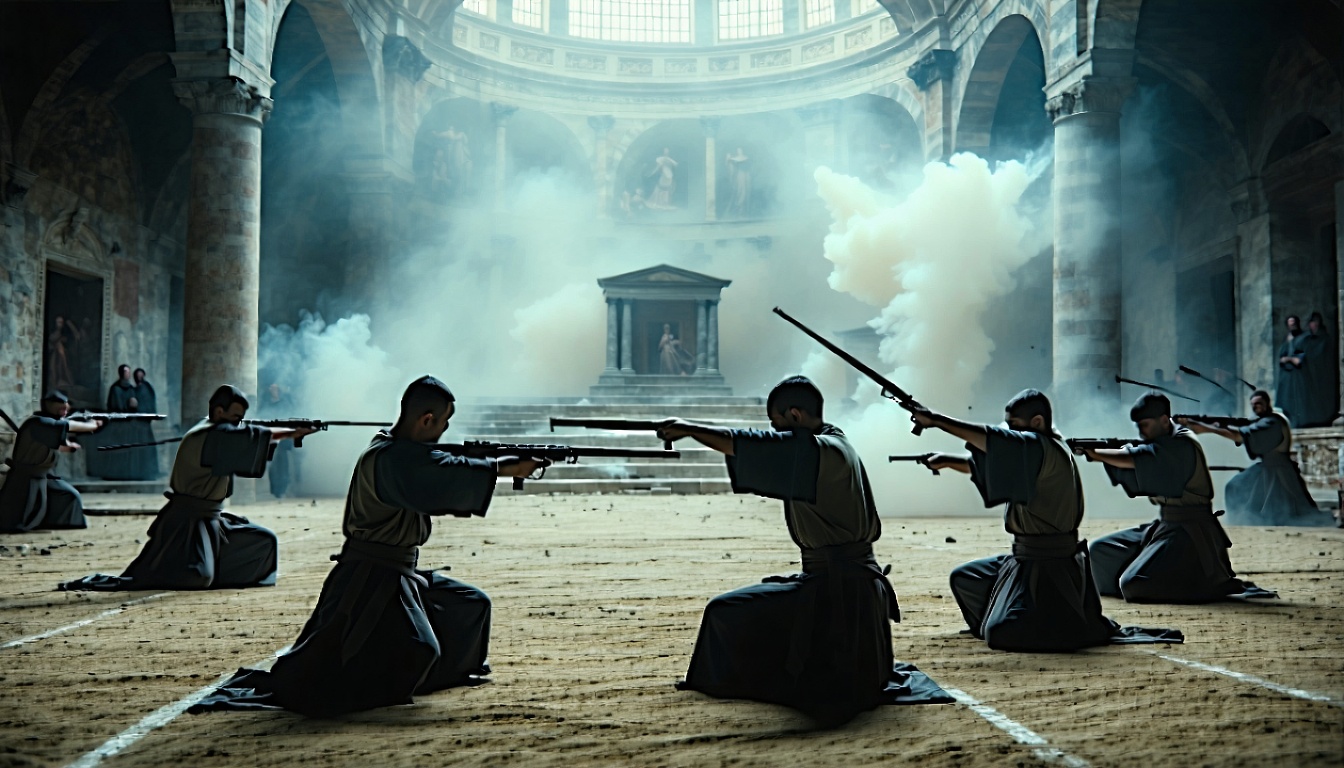
Arthur headed out to prepare the range while Niccolo went to collect Desiree from the basement. They emerged ten minutes later into thin morning light, frost still clinging to the shadows between the trees. She looked skittish and wary, as if ready to bolt, but she followed. Whatever Niccolo had said, it worked—more than Arthur had managed in three days.
He showed them the guns: how to load and clear them, the compressed air cartridges in the back, how to aim for center mass. He demonstrated with three darts, clean into the target's chest. Then Niccolo had a go—his first shots sailed entirely past the backstop and into the woods, money Arthur doubted he'd recover. Desiree did better, hitting the target once and the backstop with the other two.
He handed the second gun to Desiree, and her fingers closed around the grip—not the fumbling wrap of someone unfamiliar with weight in her hand, but a slow, deliberate squeeze, as though testing the heft of a weapon she'd imagined holding for a long time. An expression passed across her face that wasn't shock and wasn't gratitude. The look of a woman measuring whether this changed anything.
They trained through the morning. Desiree barely spoke. She fired when told, reloaded when shown, and stood where Arthur pointed. But her exhale after each shot came sharper and more deliberate, and her stance shifted a fraction steadier with each pass. She wasn't practicing to impress anyone. She was memorizing.
Arthur used the session to study Niccolo the way he'd studied countless sources throughout his career—watching for tells under pressure, the gap between what a man said and what his body revealed. Niccolo's jaw stayed set through each misfire and he adjusted his grip without being told. By the third round, he cracked a half-smile between shots. A man who kept his focus.
When they broke for lunch, the sun had climbed high enough to warm the clearing. He prepared canned stew and more stale bread. Desiree accepted hers and took it out onto the porch.
"She doesn't like you very much," Niccolo said as they sat down to eat.
"Thanks for stating the obvious. Would you?"
"Of course not." He ate a spoonful of stew. "Though, I thought she would become more receptive once she found out we planned to put an end to Bishop Glasser's tyranny."
"Most probably, she doesn't believe we will." Arthur leaned forward, elbows on his knees. "I've interviewed dozens of victims over the years—trafficking survivors, whistleblowers, people who went to authorities and got burned. They all share certain tells. Watch Desiree's eyes when we talk about the bishop. She doesn't look afraid. She looks resigned."
"She came forward to the Church to tell the truth, and the Church completely ignored her. Worse, they called her a liar to protect the bishop."
"Think of it from her perspective. The Church failed her. And she understands, maybe even more than we do, how dangerous Glasser really is. She might simply think we won't manage to stop him." He paused. "Or she might think this is one of the bishop's tests. He forced her to write letters and tortured her for years. Maybe she thinks he orchestrated the kidnapping—that this is another situation where she's supposed to prove her loyalty."
Niccolo sat in silence for a long few moments. He hadn't attempted to rationalize or make excuses for what the Church had done, no protests about insufficient evidence or unreliable narratives—the deflections Arthur had come to expect from institutional spokespeople throughout his career. He was more concerned with what had happened to Desiree than with defending the institution he served.
"Which means she might know something and feel too afraid to tell us," Niccolo said.
"Exactly. And we can't do much about it. No matter how many times I promise I'm not working with the bishop, she'll never believe me."
"I can talk to her."
"You think she will believe you?"
"No," Niccolo said, standing from the couch. "But if she knows anything at all, then we need to at least try."
With one last meaningful look toward Arthur, he opened the front door and disappeared outside. Arthur watched him go, then pulled the dossier from his desk and spread it across the table. Two of Glasser's former parishes had received donations from the same anonymous benefactor, routed through a bank in Liechtenstein. He marked the connection.
He flipped back to the section on parish transfers—eight children moved from Glasser's known parishes to church-affiliated care facilities over twelve years. The documentation was meticulous in the way only institutional concealment could be: each transfer signed and countersigned, each child referenced by case number rather than name, each authorization stamped with a Vatican internal department code that Arthur had initially dismissed as administrative filler.
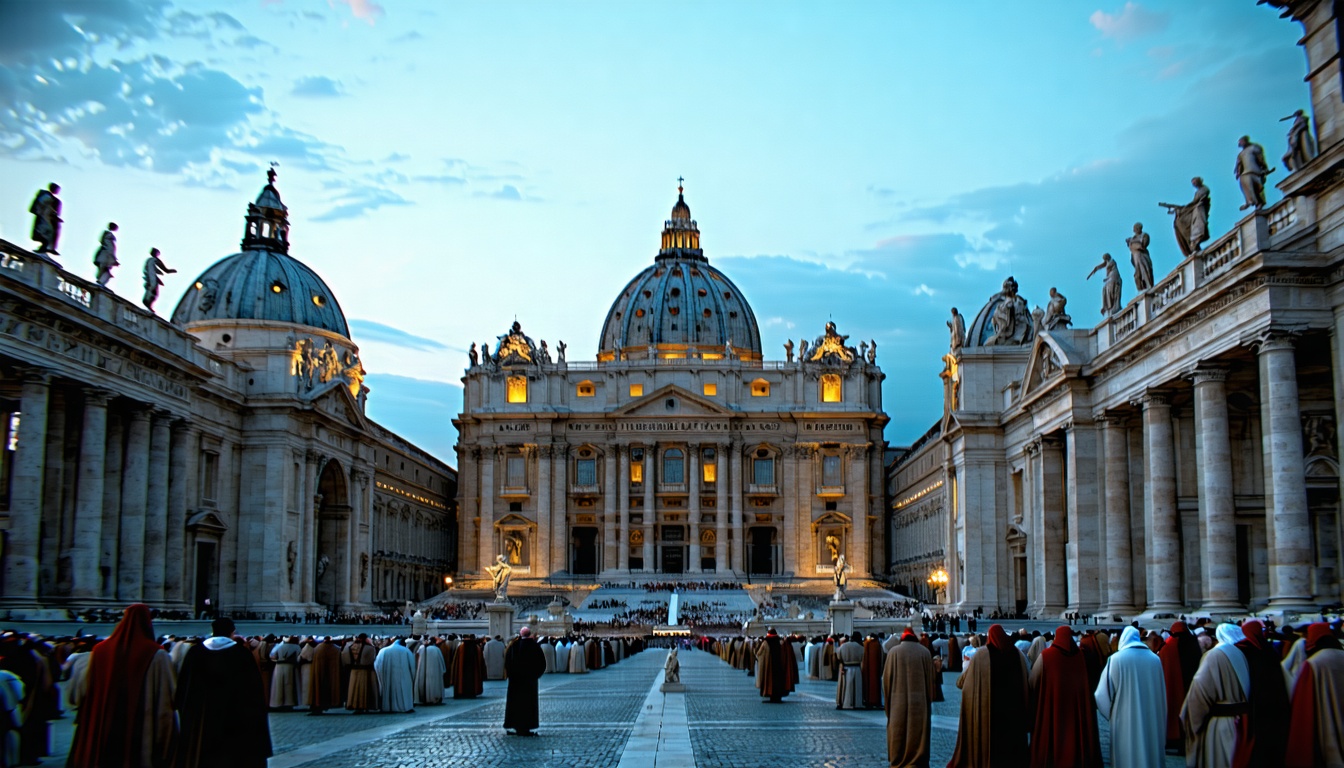
He treated it as filler no longer. Three transfers separated by six years and four continents bore the same authorization stamp. Some centralized office within the Apostolic Palace had coordinated their removal—not a rogue bishop operating alone, but an organized program, reporting to someone, moving children somewhere with the Church's full institutional signature behind every door.
Arthur put a question mark next to the Vatican code and underlined it twice.
The bishop stayed careful and guarded. Arthur had brought down careful people before. They all made mistakes eventually—the trick was knowing where to look.
***
He found Niccolo on the porch with Desiree. They sat in separate rocking chairs with a careful distance between them, not speaking. Desiree stared at the tree line. Niccolo stared at his hands. The afternoon light fell in long shafts between the pines, and the air had turned cool enough to carry the smell of damp earth beneath the trees.
Arthur considered his approach. Desiree's presence complicated things, but what he needed to discuss couldn't wait—and keeping secrets in front of her felt like another version of what the Church had already done.
"Niccolo. Inside."
The priest looked up. Something in Arthur's tone made him rise without argument. He murmured an apology to Desiree, who didn't acknowledge it, and followed Arthur into the cabin.
Arthur dropped the dossier on the coffee table and opened it to the page with the authorization codes circled in red.
"What am I looking at?" Niccolo asked, sinking into the armchair.
"Parish transfer documents. Eight children moved from Glasser's parishes to church-affiliated care facilities over twelve years." Arthur tapped the circled stamp. "This authorization code appears on three of those transfers. Louisiana, Germany, the Philippines. Six years apart, four continents. Same code."
Niccolo's face went still. Not blank—still, the way a man's face went when he recognized something he hoped never to see outside a locked room.
"It's a departmental code. Many Vatican offices use similar—"
"Don't." Arthur held up a hand. "I've spent twenty years reading people who didn't want to be read. You recognized that stamp, and whatever it means rattled you. So skip the part where you stall."
Niccolo closed his eyes. His fingers pressed into his knees.
"Those codes tell me something I already suspected," Arthur continued. "Glasser isn't operating alone. Someone inside the Vatican coordinated these transfers. An organized program with institutional signatures and countersignatures on every document. This isn't a rogue priest—it's a system." He sat down across from Niccolo. "And you know what system."
"I didn't know about Glasser's involvement. That I swear."
"But you know about the program."
Wind shifted outside, carrying the creak of branches and the distant sound of water over stone. Niccolo opened his eyes and stared at the dossier as though the circled codes might rearrange themselves into something less damning.
"What I'm about to tell you is known by fewer than twenty people in the entire Vatican."
"I'm not one of them. Fix that."
Niccolo's jaw worked. Then, quietly: "The Vatican Children."
Arthur waited.
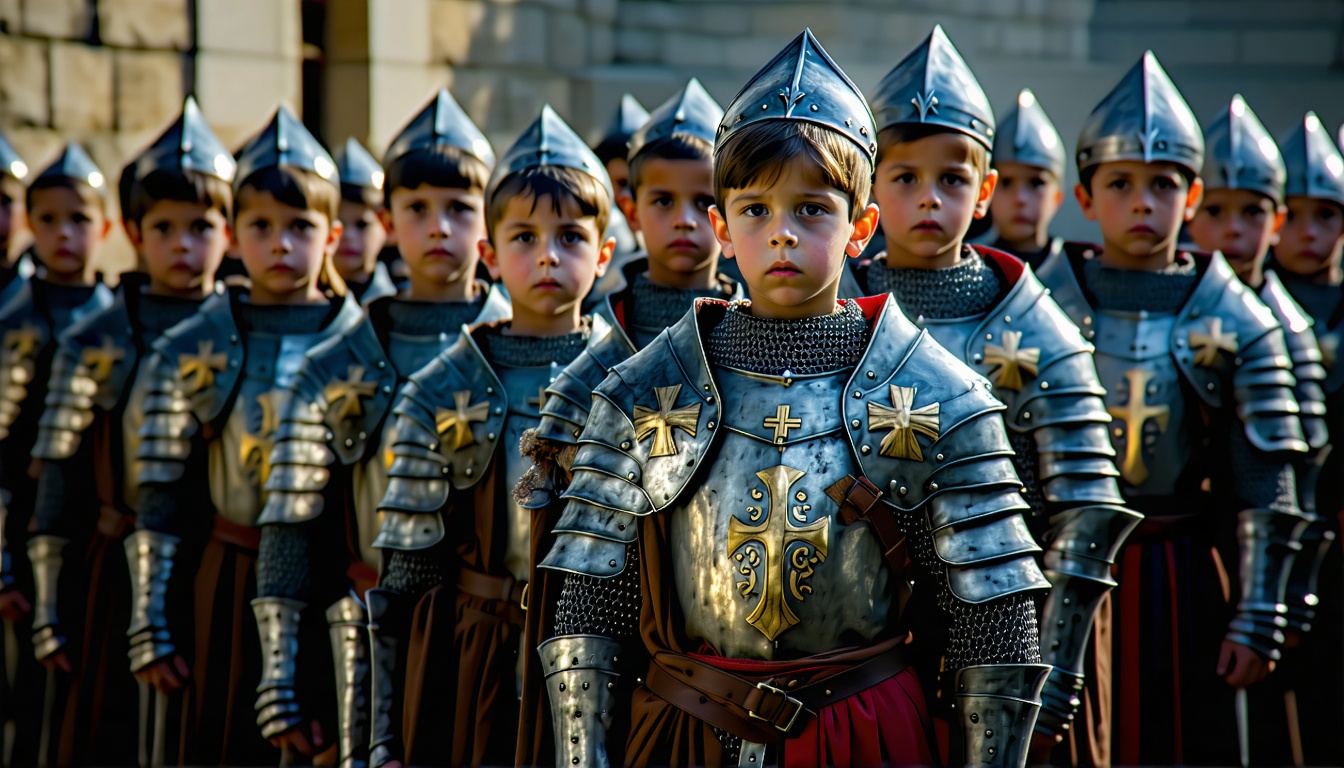
"That's what the program is called. Special children. Born with gifts most people would call supernatural." He spoke carefully, each word measured against whatever oath he was breaking. "The abilities manifest in different ways. Some develop a sensitivity to emotions—they can read feelings, sense intentions, push suggestions into another person's mind. Others develop telekinesis. A rare few can do both, or manifest something stranger."
Arthur's first instinct was dismissal. Twenty years of investigative work had taught him to distrust explanations that sounded like mythology. But the basement in Everett rose up behind his skepticism like a wall—objects that had moved without being touched, air that had thickened, the priest Reynolds at the center of it, radiating something that Arthur's rational mind still couldn't file.
"Reynolds," he said. "In Everett. He was one of them."
Niccolo nodded. "His name is on the Vatican's list. One of the stronger ones. The abilities require proximity and focus—they drain the user physically, especially untrained children. Sedation shuts them down entirely. They're powerful under the right conditions, but they aren't invincible."
Limitations described with clinical precision. Not fairy tales—biology. Measurable, bound by rules. That bothered Arthur more than blind faith would have. Faith he could dismiss. Rules implied evidence.
"How many are on this list?"
"I don't know the exact number. The children are extremely rare. Most never develop their abilities beyond vague intuitions—a knack for reading people, an object that shifts once and never again. The gift stays dormant unless awakened through training." Niccolo paused. "Or trauma."
The word settled between them.
"And the Church's role?"
"In the past, the Church gathered them. Ran experiments. Treated them as witches." Niccolo's jaw tightened. "Centuries ago. Now the program monitors them. Keeps the list. Nothing more."
"Nothing more," Arthur repeated, "except that someone with those authorization codes has been moving children off the record and into facilities where they disappear. And the bishop—the same bishop the Vatican has been protecting—appears to be collecting them."
"I didn't know Glasser had access to the program. Those codes should be restricted to a handful of senior officials."
"Which tells us who his protectors are." Arthur stood and paced to the window. Through the glass, Desiree still sat on the porch, her gaze fixed on the trees. "A man with that kind of backing inside the Vatican would know about everything your handful thought they were keeping safe. The Children, the list, where to find them."
"You think his protectors gave him the program."
"I think they gave him the keys. And he's been using them." Arthur turned from the window. "The question is: for what?"
Niccolo stared at the dossier. Three stamps. Three children routed through an institutional machine designed to make them disappear. However many more hadn't left a paper trail at all.
"I should have told you sooner."
"Yes."
"I didn't think it was connected. The program is administrative—a list, nothing more. The idea that someone would use it to—" He couldn't finish.
"Everything connects," Arthur said. "Every detail matters. No more secrets between us, Niccolo. And I mean none. Whatever else you're holding back about the Church, about the Children, about anything—I need it now, not when I drag it out of you."
"Agreed." Niccolo's voice had steadied, though his hands hadn't. "But this must stay between us. If the wrong people at the Vatican learn what we know—"
"Then we'd be reporting to the enemy." Arthur picked up the dossier and closed it. "Tight lips. No channels until we know which ones are clean."
He carried his coffee to the kitchen and stood at the window. The light had shifted, throwing long shadows across the cabin floor. Desiree on the porch. The forest stretching unbroken to the horizon.
Somewhere beyond that horizon, Glasser was building something with stolen children and institutional cover. The trail of transfers and shell companies and buried reports all pointed to the same conclusion. The bishop wasn't just a predator hiding from justice. He was a man with a plan, resources, and the Vatican's own secrets at his disposal.
Arthur drained his coffee. They were running out of time.



Join the Discussion