Traq's Resistance - Chapter 2: Ghosts in the Silence
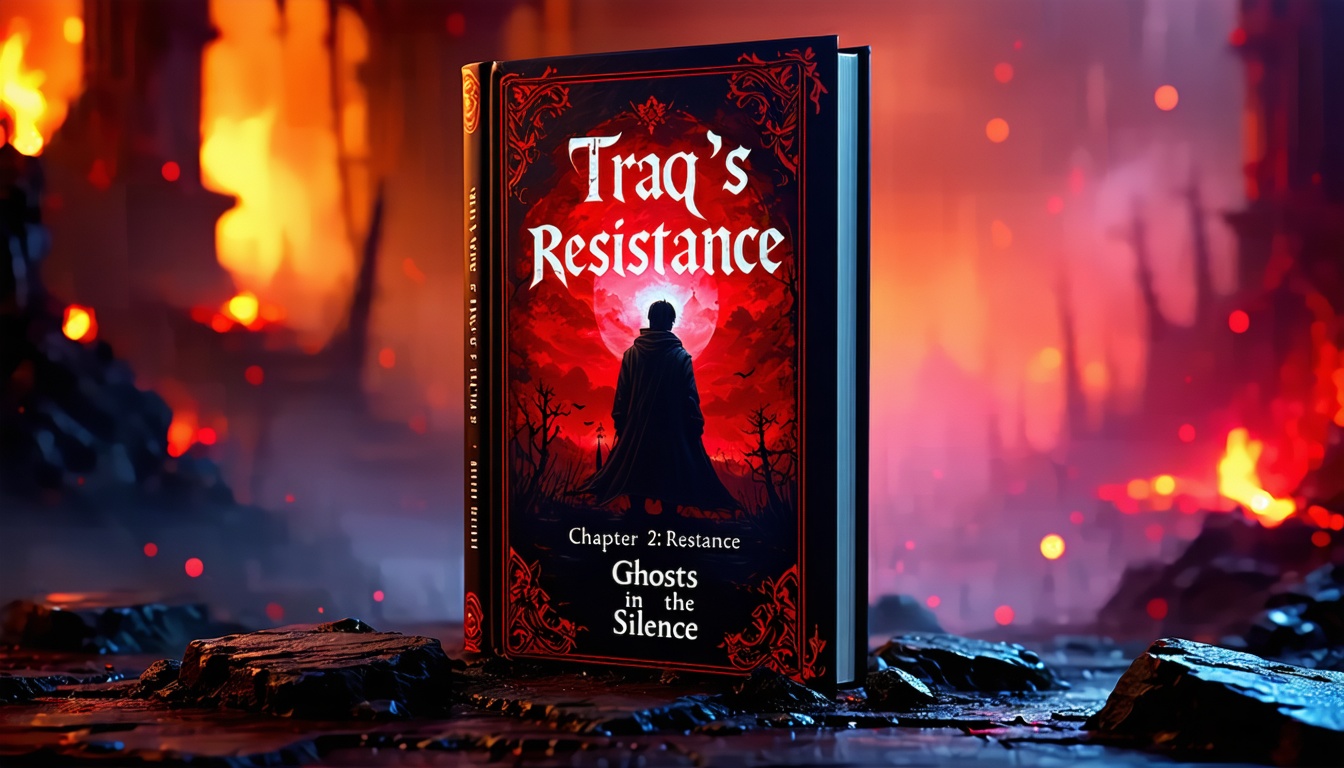
The Adelina groaned through every jump.
Old ship. Cargo hauler repurposed for a crew that couldn't afford anything better, her hull patched with mismatched plates, her engines running a half-tone off from the harmonic they were designed for. Traq lay in the narrow bunk and listened to the vibrations travel through the bulkhead behind his head—metal singing under stress, rivets whispering complaints into the recycled air. Sounds he would have catalogued and dismissed in microseconds with the implant. Sounds that now occupied him for hours.
Three days out from Meridian Station. Eleven to go before they reached Haven, assuming the Adelina's FTL drive held together and Jim didn't kill them all with his "creative" approach to maintenance.
Traq stared at the ceiling. Gray metal, twelve centimeters from his face. A water stain in the shape of something he couldn't name—his pattern-recognition was sluggish now, operating at biological speeds instead of the enhanced tempo he'd lived with for twenty-three years. The implant would have identified the shape in a fraction of a second, cross-referenced it against every known pattern in its database, and filed the result for potential future relevance. Without it, Traq stared at the stain and saw only a stain. Formless. Random. Stubbornly resistant to interpretation.
Like his future.
He'd tried to sleep. His body needed it—the injuries were healing, but slowly, without the implant's accelerated cellular repair. His ribs ached when he breathed too deeply, the fractured bones knitting together at the glacial pace of unenhanced biology. The shoulder packed with surgical foam itched along nerve pathways that didn't connect to anything anymore—ghost sensations from the implant's neural network, phantom signals from a system that no longer existed. His left leg throbbed with each heartbeat, the damaged tissue reminding him that Parwen flesh didn't regenerate the way human tissue should.
But sleep meant dreams. And dreams meant the entity.
It came in fragments—never a coherent narrative, never something he could examine and understand. Flashes of alien geometry, structures that existed in dimensions human eyes weren't built to perceive. The sensation of millions of minds screaming in unison, their consciousness consumed like fuel in a furnace, each individual awareness snuffed out and absorbed into something vast and hungry. The cold, vast intelligence behind it all, patient as gravity, ancient beyond any human frame of reference.
And underneath the horror, something worse.
Familiarity.
The entity had been inside his mind. Had touched something fundamental in his consciousness during that final psychic battle on the Arcadia, when the implant had shattered and Traq's awareness had flooded outward into the alien network. For a brief, terrible moment, they'd been connected—not as predator and prey, but as two intelligences studying each other across an impossible divide. The entity had seen him—not his tactical capabilities or his military training or the enhanced processing that made Vanguards valuable, but him. The consciousness beneath the optimization. The human animal underneath the weapon.
It knew him now. His fears. His patterns. The shape of his defiance.
And part of him—the part that had been enhanced, accelerated, wired into the Vanguard network since childhood—part of him recognized the entity in return. Not its intentions or its nature, but its architecture. The way it organized consciousness, consumed and redistributed awareness, built patterns from the consumed minds of billions—it was hauntingly similar to the way the Vanguard implant organized neural activity. The same fundamental approach to consciousness, scaled up to galactic proportions.
That was what kept him awake. Not fear of the entity—he'd moved past fear into something harder, a cold awareness that sat in his chest like a stone. What kept him staring at the water stain on the ceiling was the growing suspicion that the Vanguard program and the entity were connected in ways the Empire had never understood. That the implant technology wasn't just similar to the entity's architecture by coincidence.
That they were the same thing.
That was the suspicion that kept him staring at the ceiling. What had woken him tonight was something worse.
The dream had changed. Where before the entity appeared in fragments—distant, archival, the residual data of a broken connection replaying itself—tonight it had been present. Active. Something vast and precise had traced the neural pathways where the implant once lived, testing the scar tissue the way a locksmith tests tumblers. Cold pressure against sealed channels, methodical and patient, cataloguing each closed connection with the detached thoroughness of something that had done this billions of times before.
Then it had pushed. Not hard—experimentally. A hairline thread of awareness pressing against the weakest seal, the newest scar, the place where neural tissue hadn't fully calcified over the gap the implant left behind.
Traq had woken with his jaw clenched so hard his teeth ached. The implant socket at the base of his skull burned with a phantom cold that lasted twenty minutes, and when it finally faded, his hands shook with something that had nothing to do with withdrawal.
The entity wasn't just a memory haunting his dreams. It was testing the door.
***
The ship's galley was the size of a closet. Two fold-down seats, a food synthesizer that produced results best consumed with eyes closed, and a viewport that showed the blurred streaks of FTL transit—reality smeared across dimensional boundaries, stars reduced to luminous threads.
Traq sat with his back to the viewport and tried to eat. The synthesizer had produced something that claimed to be protein porridge. It tasted like warm paste with chemical undertones—a flavor profile that the implant would have suppressed, redirecting the sensory input away from the disgust centers and allowing him to eat efficiently without being distracted by trivial concerns like taste. Without the implant, the full experience hit him: the texture, the temperature, the vaguely metallic aftertaste, the way it coated the inside of his mouth. Every meal was an exercise in endurance.
His hands were shaking. Not badly—not enough that anyone would notice unless they were looking for it. A fine tremor in his fingers, the kind that came from neural pathways rerouting themselves in the absence of the implant's stabilization. The doctors on Meridian had warned him about withdrawal symptoms. Enhanced cognition was addictive at the neurochemical level—the brain adapted to operating at accelerated speeds, and when the acceleration stopped, the resulting cognitive downshift was like thinking through mud. The tremor was the visible symptom. The invisible ones were worse: the phantom calculations, the moments of reaching for processing power that wasn't there, the brief, disorienting lapses where his brain tried to access the implant and found nothing.
He set down the spoon. Picked it up again. Set it down.
"You're going to wear a groove in the table."
Adeline stood in the galley entrance, her hair damp from the ship's miserly shower system—a thirty-second burst of recycled water that Jim had rigged to a timer to prevent waste. She wore one of Jim's old work shirts—too large, sleeves rolled to her elbows—and the pragmatic expression of someone who'd learned to read his moods during three weeks of sitting at his bedside on Meridian, watching him fight through the worst of the withdrawal while machines beeped and doctors shook their heads.
"Can't sleep," he said.
"I know. The walls are thin." She sat across from him, folding her legs beneath her on the narrow seat. "You were talking in your sleep again. Before you stopped sleeping entirely."
"What did I say?"
"Nothing that made sense. Names I didn't recognize. Numbers. Once you said 'it remembers' about fifteen times in a row." She studied his face—not with pity, which he would have deflected, but with the calm assessment of someone cataloguing damage and planning repairs. "The entity?"
Traq nodded. There was no point in lying to her. Adeline had a talent for extracting truth—not through confrontation, but through a patience that outlasted every deflection. Three years as a captive had taught her to wait, to observe, to let silence do the work that questions couldn't.
"When the implant shattered, I was connected to it. Deeply. Not just surface contact—I was inside its network, seeing through its... perspective, I suppose. Millions of consumed minds, all networked together into a collective intelligence. Not dead—that's the worst part. The minds it consumes aren't destroyed. They're... preserved. Maintained in a state of perpetual awareness, each one contributing its knowledge and memories and cognitive patterns to the collective. They know what they are. They know what happened to them. They can't stop it." He paused. "It was beautiful, in a terrible way. Like looking at the ocean and understanding for the first time how deep it goes."
"And now?"
"Now I'm a man in a rowboat, and the ocean knows my name."
Adeline was quiet for a moment. The FTL drive hummed through the bulkhead, a constant vibration that had become background noise over the past three days. The ship creaked—the Adelina's hull plates contracting in the cold of transit, a sound like an old house settling.
"Tell me about before," she said. "Before the Vanguard program. Before the implant."
Traq looked at her sharply. "Why?"
"Because you've been acting like the implant was the beginning of your existence. Like nothing before it counted." She reached across the table and took his trembling hand. Her grip was warm, firm—the hands of someone who'd survived manual labor and captivity and emerged with calluses that told their own story. "You were a person before they put that thing in your head, Traq. A child. A boy with a name and a history and a life that didn't require enhanced cognition to be worth living."
"I was seven." The words came out before he could stop them—dragged from a place the implant had kept sealed for twenty-three years. "When they selected me for the program. My parents—" He stopped. The memory was there, but it was different now. Without the implant's emotional dampening, the raw edges of it were sharper than he'd expected. Like picking up broken glass and discovering the cuts were deeper than they looked. "My parents signed the consent forms. They were told it was an honor. The Vanguard Academy, training the galaxy's elite soldiers. Their son, chosen for greatness."
"Were they proud?"
"They were poor. The academy paid a stipend to families of recruits—not generous, but enough to matter when your mother works double shifts at a textile factory and your father repairs machines for a wage that barely covers rent." Traq's jaw tightened. "My mother cried when I left. My father shook my hand like I was already a man. I remember the calluses on his palm—thick, rough, the skin of someone who'd worked with tools every day of his life. He smelled like machine oil and the cheap soap they sold at the factory commissary."
"And now? Without the smoothing?"
"Now I remember that my mother had calluses on her hands from the textile factory where she worked double shifts. I remember the sound of her voice—not the words, the implant archived those, but the sound. The way it cracked when she said goodbye. I remember that my father smelled like machine oil and cheap soap, and that he held my hand too tightly at the transport station, like he was trying to memorize the shape of my fingers." His voice roughened. "I remember that my sister—" He stopped. Swallowed. "My sister was four. She didn't understand why I was leaving. She kept asking when I'd come back."
"Did you?"
"Once. When I was twelve. Field leave between training rotations." The memory surfaced, painfully vivid without the implant's filters. The small apartment in the factory district. The smell of cooking he didn't recognize—his mother had changed recipes since he'd left. The way the light came through the window at an angle he didn't remember. "She didn't recognize me. The implant had changed how I moved, how I spoke, how I held my body. Everything about me had been optimized. I was... efficient. Precise. I'd been trained to scan rooms for threats and calculate optimal positions before sitting down. She looked at me like I was a stranger wearing her brother's face."
He pulled his hand free and pressed both palms flat against the table, grounding himself in the cold metal. The tremor was worse now—the neural pathways reacting to emotional stress they hadn't been allowed to process for over two decades.
"That's the last time I saw any of them. The academy discouraged family contact after the first enhancement cycle. Said it created emotional interference with the integration process. By the time I understood what they'd done to me—what they'd taken—it was too late. The implant was too deeply integrated. Removing it would have killed me."
"But it didn't kill you."
"It almost did. The doctors said my brain hemorrhaged for forty-eight hours after the removal. Cerebral edema. Neural pathway collapse. They had to rebuild connections that the implant had been managing—basic functions, things like temperature regulation and motor coordination, that the implant had been handling since I was seven. My brain didn't remember how to do its own job." He looked up at her. "Sometimes I think the part of me that was the Vanguard is dead. And what's left is the seven-year-old boy who doesn't know how to be anything else."
Adeline stood and moved around the table. She sat beside him, close enough that their shoulders touched—the same position she'd taken in the hospital, in the cramped room on Haven, in every quiet moment since she'd decided that proximity was her answer to his isolation. Not crowding him. Not demanding anything. Just being there, a warm presence in the cold geometry of his new existence.
"Then the seven-year-old boy will learn," she said. "That's what humans do. We adapt."
"You keep saying that."
"Because it keeps being true." She turned to face him. Her eyes were steady, clear—the eyes of someone who'd survived three years of captivity by refusing to let the darkness inside her define who she was. "I spent three years in a slave pen, Traq. Three years of being told I was property, that my identity was whatever my owner decided it was. And when I got out—when you found me—I had to rediscover who I was. Piece by piece. It took months. It's still happening."
"That's different."
"Is it? You had your identity stripped away by an institution that used you as a weapon. I had mine stripped away by people who used me as a commodity. The method differs. The wound is the same." She put her hand on his cheek, turning his face toward her. "You are not your implant, Traq Lain. You never were. The courage, the stubbornness, the refusal to surrender—that came from you. From the boy whose mother had calluses and whose father smelled like machine oil. The implant just made it faster."
He needed her to be right. The part of him that remained the Vanguard—the tactical, analytical, ruthlessly pragmatic part—catalogued her words as emotional comfort with low strategic value. But that part was quieter now. Softer. Drowned out by the louder, rawer voice of a man who was learning to think at human speed for the first time in twenty-three years.
"I don't know how to fight without it," he admitted. The words came out like a confession—the kind of vulnerability the Vanguard training had explicitly conditioned against. Weakness was a target. Vulnerability was a liability. Admitting what you couldn't do was handing your enemy a weapon. "Everything I was—every skill, every instinct, every tactical advantage—came through the implant. Enhanced reflexes. Accelerated processing. The ability to read a battlefield in milliseconds and react before anyone else could think. Without it, I'm slow. Clumsy. Ordinary."
"Ordinary people build civilizations. Ordinary people raise children and write symphonies and figure out how to survive in the most hostile environments the universe can throw at them." Adeline smiled—a small, fierce expression that transformed her face from exhausted to luminous. "Ordinary is not a weakness, Traq. It's the starting point for everything extraordinary."
The ship shuddered—a micro-adjustment in the FTL field that sent vibrations through the hull. Somewhere below them, Jim swore at the engine and threatened it with a wrench.
A sound pushed up from Traq's chest—rusty, unfamiliar, like a machine that hadn't been used in too long. A laugh. The implant had never suppressed laughter entirely, but it had muted it, categorized humor as a low-priority emotional response, and redirected the neural energy to more productive processing. Without that redirection, the laugh came out raw and genuine and slightly painful.
"Eleven more days to Haven," he said.
"Eleven more days to figure out who you are without the implant." She leaned against him. "We'll manage."
They sat like that for a while. The FTL drive hummed. The hull creaked. The viewport showed the smeared light of transit, and neither of them looked at it.
Traq became aware of small things. The rhythm of her breathing—slower than his, steadier, the cadence of someone who had taught herself to be calm in dark places. The weight of her shoulder against his, warm through the fabric of Jim's borrowed shirt. The faint smell of the ship's recycled water in her damp hair, impersonal and clean, and underneath it something that was just her—not a perfume or a product but the irreducible scent of another human being, close enough to register on senses that had never been allowed to linger on anything so ordinary.
Without the implant, he couldn't dismiss it. Couldn't file it under low-priority sensory data and redirect his attention to something strategically useful. The warmth of her, the nearness of her, the simple fact of another person choosing to sit in the dark with him—it filled the space where tactical awareness used to live, and for the first time since the implant's removal, the emptiness didn't feel like loss.
Adeline shifted beside him. Not pulling away—adjusting, settling deeper, as though she'd made a decision her body was carrying out before her mind had finished weighing it. Her hand found his on the seat between them. Not the deliberate grip she used when grounding him through a tremor or pulling him out of a nightmare's undertow. Something lighter. Her fingers laced through his and rested there, palm against palm, as natural as if they'd done it a thousand times.
They hadn't. In the hospital, she'd held his hand to check his pulse, to pull him back from the edge of withdrawal seizures, to prove he wasn't alone. Those had been acts of care—necessary, purposeful, bounded by the roles they'd fallen into: the broken soldier and the woman who refused to let him break. This was different. This was her hand in his because she wanted it there.
He felt the shift like a change in atmospheric pressure—subtle, unmistakable, the kind of thing the implant would have quantified and he would have ignored. But the implant was gone, and Traq couldn't ignore anything anymore. He turned his head and found her looking at him. Not with the careful assessment she used when cataloguing his damage. Not with the fierce determination she wore like armor. Something beneath both of those—something she'd been keeping sealed behind the same walls that had kept her sane through three years of captivity.
She was afraid. Not of the entity or the fleet or the darkness waiting at the edge of the galaxy. Afraid of this—the small, terrifying act of wanting something for herself after years of having want beaten out of her. He could see it in the way her jaw tightened, the slight hitch in her breathing, the almost imperceptible tremor in the fingers laced through his. Three years in a slave pen had taught her that wanting things was dangerous. That attachment was a weapon your captors could use against you. That the safest way to survive was to need nothing and no one.
And here she was, sitting in the dark galley of a cargo hauler, choosing to need him anyway.
"Adeline." His voice was rough. He didn't know what he intended to say—the implant would have assembled the optimal response in milliseconds, weighed emotional impact against strategic value, produced words calibrated for maximum effect. Without it, all he had was her name and the weight of everything it carried.
"Don't say something tactical," she said. The ghost of a smile at the corner of her mouth—self-aware, almost amused, as though she'd anticipated exactly the kind of deflection the Vanguard in him would attempt. "Don't tell me it's dangerous. Don't tell me the entity makes you a liability. Don't tell me I should protect myself by keeping my distance." She met his eyes. "I already know all of that. I've known it since Meridian. I sat with you anyway. Every night. Not because I'm brave and not because I'm stupid. Because somewhere in the middle of watching you fight to come back from the edge, I stopped being the woman who survived and started being the woman who chose."
The words landed in the space between them—precise, unflinching, delivered with the same clarity she brought to navigation coordinates and tactical assessments. But underneath the clarity, her hand was shaking. Barely. The kind of tremor that came not from neural withdrawal but from the simple, human terror of saying something true and waiting to see if it destroyed you.
Traq looked at her. Without the implant's analytical overlay, without the emotional dampening that would have reduced this moment to a data point, he saw her completely. The strength that had carried her through captivity and the vulnerability that strength had been built to conceal. The woman who had remade herself from the wreckage of three stolen years and was now, deliberately and with full knowledge of the cost, offering a piece of that rebuilt self to a man who might not survive the next six months.
He lifted their joined hands and pressed his lips to her knuckles. A small gesture. The simplest thing in the universe—so simple that the implant would never have wasted processing power on it. His unenhanced brain understood it perfectly.
"I'm not going to say something tactical," he said.
She exhaled—a breath she'd been holding longer than this conversation, longer than tonight, maybe since the first night she'd sat beside his hospital bed and realized that the vigil she was keeping had changed from obligation to something she didn't have a safe word for.
"Good," she whispered.
The ship hummed around them. The FTL drive sang its imperfect song. And in the galley of a cargo hauler held together by duct tape and stubbornness, two people who had been broken by different machines sat together in the dark and let the silence carry what words couldn't.
***
He started training the next morning.
Not the enhanced combat drills he'd practiced for twenty-three years—those were useless without the implant's accelerated reflexes and predictive targeting. Instead, he went back to basics. The raw physical exercises they'd taught at the academy before the enhancement surgery—the foundation training that built bodies strong enough to survive the implant integration. Push-ups. Pull-ups. Running laps in the Adelina's cramped cargo bay, where the ceiling was too low and the floor was uneven and the air tasted like old hydraulic fluid.
His body protested. The injuries weren't fully healed, and without the implant's pain management, every strain registered at full volume. His left leg dragged after the first ten laps, the damaged tissue screaming with each impact. His shoulder screamed by the fifth push-up, the surgical foam shifting beneath skin that hadn't finished healing. His ribs ground against each other when he twisted wrong, sending bright sparks of pain through his torso.
He kept going. Because stopping was surrender, and Adeline was right—he needed to learn who he was without the enhancement. Starting with the most basic question: what could his body actually do?
The answer, he discovered, was less than he remembered and more than he expected. Less, because the implant had been compensating for physical limitations he'd never been aware of—stabilizing his aim, optimizing his stride, adjusting his balance in real time. Without it, he tripped over his own feet, misjudged distances, overextended when he threw a punch at the heavy bag Oliver had rigged from cargo strapping. More, because underneath the optimization, there was something the implant hadn't created: raw stubbornness. The willingness to get up after falling down, to try again when every nerve ending said stop. Whether that stubbornness would be enough without the processing power to back it up—that was the question he couldn't answer.
Oliver found him an hour later, collapsed against a cargo crate, breathing hard and covered in sweat. The cargo bay was cold—the Adelina's environmental systems prioritized the living quarters—and his breath came in thin clouds that dissipated in the recycled air.
"You look terrible," Oliver said.
"Feel worse."
"Good. Means you're actually trying." Oliver sat beside him, offering a water flask. The big man moved with an economy of motion that Traq had always admired—not the optimized efficiency of an enhanced soldier, but the practical competence of someone who'd been taking care of his body since before the Vanguard program existed. Oliver had never received an implant. He was baseline human—always had been, always would be. And he'd survived everything the galaxy had thrown at him. "You know, you were tough before the implant. I remember sparring with you at the academy, before your enhancement date. You were twelve, I was fourteen, and you broke my nose because I underestimated your speed."
"I don't remember that."
"The implant probably filed it under 'irrelevant pre-enhancement data.'" Oliver's voice carried a trace of bitterness—the residual frustration of a man who'd spent decades watching his best friend be hollowed out by a machine. "It did that, didn't it? Stripped out anything that didn't serve the mission. Made you efficient at the cost of making you... you."
"You sound like Adeline."
"Smart woman. You should listen to her." Oliver took the flask back. "I've been thinking about the implants. About what you said—that the entity can use them. That every Vanguard is potentially compromised."
"It's a theory. I don't have proof."
"You had a direct connection to the entity's mind. That's better than proof—that's firsthand intelligence." Oliver's expression was serious—the operational focus of a soldier processing a tactical assessment. "There are sixty thousand active Vanguards in the galaxy. Imperial and Union combined. If even a fraction of them can be controlled when the fleet arrives..."
"Then the galaxy's most powerful soldiers become its greatest vulnerability." Traq wiped sweat from his face. "I know. It's why we need to find whatever fought the entity before. Whatever hurt it. If we can understand how it was wounded, we might be able to find a way to shield the implants. Or disable them."
"Or you could tell people the truth. Broadcast what you know about the implant vulnerability. Let every Vanguard make their own choice."
"And cause mass panic in every military in the galaxy? The Empire would suppress it. The Union would deny it. And the independent systems would start hunting Vanguards as potential threats." Traq shook his head. "We need a solution before we announce the problem. Otherwise we just add chaos to an already chaotic situation."
Oliver was quiet for a while. The cargo bay was cold—the Adelina's environmental systems prioritized the living quarters, leaving everything else at just above freezing. Their breath came in thin clouds that dissipated in the recycled air.
"You know what's funny?" Oliver said eventually. "When we were kids at the academy, before the enhancements, the instructors used to say that the implant would make us complete. That we were incomplete without it—half-formed, unfinished. That the Vanguard program would make us who we were meant to be."
"I remember."
"They were wrong." Oliver stood, extending a hand. "The implant didn't complete you, Traq. It just made you louder. The signal was always there." He pulled Traq to his feet. "Come on. Jim's making something he claims is dinner. It probably won't kill us."
Traq followed him out of the cargo bay, limping on his bad leg, his body aching in a dozen places. The ship hummed around them—imperfect, damaged, held together by determination and duct tape.
Like him.
His mother's calluses surfaced. His father's machine-oil hands. His sister's face, confused and sad, watching a stranger leave in her brother's body.
Twenty-three years of enhancement. Twenty-three years of being told he was more than human, better than human, designed for a purpose that transcended ordinary existence.
And now, stumbling through a cargo hauler with a bad leg and trembling hands, the question pressed in: had he ever been anything more than what the academy had made him.
The darkness behind his eyes was quieter now. Not because the dreams had stopped—they hadn't. The entity hadn't gone, lurking at the edge of consciousness, patient and vast and hungry.
But between the darkness and the waking world, there was something new. A small, stubborn warmth that had nothing to do with implants or enhancements or the cold equations of tactical processing.
Hope. Fragile as glass. Real as gravity.
He held onto it and kept walking.






Join the Discussion