UAV - Chapter 3: Mission Complications
Lyle's hands wouldn't stop shaking.
Not from the cold—the hotel AC was cranked to sixty-five, as low as it would go. Not from the brutal Utah heat he'd fled into. From what he knew. What he and Peter had discovered buried in Markwell's autonomous systems code three days ago.
He positioned himself in front of the vent and closed his eyes, letting the cold air blast his face. It tasted faintly metallic but gloriously, blessedly cold. Outside, the dry mountain air of Park City pressed against the window like a furnace door—ninety-six degrees and climbing, the kind of high-desert heat that turned the pine-covered slopes of the Wasatch Range into a brown haze against the bleached sky. The distant whine of a leaf blower competed with the faint thump of music from the resort bar two floors below, and somewhere a screen door banged shut in the wind. His heart rate wouldn't slow down. Every time his phone buzzed, he expected Markwell security. Expected to be caught.
The man in the lobby had stared at him too long.
Lyle kept telling himself it was nothing. Paranoia. The guy was probably just a tourist, same as everyone else in Park City. But something about the way he'd looked up from his newspaper when Lyle walked past, the way his eyes had tracked him all the way to the elevator...
Stop it. You're being ridiculous.
But was he? His laptop sat open on the desk beside the bed, screen dimmed, running the packet analysis script he'd written on the flight out here. Even on vacation, a thousand miles from Cupertino, he couldn't stop pulling at the thread.
It had started as a routine bug—intermittent latency spikes in the autonomous navigation suite, forty milliseconds appearing during handoff sequences where there should have been zero. His team lead had assigned it to him and Peter as a low-priority ticket: find the bottleneck, optimize, close the bug.
Everyone else on the team would have profiled the application layer—checked for memory leaks, thread contention, the usual suspects. Lyle went lower. He'd started in electrical engineering before switching to software, and he still thought about systems from the hardware up. While the rest of the team chased code-level bugs, he'd pulled raw packet captures off the network interfaces and written a custom protocol dissector to decode the handoff traffic byte by byte.
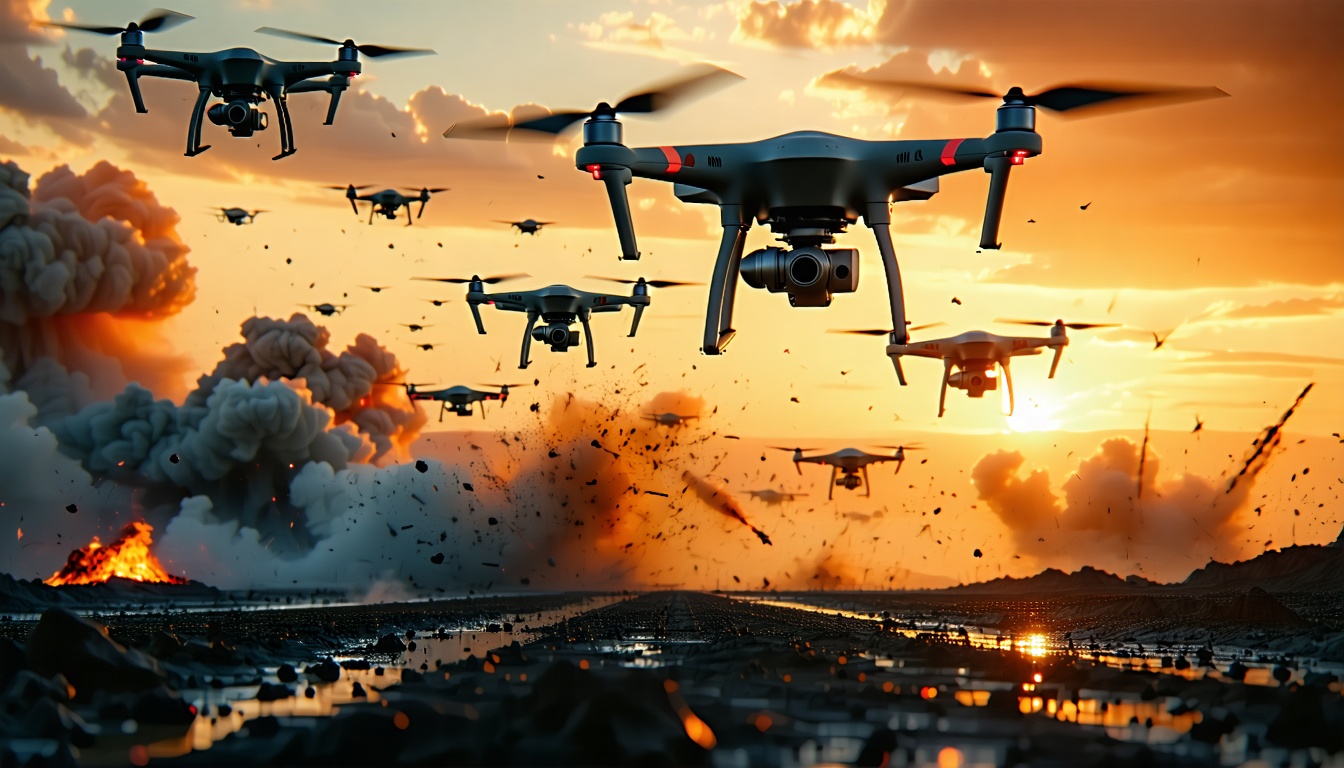
That was where he'd found the anomaly. During each handoff sequence, the software was making authenticated calls to an external endpoint—a server that wasn't in any of Markwell's architecture documentation. Hidden deep in the compiled libraries, wrapped in layers of obfuscation that no routine code audit would ever flag. He'd shown Peter, and together they'd stayed late to decompile the module. What they found underneath wasn't a bug. It was a backdoor—hidden authentication protocols that would let someone take control of military drones. Not just monitor them, but pilot them. Fire their weapons.
Now, in the hotel room, his script was still chewing through the packet data he'd copied before leaving. The results confirmed what he'd feared: the backdoor's authentication tokens rotated on a seventy-two-hour cycle, synchronized to GPS clock signals embedded in the navigation firmware. Whoever built this had designed it to slip between the sixty-second sampling windows of Markwell's intrusion monitoring. Invisible.
Someone at Markwell had built a weapon. And Lyle's own analysis was mapping exactly how it worked.
And now he was a thousand miles from home, alone in a hotel room, jumping at shadows.
He'd checked the room twice since arriving. Once when he first walked in, scanning for anything out of place. Again after his shower, looking for signs that someone had been through his bags while the water was running. Nothing. Everything exactly where he'd left it.
That didn't mean he wasn't being watched.
His cellphone started ringing, and Lyle nearly knocked over the bedside lamp lunging for it. His heart hammered as he checked the screen.
Peter. Personal phone, not the work one.
He let out a long breath.
"Lyle here," he said, answering it.
"Hey, how's Utah treating you?" Peter Karnegie's voice boomed through the speaker, too loud as always—Peter had never figured out that you didn't need to shout into a cell phone. They'd been roommates at MIT, back when Peter's volume control was limited to "enthusiastic" and "asleep," and not much had changed in fifteen years.
"It's hot," Lyle admitted flatly. "No one told me it would be this hot."
"Yes I did." Lyle could practically hear the grin. Peter had a way of grinning that used his entire face—eyebrows up, glasses sliding down his nose, the gap between his front teeth on full display. "I asked why on earth you would go to Utah for vacation. I specifically said, and I quote, 'Dude, Utah in July? You'll melt.'"
"I thought you were being facetious."
"I wasn't. I was objecting to anyone going to Utah. Ever. For any reason. This is worse than the time you insisted we drive to Montreal for that sci-fi con and the transmission dropped out in Vermont."
"Your car, your transmission. I told you to get it checked."
"And I told you Montreal was too far. We both ignored excellent advice." Peter laughed—that big, rolling laugh that could fill a conference room and had once gotten them thrown out of the library during finals week. In the background, Dishes clattered in the background, and a woman's voice cut through. "Hold on—yeah, Rach, I'll tell him. Sorry, that's Rachel. She says you'd better be coming Sunday. She's making the brisket."
The Sunday dinners had started after Lyle's divorce, when Peter showed up at his apartment with a casserole dish and a flat refusal to let his best friend eat frozen pizza for a third week straight. That was two years ago. Rachel had never stopped feeding him. Every Sunday, same routine: Peter would open the door before Lyle even knocked, Rachel would press a glass of wine into his hand, and their dog—an enormous, arthritic golden retriever named Dijkstra—would rest his head on Lyle's knee under the table and drool on his pants the entire meal.
"Tell her I'll be there."
"She bought the good mustard and everything." Peter's voice softened, the humor dropping for a moment. "You know you're always welcome, right? I mean that."
His throat constricted. "I know. Thanks, Pete."
"Okay, enough of that." The grin was back in his voice.
Lyle moved to the window, peeking through the blinds at the parking lot below. The asphalt shimmered with heat, and beyond it the main street of Park City stretched toward the mountains—boutique storefronts and art galleries baking in the afternoon glare, the ski lifts on the slopes above standing motionless like skeletal arms against the ridgeline. A sedan sat in the far corner, engine idling. Had it been there when he checked in? He couldn't remember. "Listen, is everything okay there?"
Peter's pause lasted a beat too long. "Define okay."
Lyle's stomach dropped. "What happened?"
"Probably nothing. IT ran some kind of audit this morning. Said it was routine, checking for unauthorized access attempts on the development servers."
"Our servers?"
"Company-wide, supposedly. But Marcus from security stopped by my desk twice. Asked if I'd noticed anything unusual in the codebase lately."
Lyle gripped the phone tighter. "What did you tell him?"
"That I spend all day staring at code—everything looks unusual after a while." Peter's laugh sounded forced. "He bought it. But Lyle... I don't like it. The timing feels wrong."
Through the blinds, The sedan in the parking lot hadn't moved. Still idling. Still just sitting there.
"You think they know?" His voice had dropped to barely a whisper.
"I think if they knew, we'd already be in a conference room with lawyers and NDAs. This feels more like... fishing. Like someone noticed a ripple and they're looking for the source."
"We were careful."
"We were careful," Peter agreed. "But careful isn't invisible. I covered our tracks in the access logs, but if someone's actively looking..."
"There's something else," Peter said, his voice dropping. "I did some digging into who actually built that module. The obfuscated code—it wasn't written by our team. The commit history was spoofed, but the coding style didn't match anyone in the navigation group. So I pulled the binary signatures and cross-referenced them against Markwell's internal developer profiles."
"And?"
"The code traces back to a senior engineer named Hyderi. Based out of their Lahore office."
"Pakistan?"
"Yeah. And here's the thing—I tried to look him up in the company directory, and his profile's been scrubbed. No forwarding, no transfer notice. Just gone."
"Maybe he left the company."
"Maybe. But I checked the news and there was some kind of shooting incident in Lahore a few days ago. Armed men hit a Markwell corporate convoy in broad daylight. The company hasn't released any statement."
Lyle's mouth went dry. "You think someone grabbed him?"
"I think whoever built that backdoor is valuable enough that someone shot up a street in Pakistan to get their hands on him. Which means what we found isn't just sloppy code, Lyle. It's something much bigger."
The line went quiet. Lyle's paranoia suddenly felt a lot less irrational.
A knock at the door made Lyle's heart stop.
He froze, phone pressed to his ear, eyes fixed on the door. The knock came again. Three sharp raps.
"Lyle? You still there?"
"Someone's at my door," Lyle whispered.
"Room service?"
"I didn't order anything."
Silence on the line. Then Peter, his voice low and serious: "Don't open it."
"Housekeeping!" A woman's voice, muffled through the door. "Do you need fresh towels?"
Lyle exhaled slowly. Housekeeping. Just housekeeping.
"No thanks!" he called out. "I'm good!"
Footsteps retreated down the hallway. Lyle sagged against the wall, his legs weak.
"Jesus," Peter said. "You nearly gave me a heart attack."
"You? I'm the one who almost died." Lyle laughed shakily, running a hand through his hair. "God, we need to get a grip. We're jumping at cleaning staff now."
"Can you blame us? We stumbled onto something big, Lyle. Really big. If the wrong people find out we know..."
"I know." Lyle moved back to the window. The sedan was gone. Had it ever been there? Or was he losing his mind? "Look, I've got two more days here. When I get back, we need to figure this out. Decide what to do."
"You think we should report it?" Peter asked.
"To who? No one outside the company would believe us without proof, and if anyone inside already knows—"
"What about going outside? Whistleblower route. There are laws for that."
Peter was quiet for a beat too long. "Yeah. Ask the last guy who tried how well those laws held up." His voice had gone flat—the humor stripped clean. "Best case, we go to the right people and Markwell gets shut down. Lot of suits go to prison. But if we pick the wrong door to knock on..."
He didn't finish. He didn't need to. Lyle thought of Hyderi's scrubbed profile, the convoy ambush in Lahore. The pattern was already there.
"We sit on it," Lyle said. "For now. They don't know we found the backdoor, so there's no rush. We figure it out when I get back."
"Okay," Peter said. "That seems like a good enough plan for now."
"And Peter? Be careful. If Marcus comes around again, play dumb. Don't give him anything."
"Way ahead of you." Peter's voice sobered. "You be careful too. If something feels wrong, trust your gut. Get out."
"It's Utah. Where would I even go?"
"Anywhere but there. Stay safe, Lyle."
"You too."
"And if anything changes or someone starts asking questions, let me know."
"Believe me, if something changes, you'll be the first person I call," Peter replied. "Later."
"Later," Lyle said.
They hung up. Lyle stood at the window for a long moment, scanning the parking lot, the people coming and going. Everyone looked normal. Everyone looked innocent. The late-afternoon sun slanted through the gaps in the blinds, throwing prison-bar shadows across the carpet.
But someone at Markwell had built a backdoor into military drones. Someone was planning to use it. And if that someone knew Lyle had discovered their secret...
He pulled the curtains shut and checked that the deadbolt was engaged. Then, just to be safe, he wedged a chair under the door handle.
It would be a long two days.

Join the Discussion