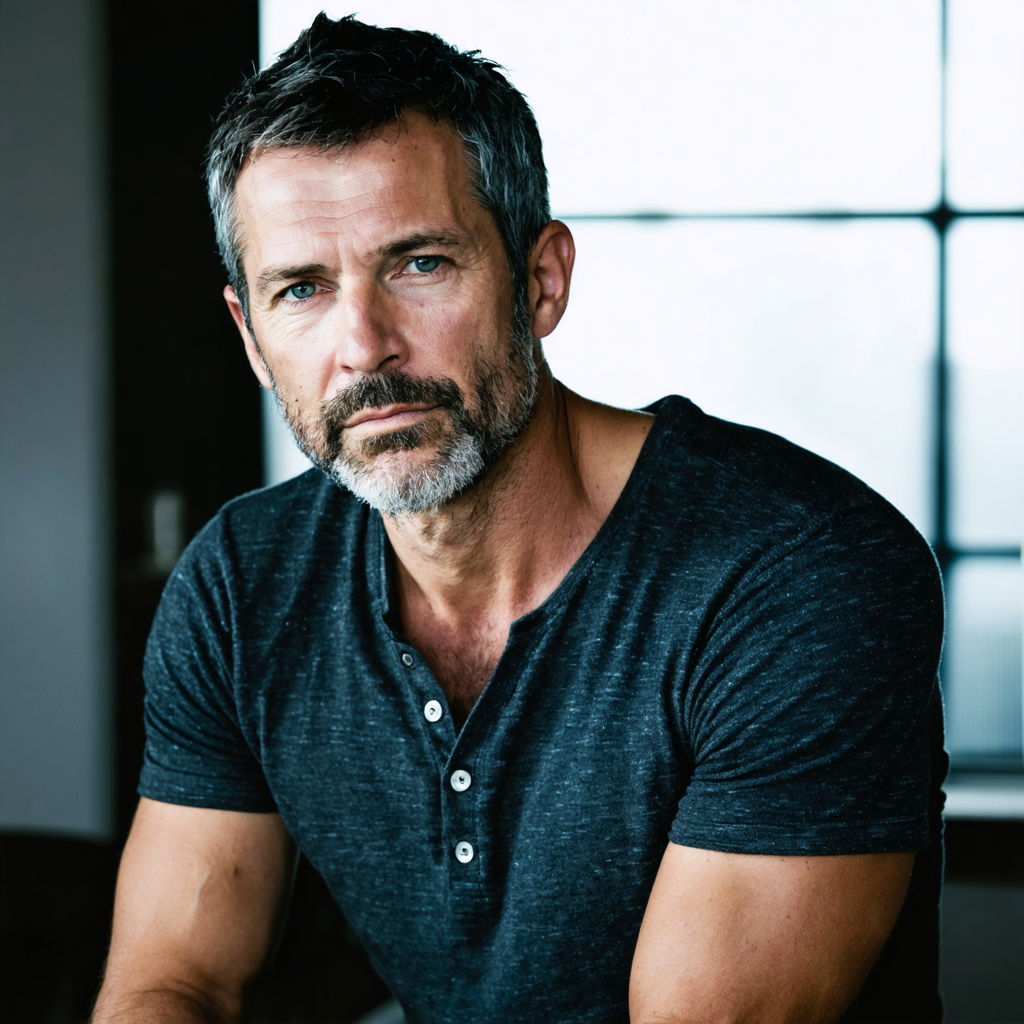
Lyle Goldman had never given much thought to the forty milliseconds that would ruin his life.
It was a Thursday—the same Thursday, as it happened, that a team of mercenaries was shooting its way through a crowded street in Lahore, Pakistan, though Lyle wouldn't learn that for another week. He was in a server room in California, headphones on, hunched over a performance trace that had been nagging him for three days. A forty-millisecond latency spike in the autonomous navigation suite's handoff sequence. Forty milliseconds. Nothing. A blink. The kind of delay most developers would have logged as network jitter and closed the ticket.
But Lyle wasn't most developers. He'd started in electrical engineering before switching to software, and he still approached systems from the hardware up—raw packet traffic, signal propagation, the physical reality underneath the abstraction layers. When something took forty milliseconds longer than it should, he wanted to know why.
He pulled up the packet captures and started tracing. The navigation module was making authenticated calls to an external endpoint during each handoff cycle. An endpoint that wasn't in any architecture documentation he'd ever seen.
He didn't know it yet, but he'd just found the seam in a seven-month conspiracy. The loose thread that, once pulled, would unravel everything—would cost his best friend his life, would put a target on his own back, and would drag him into a war fought with stolen drones and autonomous weapons over the skies of a small Texas town.
All because of forty milliseconds.
***
Lahore, Pakistan Thursday, 2:47 PM Local Time
1
"Do you think they are staring at us because of how we smell?" William shifted his weight.
Victor Cross blinked, stifling a groan. He was sitting on a park bench outside the Siddiq Trade Center in Lahore, Pakistan, twirling a pair of Chanel sunglasses in his hand and trying to appear inconspicuous; a task made all the more difficult by his bumbling compatriot.
"What?" Francis asked from the opposite side of the bench, his brow furrowing as he turned to stare at William.
"You know," William explained, "like hamburgers. Do you think we smell like hamburgers?"
Victor groaned.
"What the hell are you going on about?" Francis reiterated. "Why would we smell like hamburgers?"
Francis was Victor's second in command, the only person Victor would trust with his life. Unlike William, Francis Umstead was lithe, standing barely over five feet and thin as a rail. His accent was thick cockney, hard to understand until you'd spent enough time with him, and he wasn't at all intimidating to look at.
His size was deceptive, though, and Victor would prefer facing William, the three-hundred-pound bull of a man, in a fight over Francis. Francis was the most brilliant tactician Victor had ever met, and he knew every dirty trick for disabling and crippling opponents.
While Victor built his reputation and became famous as an international mercenary for hire, Francis was always there at his side keeping him out of trouble. They both worked for JanCorp, a private military contractor buried under layers of shell companies in the Cayman Islands. On paper, the organization barely existed—its contracts routed through subsidiaries that dissolved after each job, its payments washed through banks that asked no questions. In practice, it ran jobs for governments, corporations, and private citizens, maintaining a network of local fixers, safe houses, and surveillance assets across four continents. Francis was brilliant and dangerous.
William, on the other hand…
"Like in that movie where soldiers keep eating Chinese food so they don't smell like Americans," William elaborated. "These people keep staring at us, and I was wondering if it's because we smell like strange food to them."
"Do you ever run out of stupid things to say?" Francis raised an eyebrow.
"No joke, man, all the attention is starting to creep me out." William's head swiveled toward a cluster of men watching from a tea stall. His fingers drummed against his thigh—right where his gun was strapped beneath the robes.
"Don't do that," Victor kept his tone light. "No sense drawing attention to yourself."
"Okay, boss," William folded his arms.
It was an oppressively hot day in Lahore, Pakistan, and Victor couldn't stop sweating. The air reeked of diesel exhaust and fried street food, a cloying mixture that clung to the back of his throat. Somewhere nearby, a spice vendor's cart sent waves of cumin and chili through the humid air. The city noise was relentless—honking horns, autorickshaw engines whining in low gear, the distant crackle of a loudspeaker broadcasting the afternoon azan from a mosque two blocks over. A pack of stray dogs trotted past the bench without a glance.
His own comfort mattered less than his gear: heat was brutal on electronics, and too much time in the sun could fry the hardware. His laptop sat open on the bench beside him, and he was using it to monitor the timeline and details of his plan.
"They are on schedule," Victor checked his watch, ending the conversation. "We have a little under two minutes."
"Why do we need this guy alive, anyway?" William shifted his weight. "It would be a lot easier just to put a bullet in Imran and steal his laptop."
"Because a laptop isn't what's in his head," Victor kept his expression neutral. "Imran Hyderi built the backdoor into Markwell's drone systems. He knows every line of code, every authentication pathway. Without him, Helen will spend weeks trying to brute-force her way in."
"Can't she just hack it?" William asked.
"She's good," Victor said. "But this isn't some credit card company. This is military-grade autonomous weapons software with custom encryption. The man who designed the vulnerability is the fastest way through."
William was quiet for a beat—unusual for him. "You always see the angle nobody else does." He scratched the back of his neck, a gesture oddly thoughtful for a man his size. "Eight years on your crew, Vic. Most guys in this line burn through a dozen outfits. You don't waste people."
Victor studied him. Behind the dumb questions and the fidgeting, William was a man who'd survived two decades in one of the most lethal professions on earth. People underestimated him. Victor tried not to make that mistake.
Something cold shifted in his chest—not doubt, never doubt, but something older and rawer. Autonomous weapons. The words tasted like ash and burnt stone, like a street in a village where fourteen people had gathered for a wedding and none of them had left alive. He shut it down, the way he always did. Buried it back in the locked room behind his ribs where it belonged. There would be time for that later. There was always time for that later.
Francis leaned forward. "And if he doesn't cooperate?"
Victor's jaw tightened. "He has a wife and two daughters in Islamabad. He'll cooperate."
"Helen won't like that." Francis kept his voice low, his gaze fixed on Victor.
He gave Francis a long look. "Helen doesn't need to know how we're motivating him. As far as she's concerned, Imran is a willing consultant we recruited."
"Of course," Francis replied smoothly. "Do you think she'll buy that?"
"She doesn't have the slightest clue what we're really planning," Victor kept his expression neutral.
"And what if she figures it out?"
"Then I'll take care of it," Victor replied. "Wouldn't be the first time."
Victor's phone buzzed in his pocket. He glanced up at the streetlights around him. It was the middle of the day in bright sunlight, but those lamps were flickering to life with a telltale yellow glare. It was their cue from the fourth and hidden member of their team that the convoy was under a minute away.
"That's our signal," he said, closing the laptop and standing up from his bench, "time to work."
2
Helen Allison typed a sequence of commands into her keyboard and glanced out the window at the street below. She was on the third floor of the Siddiq Trade Center, overlooking Jail Street where Victor and the rest of the crew were assembled. The window was open despite the heat—the building's AC had given out that morning—and the sounds of Jail Street flooded in: rickshaw horns, vendor carts rattling over potholes, the rapid-fire Urdu of haggling shopkeepers. The smell of cardamom chai drifted up from the tea stall on the corner, mixing with exhaust and the sweet rot of overripe fruit from the market across the road.
She was average height, attractive if a bit skinny, with brunette hair and soft features. She rarely bothered to wear makeup or fix up her hair because she spent most of her time with computers.
She was also the newest member of Victor's team, having joined after Kate died two weeks ago. Helen had worked with Victor before while contracting with JanCorp as a hacker, but from a distance. Those jobs had also taken place while her sister was alive.
She had offered to join Victor in the field because he had been running the operation when Kate died. JanCorp released no pictures, no body—only a report that her sister was dead from an explosion. Helen wanted the truth, and no one seemed to know outside of Victor's team.
Maybe, if she got close enough, she could get her answers. For now, she would play along, pretend to be oblivious, and bide her time.
She leaned toward the window, scanning for Victor or Francis in the sea of people. They were somewhere below. Had they caught the signal? None of the team were in her view—only a throng of locals going about their daily lives like nothing was wrong.
How many will die today?
Her stomach clenched. If things went well, none would. Not civilians, anyway.
Her phone started ringing. She glanced at it, then clicked the connect button.
"Mom, this isn't a good time."
"Helen," her mother said. "Where were you?"
"I've been working," Helen replied. "I couldn't make it."
"You couldn't make it to your own sister's memorial service?"
Her chest tightened. "I was busy."
"You're still working for that company, aren't you? You promised your sister that you would quit."
"I know," Helen said. "But there isn't much point in that now, is there?"
"She didn't want this life for you," her mother said. "I don't either."
"We don't want a lot of things," Helen said. "I need to—"
"Is this how you honor her memory, by risking your life like she did? You always looked up to her, but that's no excuse for getting yourself killed."
Helen was silent for a moment. When she spoke, her voice was icy. "There was no reason for her to get herself killed either. Look where that got us?"
"Helen…"
"Mom, I need to go," Helen said, hanging up the phone.
She let out a deep breath, clearing her mind and pushing the ache aside. Her stomach twisted. It had been two weeks since Kate died, and every reminder cut fresh. Her older sister, her perfect sister, her dead sister.
She shoved the grief down. She needed to focus on work.
Down the road less than a quarter of a mile away was the approaching convoy. Victor had told her this was a recruiting mission—they were picking up a Markwell engineer named Imran Hyderi who had agreed to consult on their operation. The bulletproof vans and armed escort were just the engineer's corporate security detail. Standard precaution for a high-value Markwell asset working abroad.
Helen didn't entirely buy it. You didn't need a four-man assault team to pick up a willing consultant. But she kept her suspicions to herself.
All she knew was that she was in charge of making sure the convoy couldn't escape: Helen was going to lock down the street so that the convoy couldn't get out.
3
"Stand back," Victor bellowed in Urdu, pulling his revolver from beneath his robe, "everyone get back now."
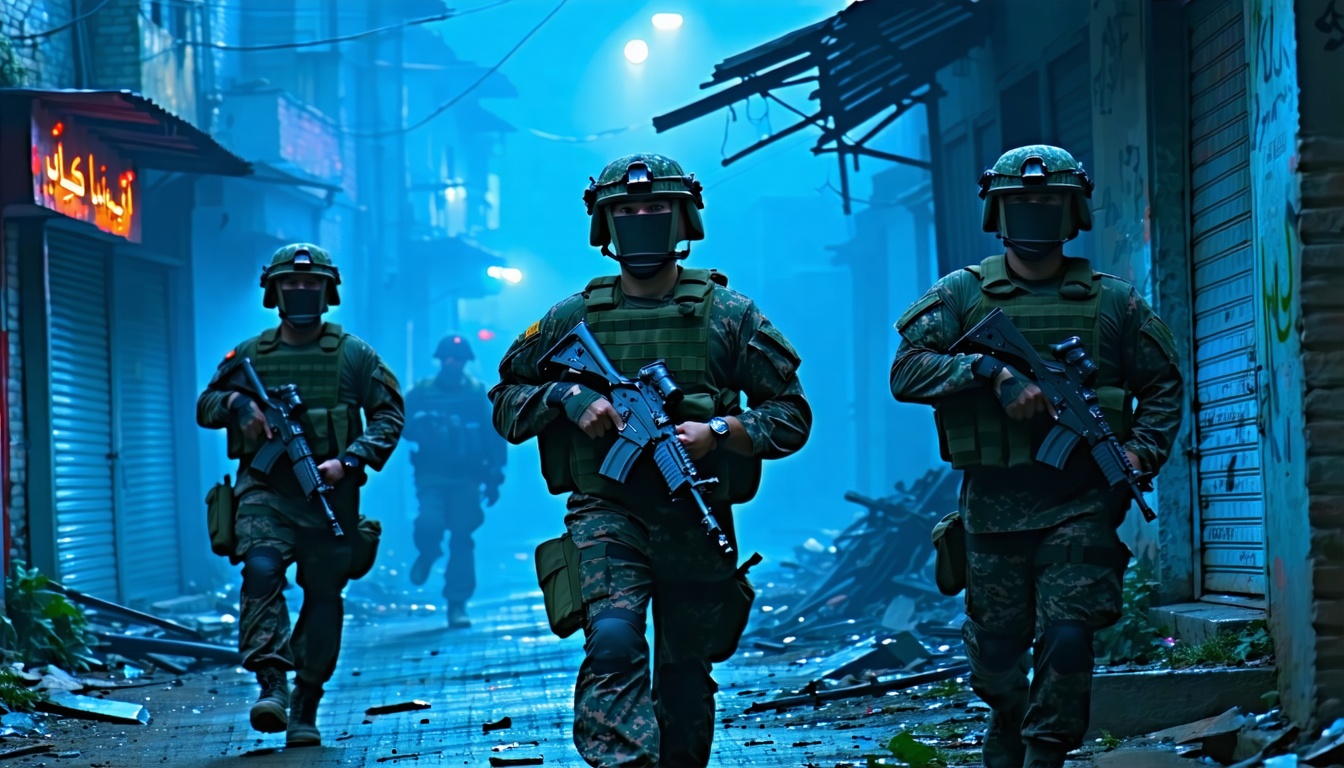
The gunfire came from up the street, a cacophony that started as Victor moved. The team was well trained, and they had already begun the assault from their designated positions. Victor ran through the thick crowd of people, shoving past dozens of bodies as he made his way to the vans.
A cacophony of screams rose up from the panicked crowd. People scattered like frightened animals, pressing against the walls, ducking into doorways, trampling each other in their desperation to flee. The stench of gunpowder cut through the spice-laden air.
When one of the men dressed in Imran Hyderi's security uniform raised his weapon to fire at Victor, Victor dispatched him quickly. Two controlled bursts from his revolver took down the man. It wasn't graceful or elegant—Victor didn't go for flourishes when lives were on the line—but it was effective.
William and Francis flanked the lead van, providing cover fire and keeping Hyderi's remaining guards pinned down. Their choreography was perfect, the result of hundreds of hours training together. William's massive frame absorbed incoming rounds like they were nothing, his body armor barely registering the impacts. Francis moved like a shadow, appearing and disappearing, his shots precise and economical.
The middle van's door burst open. Three guards piled out, weapons raised. Victor didn't hesitate. He dropped to one knee, steadied his aim, and fired. One guard spun and fell. The second took cover behind the van's door, but that was exactly what Victor wanted—it gave Francis a clear shot at his exposed legs. The guard crumpled.
The third guard made it two steps before William's massive fist connected with his temple. The man went down like a puppet with cut strings.
"Target acquired," Francis's voice crackled through Victor's earpiece.
Victor reached the van and yanked open the back door. Inside, cowering between two dead bodyguards, was Imran Hyderi. The man was slight, dark-skinned, with wire-rimmed glasses sitting crooked on his nose. He wore a rumpled dress shirt with a Markwell ID badge still clipped to the pocket. His hands were ink-stained—an engineer's hands, not a fighter's.
"Please," Hyderi whispered, his accent thick with fear. "I am just an engineer. I don't know what you want."
Victor grabbed him by the collar and dragged him out of the van. "I know exactly what you are, Dr. Hyderi. You're the man who built the back door into Markwell's Autonomous Navigation Suite. And you're going to show me how to use it."
Imran's face went white. "How do you know about—"
"Package secure," Victor said into his comm, cutting him off. "Execute phase two."
Helen's voice came back immediately: "Lockdown lifting in thirty seconds. Extraction route is clear."
They moved fast. William hoisted Hyderi over his shoulder like the man weighed nothing. Francis covered their retreat, walking backward with his weapon raised, scanning for any remaining threats. Victor led the way, clearing a path through the chaos.
The whole operation, from first shot to extraction, took less than four minutes.
By the time the police arrived, Victor's team had vanished into the labyrinthine streets of Lahore, their prize in tow.
4
"It was clean," Victor said, climbing into the car.
Their driver, Rashid—one of a dozen local assets JanCorp kept on retainer across Pakistan—pulled away from the curb before Victor had even closed the door. The vehicle was nondescript—a dusty sedan that blended perfectly with the thousands of others clogging Lahore's congested streets. Rashid threaded into the chaos of traffic—painted jingle trucks with their mirrored decorations clanking, overloaded motorcycle rickshaws weaving between lanes, donkey carts competing with sedans for road space. He drove with one hand on the wheel and the other on the horn, communicating in the city's universal language of aggressive honking.
In the back seat, Hyderi sat between Francis and William, hooded and zip-tied. He hadn't stopped trembling since they'd grabbed him. Victor could hear his breathing beneath the hood—shallow, rapid, the sound of a man trying very hard not to hyperventilate.
Francis reached over and adjusted the hood where it had bunched against Hyderi's mouth, creating a small gap for easier breathing. The gesture was barely conscious—the same hands that had killed three men in the last four minutes ensuring their prisoner didn't suffocate. William noticed but said nothing.
"Minimal casualties?" Helen's voice asked through the comm.
"Five of his guards are down," Victor reported. "No civilian casualties that I saw."
"That's something, at least."
Victor didn't respond to that. Helen's conscience was a liability, but not one he needed to address right now. She was useful, and that was what mattered.
"ETA to the airfield?" he asked.
"Forty-two minutes if traffic cooperates," Rashid said. "Might be longer. There's a checkpoint ahead."
"Can you avoid it?"
"I know another route. It adds fifteen minutes."
"Take it."
The car turned down a narrow side street, threading between parked vehicles and pedestrians with practiced ease. Victor's gaze tracked the rearview mirror for any sign of pursuit. Nothing. The police would be focused on the crime scene for hours, trying to piece together what had happened.
By then, they'd be in the air. Hyderi would be on American soil within forty-eight hours, locked in a room with Helen's equipment, and the real work would begin.
The operation had been seven months in the making. Every piece identified, surveilled, and positioned before the first shot was fired in Lahore. Hyderi was the keystone—the man who'd built the vulnerability and could walk them through it. But the other components were already catalogued: the two drone pilots at the Nevada base whose technical skills and security clearances made them indispensable, the Markwell developers who might stumble across the backdoor and need to be silenced, Helen herself, recruited through grief after her sister's convenient death. Victor didn't believe in coincidence. He believed in preparation.
His phone buzzed. A text from his employer: CONFIRMATION REQUIRED.
Victor took a photo of Hyderi's hooded form and sent it back. A moment later, the response came: CONFIRMED. PROCEED TO PHASE TWO.
Victor allowed himself a small smile. The most important piece of his operation was now in his possession. Imran Hyderi had built the vulnerability into Markwell's autonomous drone software—a hidden pathway that could give them control of military drones anywhere in the world. And now the man himself would walk them through it, step by step.
Whether he wanted to or not.



Join the Discussion