

CASE FILE: MANILA
Vatican Congregation for the Doctrine of the Faith — Office of Extraordinary Affairs Filed four years after the event by Father Niccolo Paladina, Ref. 2015-TND-0043
The rain in Tondo had no respect for a man of God.
It came down slanted and warm, the way rain did in that part of the world, and by the time Father Paladina stepped out of the van with his case in his left hand and his rosary in his right, the collar of his shirt already clung to his throat. He was twenty-nine years old. He had his doctorate in theology, two papers published in an obscure journal nobody read, and a letter from Bishop Roca pinned to the inside of his cassock. The letter said he was ready.
The letter, as it turned out, lied.
Father Vittorio Lazio did not bother with an umbrella. He walked into the rain as though it were air, his white hair flattening against his skull in long clean lines, his black bag swinging beside his knee. Vittorio was seventy-one that year. He had performed more than three hundred documented rites, and enough undocumented ones to fill a second book that the Vatican would never publish. He did not look at Niccolo. He had not looked at him very much at all in the two days since they'd landed at Ninoy Aquino.
"Keep up," the old priest said, and did not wait.
Niccolo kept up.
The alley they followed ran between tin walls and concrete walls, each one sweating in the heat. A rooster watched them from the top of an oil drum. Somewhere a radio was playing a song about forgiveness. Niccolo's shoes filled with water by the third turning, and he tried to remember whether the seminary had prepared him for rot smelling this sweet.
Two nights earlier, in the arrivals hall at Ninoy Aquino, Sister Lorena had opened a manila folder on the small steel table between them and walked Vittorio through the case the way a surgeon walks a colleague through an operation already half-begun. Six weeks of deterioration. The local priest carried out on a gurney. The girl, Marisol, fainting in the confessional after the third Hail Mary. The mother, Tala, who had not left the daughter's side in thirty-one days and who, Sister Lorena said twice, was holding up better than any mother had any right to. Niccolo had written it all down in a small black notebook. He had underlined the mother is holding up well because it seemed to him a hopeful thing. Vittorio had underlined nothing. Vittorio had only looked at the folder for a long time and then closed it and said, in Italian, Domani. Tomorrow.
Sister Lorena met them at the end of the alley, under an awning strung up from blue tarp and baling wire. She was small, thin, sixty. Her habit was the faded grey of the Daughters of Saint Paul. She put her hand on Vittorio's elbow the way a sister puts her hand on a brother's, and only then did Niccolo understand that the two of them had done this before.
"She is worse today," Sister Lorena said. Her English had the clean, careful shape of a second language loved well. "She has not eaten in four days. The mother has not slept in six. Father Danilo is still at the hospital. He may not come back."
"Danilo's faith was thin," Vittorio said. "His running is not a surprise."
"He wasn't running, Father. He was carried."
Vittorio grunted. He turned his face up into the rain for a moment. Something moved across it that might have been grief and might have been a prayer. Then Vittorio nodded once and the three of them stepped into the shanty.
The girl's name was Marisol Reyes. She was nineteen years old. She had worked six months in a bar outside the shipyard in Cavite before the thing in her had come home with her and she had stopped being able to leave her mother's house. There was a photograph of her above the sink, pinned to a water-stained square of cardboard. In the photograph she was sixteen, wearing a red dress, laughing at somebody outside the frame. The girl who lay on the cot in the back room did not look like the girl in the photograph. Her cheeks had hollowed and her hair had gone grey in patches, coarse as steel wool, and she smelled of iodine and of something else Niccolo did not have the training to name.
Her mother sat at the foot of the cot. Her name was Tala. She was praying the rosary in Tagalog, and her lips moved around the words so fast and so low that they sounded like a kettle about to sing. She did not stop praying when they entered the room. She did not look up.
Niccolo took in the room in the careful way he had been taught to take in rooms. The cot. The crate-table. The bare bulb hanging from a length of black cord. A water-stained image of Our Lady of Perpetual Help nailed crooked above the doorway. A plastic cup on the crate with an inch of brown water in the bottom of it. A small wooden bowl of uncooked rice. Sister Lorena had told him, on the drive, that the family had put the rice out because the old women in the barrio had told them to. The old women had said the rice would catch whatever was in the house if it tried to leave. Niccolo had written that down, too. Rice on the crate. Bowl half full.
He slid his free hand into his pocket and closed his fingers around his rosary. It had been his mother's. She had given it to him the morning of his ordination. The crucifix was silver and the beads were rosewood and the clasp had a small flaw on one side where she had repaired it herself when Niccolo had been seven, the one and only time she had ever let him hold it. He held it now the way he had held it then—carefully, gratefully, aware that it did not belong to him.
Vittorio set his bag on the wooden crate that served as the bedside table and knelt, and this was the first thing he got wrong, though neither of them would know it for an hour yet. He knelt beside the daughter.
"Mother," he said, in Tagalog, because Vittorio spoke seven languages and had buried two wives in the one he had been born to. "I am sorry for what has come into your house."
Tala did not answer. Her lips moved.
"Niccolo," Vittorio said, in Italian now, quieter. "Stole. Water. Oil. The green book, not the red one. If I ask for the red one, you will tell me no."
"Yes, Father."
"Repeat it."
"Stole. Water. Oil. Green book. If you ask for the red, I refuse."
Vittorio nodded. He laid his hand, very lightly, on the daughter's forehead. The girl did not move. Her eyes were open and her eyes did not track him, and between her lips, when he leaned close, the black edge of a tongue showed, darker than a tongue ought to be.
"Dominus tecum," Vittorio said.
The girl's hand shot up and took Vittorio's wrist and crushed it.
Niccolo heard the wet snap of small bones. Vittorio did not make a sound. He set his teeth against it and looked at the girl—at the thing behind the girl—and the girl's mouth opened and what came out of it was a man's voice, deep and amused and very far away.
"Padre Lazio," it said. "Sei arrivato in ritardo, vecchio."
Italian. Niccolo felt the skin of his own arms go cold. The thing on the cot spoke perfect, lilting, northern Italian, the dialect of a coast that was ten thousand miles from the room they stood in, and it spoke it in a voice that was not a girl's.
"Come mi conosci?" Vittorio said. His voice did not shake. Niccolo admired him then, fiercely, the way a son admires a father, and he held the green book tight against his chest as though it could keep his own hands still.
The thing smiled with Marisol's cracked mouth.
"Everybody knows you, old man. Everybody in the dark knows you. We had a party when your wife died. Did you know? We had a celebration."
Vittorio did not answer. He pried his crushed wrist free with his other hand, slowly, like a man freeing a coat from a nail, and he stood.
"Name yourself."
"You first."
"Father Vittorio Lazio, servant of the Most High God, called by my office to bind you."
"Nobody calls you anymore, old man. They send the boy. Look at the boy." The girl's head turned on its thin neck, all the way, further than a neck should turn, and Marisol's eyes—the whites yellow, the pupils blown wide—settled on Niccolo.
"Sei tu, Niccolo? Il bambino di Roca?"
"Do not answer it," Vittorio said, without turning.
Niccolo did not answer. His mouth had gone dry. He was aware, in a distant way, that he was very young, and that his doctorate and his two papers and his letter from the bishop meant nothing at all in this small hot room with the rain on the tin.
"Green book," Vittorio said. "Page forty-one."
Niccolo opened the book and found the page. His fingers left a damp crescent on the margin. The book opened to the Roman Rite in its older form, the Latin set in two columns, the rubrics in red. Niccolo began to read.
"Exorcizo te, immundissime spiritus—"
The thing on the cot laughed.
"—omnis incursio adversarii, omnis legio—"
The mother did not stop praying. Her rosary beads clicked. Niccolo's voice caught and steadied and caught again. Vittorio held the stole and the aspergillum and the small clay jar of oil, and he moved through the ancient sequence as Niccolo read, his hands sure on every gesture despite the broken wrist, water flicked in the sign of the cross, oil on the girl's forehead, thumb to her breastbone. The Latin pooled in the room. Niccolo felt the heat move toward the cot the way water in a pan moves toward the burner.
It was working. He could feel it working.
"Ergo, draco maledicte—"
The thing in Marisol screamed. It was a sound Niccolo had not heard before and would never, for the rest of his life, manage to forget. It was not a human scream and it was not an animal scream, and what it most nearly resembled, if he forced himself afterward to find a comparison, was the sound of steel being sheared by a machine that was breaking as it worked.
He almost lost his place on the page. He did not lose it. Vittorio's hand came down on his shoulder and squeezed, once, a silent good, and Niccolo's chest filled with the fierce and dangerous joy of a man who believes he is about to succeed at the thing he has prepared his whole life for.
The bulb above them dimmed. The air in the room grew cold in a way that tropical air does not grow cold, the cold climbing his spine in rungs, and the rice in the wooden bowl on the crate rattled, the grains hopping against the wood as though a truck had rolled past the shanty, though no truck rolled past. Niccolo kept reading. Vittorio dipped the aspergillum and flicked. Water beaded on Marisol's forehead and hissed as though it had struck a stove.
Marisol's back arched up off the cot. Her mouth opened wider than it should have opened.
And behind Niccolo, quietly, in Tagalog, Tala stopped praying.
He would remember that. For years.
He would remember that the clicking of her beads had been the rhythm under the rite the way a hi-hat was the rhythm under a song, and that when it stopped the silence in the room was the kind of silence that walks in carrying a knife.
Vittorio heard it, too. Vittorio's head came up. Vittorio was a man who had lived seventy-one years by listening to rooms.
"Niccolo."
Niccolo looked up from the book.
Tala was standing. She had risen very slowly, without any sound at all, and she was taller than she had been a moment ago, and she was smiling at Father Vittorio Lazio with a mouth that had three too many teeth.
"Old man," she said, in the northern Italian of the coast.
"Madre di Dio," Vittorio breathed.
The thing in the mother tilted its head.
"You brought oil for a daughter," it said, "and never thought to bring any for me."
For a long second no one in the room moved.
Niccolo's hand tightened on the green book until the skin of his knuckles ran white. He could feel, underneath his cassock, the crooked clasp of his mother's rosary digging into the bone of his hip, and he understood—in the slow cold way a man understands bad news a moment before he has been given it—that the thing he had been reading the rite at for the last four minutes had not been the thing he was sent to bind. The thing he was sent to bind had been four feet behind him the entire time, holding a string of beads, saying the Ave in a voice like a kettle, waiting.
The rite in his hands was the wrong rite. The body in the cot was the wrong body. The heat he had felt moving toward Marisol had not been the rite working. It had been the demon leaving—pulling back into its true host before the Latin that named the daughter could find purchase in flesh that had never been the door.
He had been reading an exorcism into an empty room for four minutes, and the real mouth it ought to have been spoken into had been smiling at his back.
Afterward, in every version of this memory Niccolo replayed in his cell in Rome during those three years of penance, the sequence of what happened next compressed into something that was not quite time. He could not unfold it. He could only set it down piece by piece, the way a child sets down stones at a cairn.
Vittorio saying, "Niccolo. Prendi la ragazza." Take the girl.
Niccolo not moving. Niccolo's feet welded to the floor.
Vittorio turning from the cot to face Tala, his broken hand still holding the aspergillum, water beading along its silver spine. Vittorio, who had begun the rite for the wrong body because the wrong body was the one screaming, because you go first to the one who is screaming, because that is what a kind man does and Vittorio, for all his gruffness, had been a kind man.
The thing in Tala moving. Not stepping. Moving, the way a shadow moves when a lamp is carried past it. Crossing the small room without seeming to cross it.
Vittorio beginning the rite again—the correct one now, the one that had the mother's baptismal name in it, the name Sister Lorena had given him two days earlier when she had briefed him at the airport, the name that Vittorio had catalogued in his enormous memory and pulled out now, clean and fast and certain—"Exorcizo te, Tala Reyes Concepcion—"
The thing laughing.
Niccolo finally moving. Niccolo dropping the green book on the concrete floor where it fell open, spine cracked, pages going wet with rainwater that had found the dip in the cement. Niccolo crossing to the cot and gathering Marisol up in his arms. The girl was lighter than a grown woman ought to have been. She smelled of iodine. Her eyes rolled up into her head as he lifted her, and he felt, through the thin cotton of her nightgown, the heat going out of her—the demon leaving her, pouring out the way smoke pours out of a chimney when the wind takes it.
Going where it had always been. Home. To the mother.
"Niccolo. Fuori. Adesso."
Out. Now.
He looked over his shoulder.
Vittorio had put himself between the thing and the door. Vittorio was not looking at Niccolo. Vittorio was speaking the rite in a voice that had gone low and slow and steady, a voice Niccolo had heard in his dreams ever since, the voice of a man who knew he would not finish the prayer he had begun and had decided, anyway, to speak each word of it as clearly as though he would.
Sister Lorena was on her knees by the door. She was holding out her rosary the way a child holds out a found thing to a parent.
Niccolo carried Marisol past her. Past Vittorio. Into the alley.
He did not turn back.
That was the thing he would not, afterward, be able to forgive himself: not the wrong rite, not the misread room, not the two days of inattention in Rome before the flight when he might have read Sister Lorena's notes more closely than he had. All of those he had, in time, learned to carry. The thing he could not set down was the shape of his own shoulders as they carried the daughter out of that doorway, and how he had held those shoulders, deliberately, so that his head could not turn, so that he would not have to see what was happening to the old man who had taught him, who was giving him the last minute of his life so that Niccolo might use it to take a girl into the rain.
Behind him the Italian stopped.
There was a sound he had no word for. It was wet and it was short and it was not a scream. The screaming had been the daughter's. This was something else—something that came out of Vittorio once, and then did not come again.
Then there was the rain.
He ran. The girl in his arms weighed almost nothing. The alley had narrowed in the way alleys narrow when a man is running and afraid, and the blue tarp of the awning caught at his shoulder as he passed under it, and somewhere in the next street a dog barked at him and a child laughed, a small bright laugh that belonged to an entirely different world. Niccolo ran until his lungs burned and the rain had gone through his cassock and the lights of a cross street rose out of the dark, and only then, under a streetlamp that buzzed and pulsed, did he stop and look down at the girl he was carrying, and see that her eyes were open, and that she was looking at him, and that she was crying without sound.
"Salamat po," she whispered. Thank you, Father. It was the only thing she would say for eleven months.
The Jesuit house in Malate took Marisol in. She lived. She did not speak for eleven months. When she finally did, it was to ask for water. Sister Lorena wrote Niccolo about it, three years later, when Niccolo was still sitting behind a desk in Rome cataloguing heretical manuscripts because the Congregation had decided that a young priest who had dropped a rite and left his mentor to die should not be sent into the field again until he had learned, as the memorandum phrased it, the virtue of obedient presence.
He had burned the letter. Then he had fished the ashes out of the sink and spread them on the windowsill and wept until he was empty.
Father Vittorio Lazio was found in the shanty at dawn. The rain had moved on by then. Father Danilo returned to the barrio and gave him the last rites posthumously, which was not canonical and not permitted and which every priest who heard of it later agreed was the only right thing to do. Vittorio's body was intact. His face, the Jesuits said, was peaceful. His right hand had closed around the stole, and the knuckles would not unbend to let it go, so he was buried in it.
Tala Reyes Concepcion was never found.
Niccolo filed no report. The Congregation filed a summary without his signature, using Sister Lorena's account and the testimony of the two boys from the barrio who had helped carry the body. Niccolo had been given thirty days to submit his own and had not submitted it. Then sixty. Then a year. His superior had eventually stopped asking, because his superior had been a compassionate man.
The cot in the back room of the shanty in Tondo is still there. The photograph of Marisol in the red dress is still there. Sister Lorena cleans the room every Friday.
Four years passed.
I am writing this now, the priest wrote, because a boy in a town called Everett, Washington, chased me into a basement with a broken rosary last October and asked me whether God had abandoned me.
I had come back to my room at the cathedral rectory after midnight. My hands would not stop shaking. I had eaten nothing since morning. I sat at the small desk the diocese had given me, which was not my desk and had never been my desk, and I opened a new file on the Congregation's encrypted server and typed the heading you have just finished reading. I stared at it for the better part of an hour. Then I turned off the desk lamp and sat in the dark, and by the gray light of the laptop's screen I wrote what I should have written four years ago, and what Monsignor Ruggeri has asked me to write every May for four Mays now, and what I could never quite bring my hand to begin.
I did not know how to answer him.
I still do not know how to answer him. I know what I said—I said the words I had been taught to say, and by the grace of God they held against him long enough for another man to finish the work I could not.
But what I had not said to anyone, in four years, was the true reason the words caught in my mouth when I tried to speak them, and the reason I could not take the rosary from my pocket until my mentor was dead in a foreign rain and a stranger's daughter was asleep in my arms. The reason was not that I was afraid. I had been trained for fear. The reason was that in Tondo, in July of 2015, I had learned something I had not been trained for, which was that the wrong body is sometimes the loud one, and the right body is sometimes the one praying in the corner, and that a priest who has not learned to tell the difference is not a priest but a man in a collar holding a book.
Father Lazio had learned that difference. He had not been able to teach it to me in two days. He tried, in the end, to teach it to me with his dying, and I have spent the last four years trying to prove I was worthy of that lesson.
I have not been worthy. I do not know whether I ever will be.
I submit this file to the Office of Extraordinary Affairs for the record. I request that it be sealed to all eyes except those of the next young priest who is assigned to the Philippines with a letter from his bishop and a doctorate he has not yet learned to forget. When that young priest asks his supervisor what happened in Tondo in July of 2015, let the supervisor hand him this file. Let him read it before he goes.
Tell him the mother is praying in the corner.
Tell him to look.
— N. Paladina Rome, November 2019
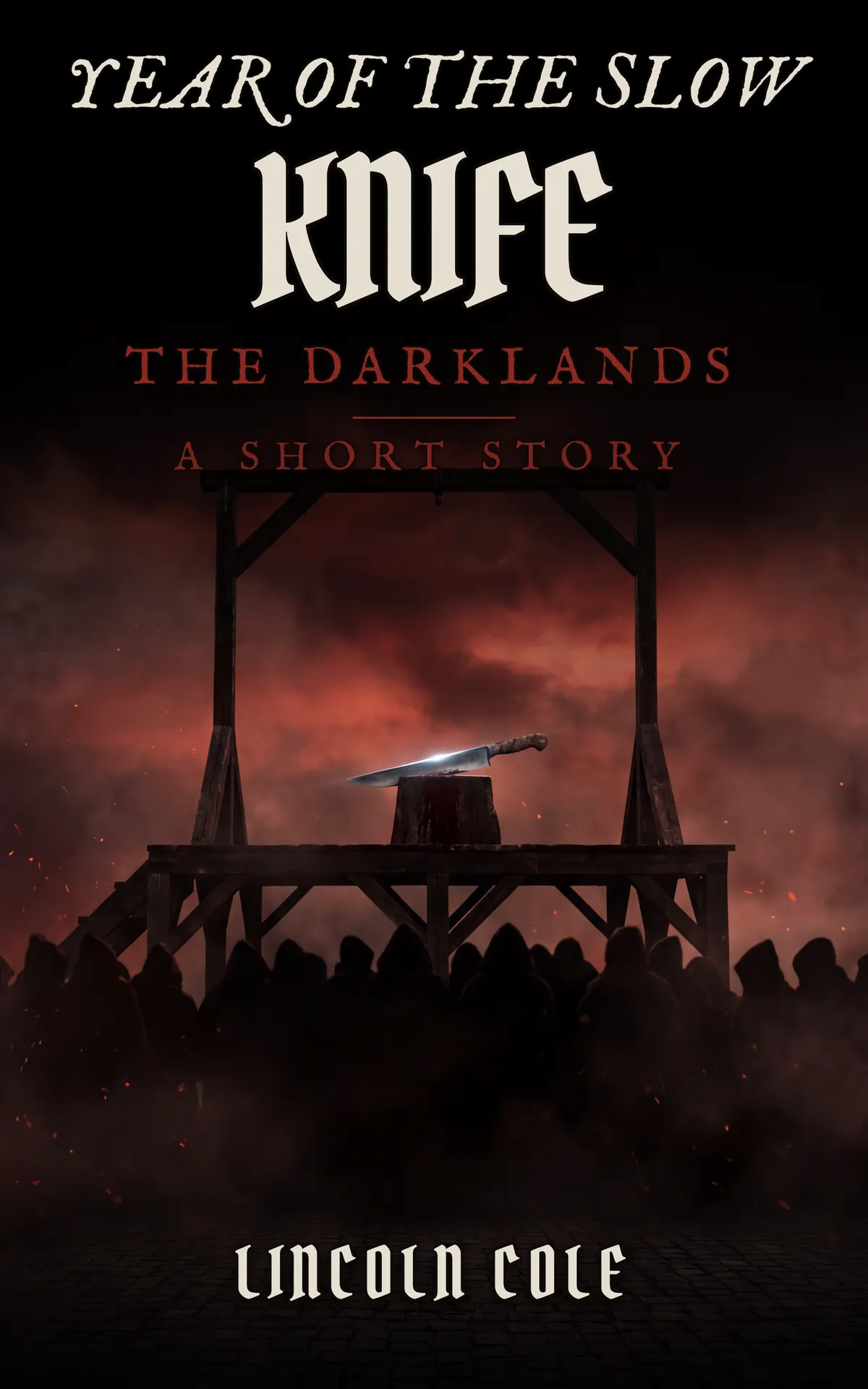
📖 Want more of this world?
This story lives in the world of World of Shadows. If you liked it, the novel goes deeper.
Get The Everett Exorcism on Amazon → (free with Kindle Unlimited)

Join the Discussion