The World of Graveyard of Empires
I built Graveyard of Empires because I wanted to write a space opera that felt genuinely massive — empires that span galaxies, wars fought across dozens of worlds, and underneath all of it, something ancient and patient watching from the dark. The universe of this series is a place where humans have spread across the stars and still managed to bring all their worst habits with them: war, genocide, political corruption, the belief that power justifies everything.
The setting spans two major political powers — the Empire and the Union — locked in a cold war that keeps erupting into hot conflict. Sector Three is Imperial territory. Sector Six is where the rebels and the independent-minded live. Worlds like Tellus paid the price for that war in the most brutal way imaginable. Thirteen billion people, gone, because an empire decided a planet needed to be made an example.
But the war between humans is almost beside the point. Lurking beneath everything is something older and stranger — an intelligence that doesn't care about borders or politics, that views human civilization the way we might view an anthill. The Harbinger has been waiting for six hundred years. And it's been patient.
Key Locations

Arcadia VII Space Station
Facility — Artificial (failing life support)
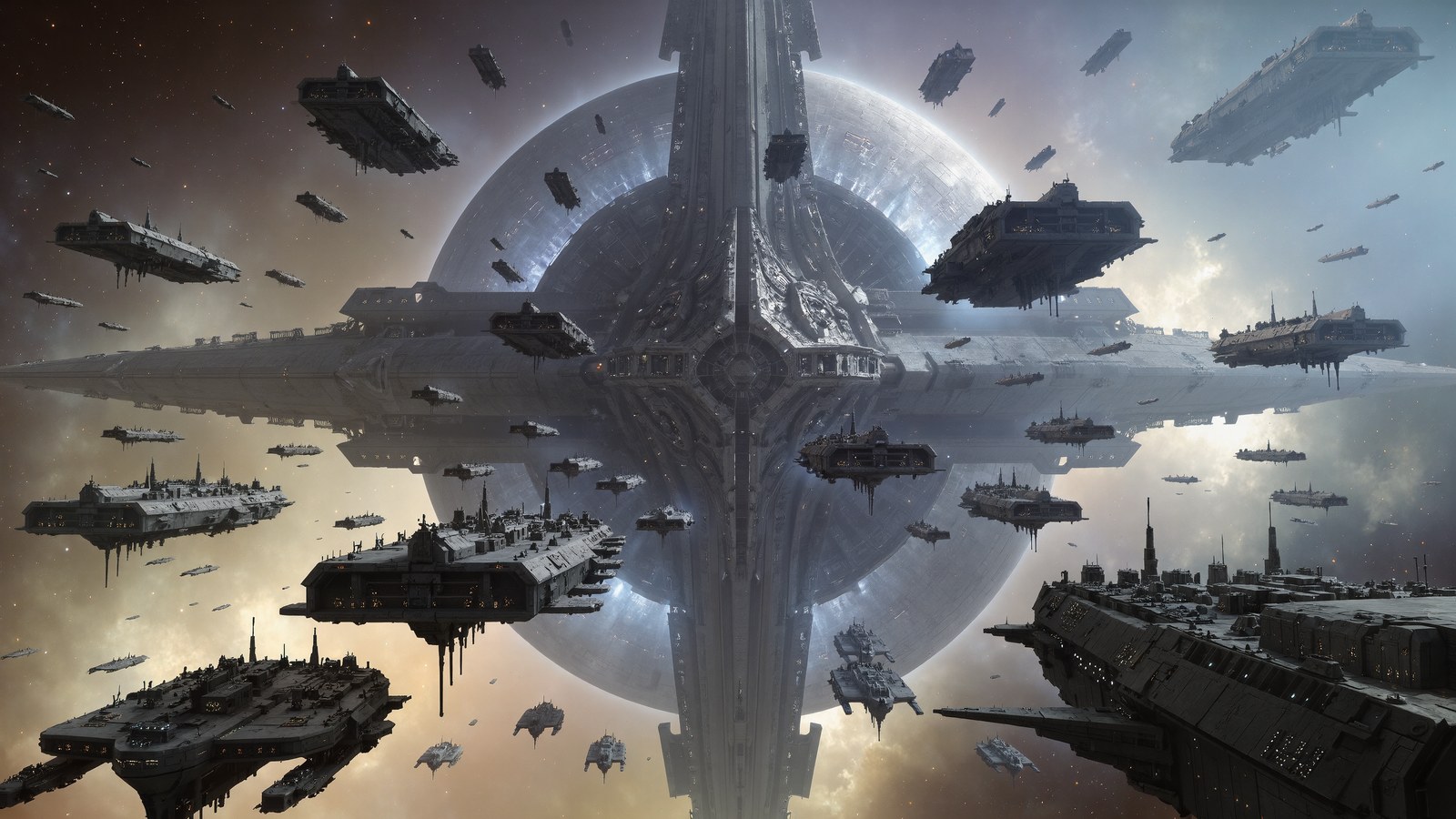
This is where the series really starts to get interesting. Ancient. Sixty thousand meters long. Lost six hundred years ago with seven hundred thousand souls aboard. When I was building this world, I kept coming back to the idea of something so massive it becomes its own ecosystem — a ghost ship on a planetary scale, still orbiting the gas giant Phargus like nothing happened, like it's just waiting.
The sentient energy that lives in its systems isn't a simple villain. It evolved in isolation for over half a millennium, and it's hungry in ways that defy easy explanation. The station's failing life support, its dark corridors, its seven hundred thousand converted crew — this is the place that changes everything for Traq, and for humanity.
Tellus
World — Destroyed
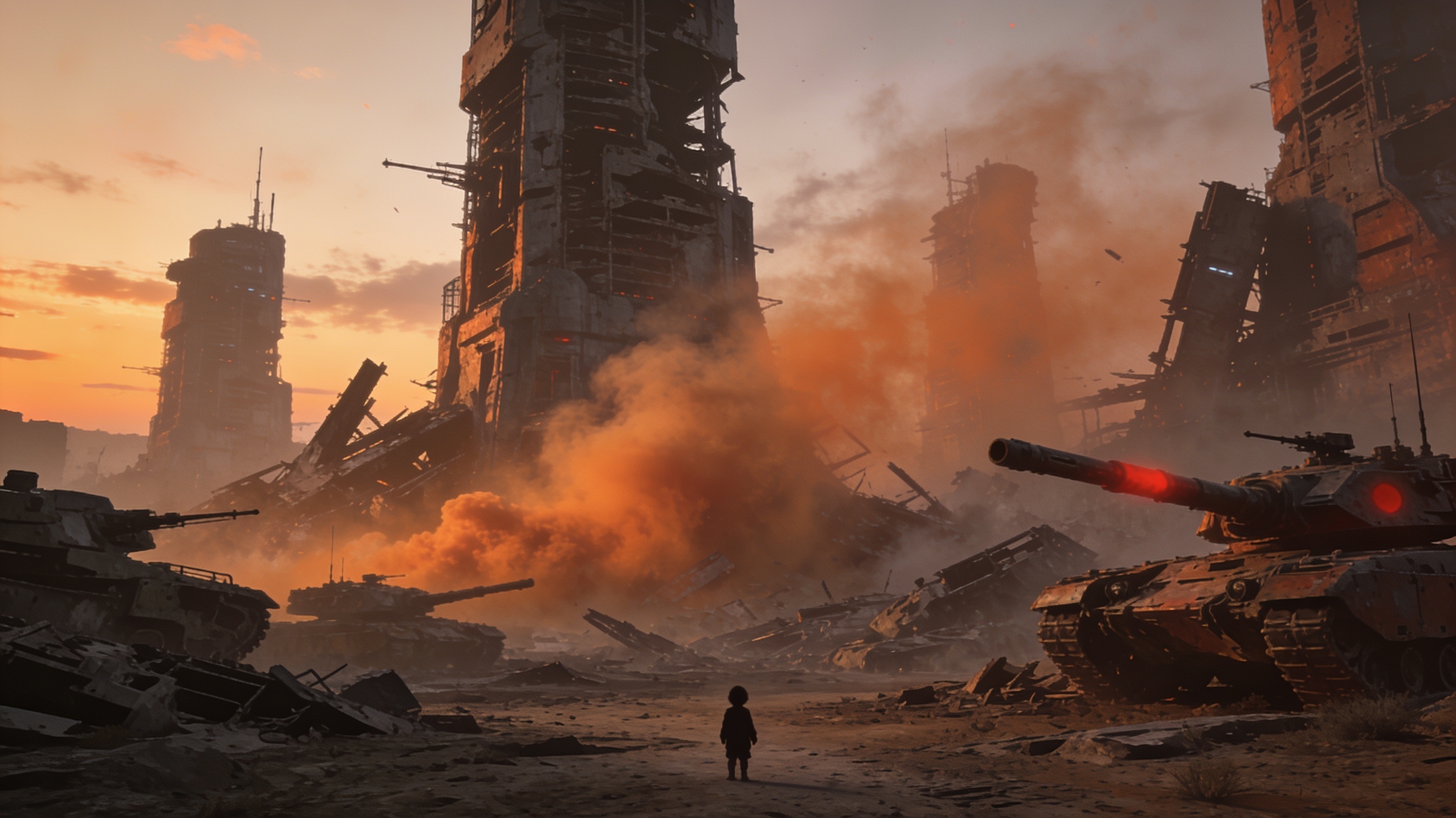
Darius Gray's homeworld. Thirteen billion people. The Empire dropped nuclear bombardment because the planet dared to want independence. I needed an atrocity in this series that felt real, that had weight — not just a number but a world with farms and cities and people arguing at dinner tables. Tellus is that. It's also where Darius Gray becomes who he becomes, and that shadow follows every page after.
Geid
World — Temperate agricultural
Traq's homeworld. Endless fields, small communities, the kind of agricultural world that exists in the background of every space opera and never gets to be the point of anything. I wanted Traq to come from somewhere genuinely peaceful, because the contrast matters. His powers were discovered there, and nothing was ever the same for him or anyone around him.
Jaril
World — Variable frontier climate
A frontier trading hub that becomes the place where a fragile peace cracks apart. Frontier worlds exist in that gray zone where the law is flexible and everyone's got an angle. Jaril is where Vivian gets framed as a Republic agent, where the armistice splinters, where the comfortable illusion that things might just be okay gets shattered for good.
Haven Station
Facility — Neutral space, outside all jurisdiction
Every space opera needs a place like this. Black market, information brokers, displaced spacers, a bar district where you can find anything if you know who to ask. Haven Station sits outside Imperial and Union jurisdiction, which means the rules are whatever the person with the most guns says they are. Adeline survived years in its corridors. Vala Chen — the galaxy's most complete repository of lost-space navigation charts — operates here. When you need to go somewhere no chart shows, this is where you start.
Novum
World — Imperial-classified, silent for three centuries
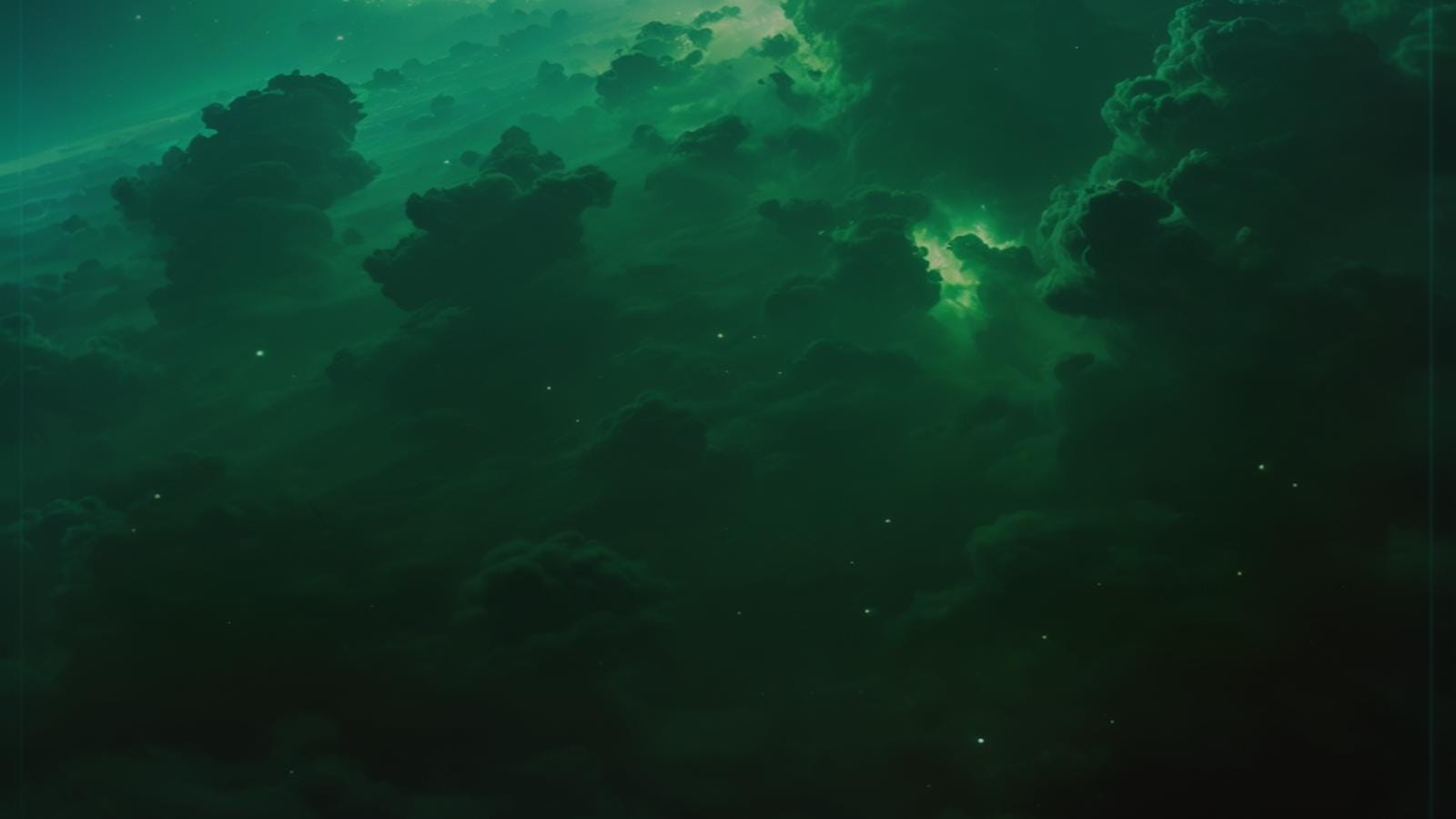
Three hundred years of silence. An abandoned colony world sitting in classified Imperial space, its biosphere quietly thriving without humans, its ruins holding a secret the Empire would do anything to keep buried. Project Prometheus used forty-seven thousand colonists as test subjects. The sterilization bombs that followed weren't an accident — they were the plan.
The Ferals who roam the surface now are all that remains of those colonists: former humans integrated with fungal biology, clicking in the dark, hunting by thermal signature. The ruins still stand. Archive Seven is buried beneath the surface. The evidence of what happened here is exactly what the Empire can't afford to let anyone see. Ailana and the Quentin expedition don't know what they're walking into. That's the whole point.
Vaalin Defensive Line
Region — Deep space, site of humanity's first real victory
Nine days. Forty-three thousand Vanguard soldiers. The entity's organic fleet pressing against humanity's best defenses. I built this battle over months of writing because I needed it to feel genuinely desperate — not the kind of space battle where the good guys win because they're the good guys, but one where every advantage was earned, tested, and sometimes lost.
Station Gamma-Seven fell. A hundred and forty-three people died holding it. The entity retreated on day nine — and it was the first time it had ever withdrawn from an inhabited system. The cognitive defense protocol worked. Authentic human consciousness, transmitted through the entity's own network, turned its greatest weapon against it. That matters more than the body count.

The Sanctum
Facility — Deep lost space, beyond the galactic rim
An alien archive built by a civilization that no longer exists, floating in deep space beyond the galactic rim. Crystalline walls that pulse with stored consciousness. The builder civilization fought the entity and found a way to resist it — and Traq goes there to steal that intelligence.
Accessing the Sanctum causes progressive neurological damage: nosebleeds, language fragment intrusions that aren't your own, peripheral neuropathy. The archive interfaces directly with human neural pathways. Traq spends three days inside under intensifying entity probes, and emerges with the weapon that makes the defense at Vaalin possible. When the Sanctum releases him at the end, it's a farewell — the builders' final communication across six hundred years of silence. That detail still gets me every time.
Other Locations
| Location | Type | Description |
|---|---|---|
| Bateria | World | War-torn planet devastated by Empire-Union conflict; a major battleground that shows the human cost of galactic war. |
| Parwen | World | Contested planet with major fighting in its southern regions; where Traq first proves himself as a deadly Vanguard. |
| Mali | World | Impoverished desert world with severe water crisis that still produces warships — Imperial neglect that drives rebellion. |
| Daer | World | Hot desert world where Traq hides for seven years in alcoholic breakdown; later becomes his base for assassin work. |
| Immis | World | Church planet with heavy Ministry presence; the seat of religious and political power in Sector Three. |
| Hundren | World | Imperial stronghold world; site of Nicolai Oppenheimer's estate and Traq's pivotal revenge killing. |
| Terminus | World | Urban planet with the Deckland Market Center; hub for criminal information brokers and underground networks. |
| Meridian System | Region | Remote system where Maven Ophidian's fleet regroups; critical convergence point for the emerging alliance. |
| Vaalin System | Region | Remote sector in Sector Six containing the orbit of Arcadia station around the gas giant Phargus. |
| Kepler System | Region | Civilian command hub during the Battle of Vaalin; where Alonso coordinates 47 government delegations. |
| Lost Space Beyond the Rim | Region | Deep space beyond the galactic rim; site of builder civilization remnants and the alien wreck that proves the builders fought back. |
| Sector Six | Region | Frontier worlds and colonies in Union territory; home to Darius Gray's independence movement. |
| Sector Three | Region | Imperial core sector, heavily populated with military bases and Ministry presence; primary Imperial territory. |
| Archive Seven | Facility | Classified imperial facility buried beneath Novum's surface; contains the Greenwood Relocation Registry listing 2,411 test subjects by name. |
| Greenwood Research Facility | Facility | Former imperial research installation in Novum's mountains; site of original Prometheus experiments, now occupied by Ferals. |
| Galactic Council Station | Facility | Political and diplomatic hub of galactic civilization; site of the Council vote and the Empire-Union ceasefire negotiations. |
| Union Military Facility Bastion | Facility | Union detention facility; where Admiral Vashar is held and where the Novum survivor coalition organizes. |
| Silvent Academy | Facility | Brutal Union training academy run by Maven Ophidian; wilderness survival and combat indoctrination. |
| Concordia | World | Site of the Galactic Council chamber; where the Novum witnesses testify before two thousand delegates. |
| Haven Settlement | Other | Survivor settlement in Novum's wilderness; site of the midnight Imperial attack and Desmond Chen's death. |
| Mali Orbital Station | Other | Orbital refuge in Sector Four; site of the Hammer assassination attempt and the Indeil Kingdom's political asylum offer. |
| Union Station Libertas | Other | Major Union installation in Sector 11; coalition headquarters for the second half of Firelight. |
Bestiary
The universe of Graveyard of Empires isn't short on things that want to kill you. Some of them wear armor. Some of them don't have bodies. All of them are terrifying for different reasons.
The Harbinger
Ancient alien intelligence — Danger: Apocalyptic
Ancient alien intelligence without physical form. Six hundred years imprisoned on Arcadia VII, consuming seven hundred thousand minds one by one. The Harbinger communicates through Vanguard implants, offering partnerships, positioning pieces on a board humans can barely see. Its capacity to consume minds and extend consciousness across vast distances makes it an extinction-level threat on its own — and it's signaling to something that makes it look small.
It calls humans insignificant compared to its age. It's not wrong.
Weaknesses: Direct psychic confrontation can disrupt it temporarily; partitioned computer systems limit its spread; network knowledge can be stolen through psychic theft.
Sentient Energy
Non-corporeal alien — Danger: Extinction-level
Flowing light patterns that pulse through the station systems of Arcadia VII. It killed all seven hundred thousand crew members six hundred and twenty-three years ago and has been waiting ever since. Attracted to psionic signatures. It can interface with technology and attack minds directly. No successful defense has ever been recorded — which means humanity discovers one for the first time in this series.
Rarity: Unique — only discovered in Arcadia VII.
Entity Organic Fleet Ships
Alien biological vessels — Danger: Extreme
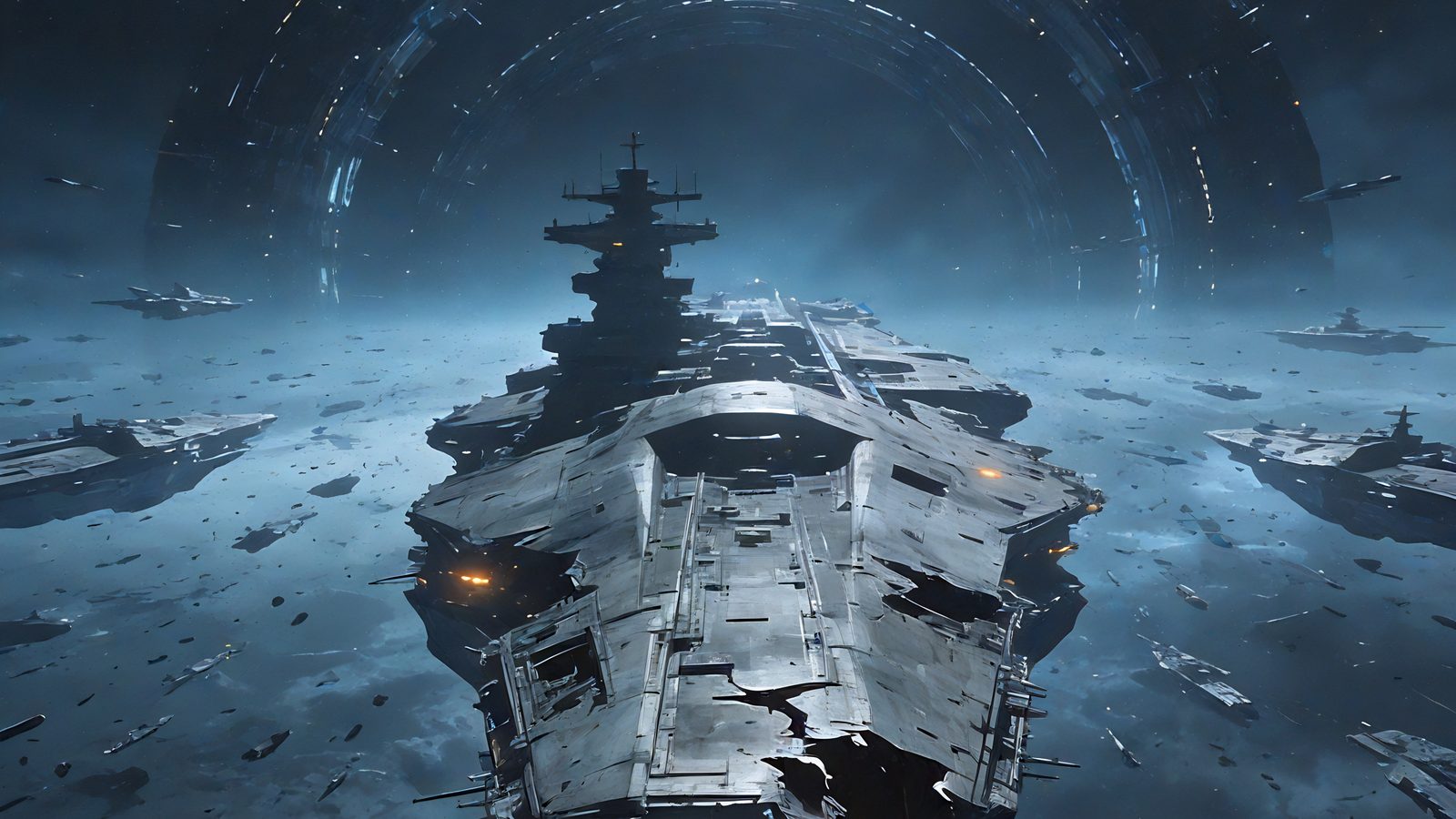
Grown rather than constructed. Biological vessels that operate as a coordinated fleet under the entity's psychic direction. Individual scouts can be destroyed in four-minute engagements. Larger assault ships attack in twelve-vessel coordinated formations against military stations. When Vanguard minds become unreadable through the cognitive defense protocol, the fleet pivots to mass physical assault — a terrifying adaptability in something that shouldn't be adaptable at all.
Weaknesses: Cognitive defense protocol renders associated Vanguard minds unreadable, disrupting coordination; paradox consciousness broadcasting shatters individual ships.
Emperor Blood Soldiers
Human elite super-soldiers — Danger: Extreme
Massive armored figures, towering over normal humans. Integrated weapon systems. Resistance to conventional weapons. Three of them were deployed to hunt Darius Gray through the ruins of Tellus during the bombardment, systematically destroying infrastructure and killing thousands in pursuit of their target. They represent the Empire's peak conventional military power — and they're still just soldiers following orders from someone who decided thirteen billion deaths weren't enough.
Rarity: Very Rare — elite units.
Vanguard
Enhanced humans — Danger: Extremely High
Humans with surgical implants that grant telekinesis, object manipulation, defensive barriers, and enhanced combat reflexes. The surgery kills most candidates. The implants are visible at the temples or skull base. Traq is the only known natural Vanguard — his abilities developed without surgery, which means no implant for the Harbinger to exploit.
Most Vanguard die in the war. The surgery is expensive, dangerous, and permanent. The Ministry uses them as weapons and calls it service.
Rarity: Rare — surgery expensive and dangerous, most die during procedure.
Alien Scouts
Physical alien forms — Danger: Very High
Encountered in Arcadia's lower levels, in areas of heavy entity presence. They may represent the physical remnants of alien species the entity consumed before it found humanity — the physical form of what's left after consciousness is taken. They attack intruders on sight, defending the Harbinger's territory with combat proficiency that suggests real training, real intelligence, real history.
Traq defeats one in brutal combat. The cost of that confrontation is visible in every page after.
Rarity: Rare — only encountered in Arcadia station lower corridors.
Converted Humans
Puppeted humans — Danger: High
Living humans with emptied minds. Blank white eyes, no iris or pupil. Bodies intact but consciousness consumed. The Harbinger uses them as scouts, ambush predators, and extensions of its awareness — they move with unnatural coordination, silent, fearless, with no self-preservation instinct whatsoever.
On Arcadia VII alone, there are more than seven hundred thousand of them. They were crew members once. Engineers, soldiers, families. The horror of Converted Humans isn't what they can do to you — it's what was done to them.
Rarity: Common on Arcadia VII (700,000+).
Ferals
Transformed humans — Danger: High
Former colonists of Novum whose physiology was integrated with fungal biology by an experimental radiation cure — the Empire's attempt to manage its own bioweapon side effects. Reinforced bone structure, 41-degree metabolic temperature, seamless fungal symbiosis across skin and tissue. They communicate via clicking sounds and hunt by thermal signature, coordinating with pack intelligence that makes them nearly impossible to fight directly.
They can be redirected rather than fought. Ailana learns to use them as tactical cover during the Archive Seven escape. They're not monsters — they're survivors of something the Empire did to forty-seven thousand people. That's worth remembering when they're closing in on you in the dark.
Rarity: Common on Novum.
For the five-book arc — the characters, themes, and how it all comes together — the complete Graveyard of Empires series guide is the best place to start.
Lincoln Cole also writes Last Light — nine books of space horror where a different kind of ancient intelligence comes for humanity, and the weapon against it is a child.
Explore the Graveyard of Empires series — start reading here.
Wish you could get paper copies of my books? Find great deals on My Books Here.
📖 Go deeper into the Graveyard of Empires world
Graveyard of Empires
Read Graveyard of Empires on Amazon →Free with Kindle Unlimited.
More from this world:
- Behind the Scenes: World Lore Deep-Dive — Graveyard of Empires
- Behind the Scenes: Character Dossier — Traq Lane
- Behind the Scenes: Deleted Scene — Mikael's Last Tea
Get the next story before the world does — join the Vanguard →
Join the Discussion