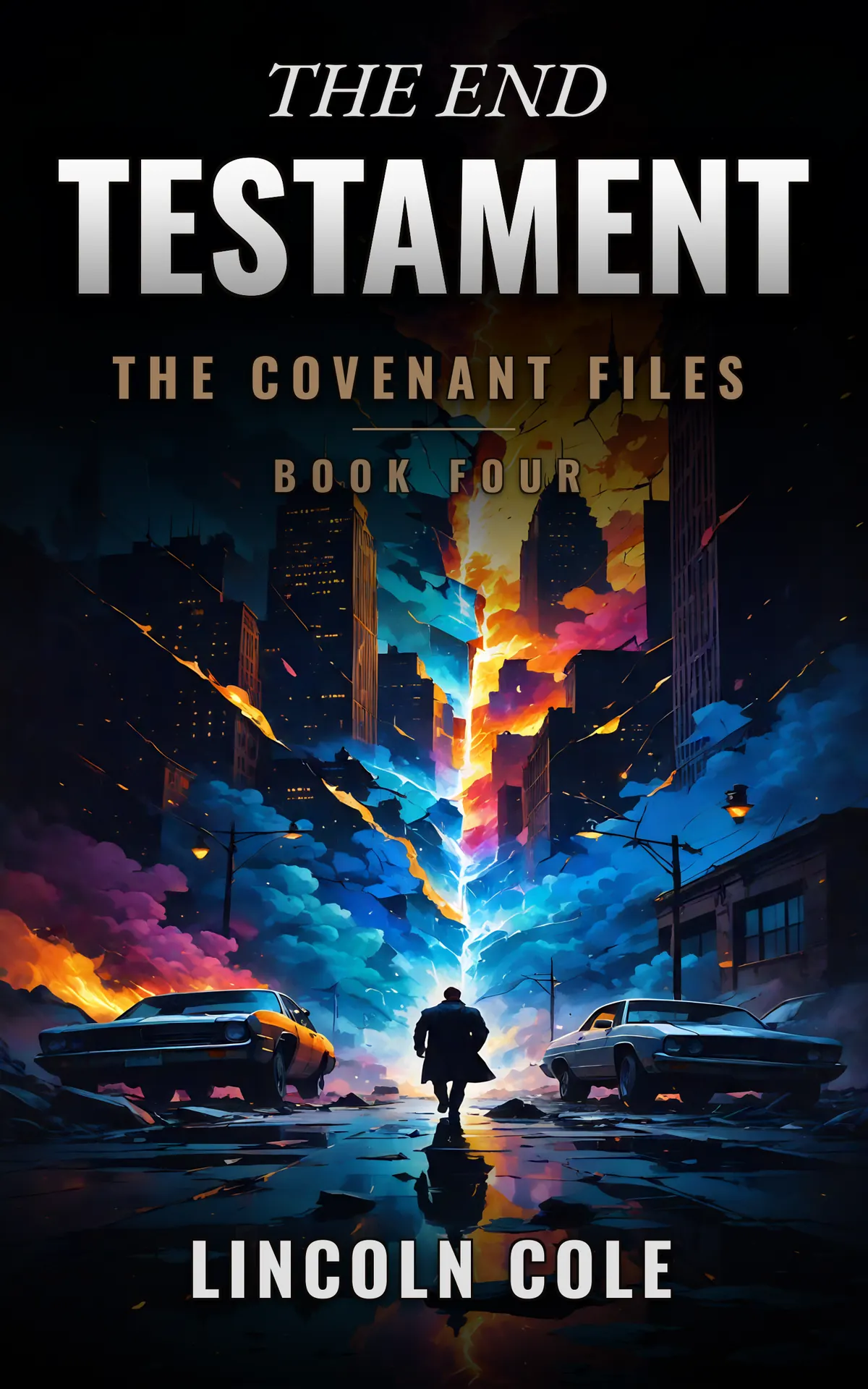
The End Testament
When faith fails, only the fallen remain to save us all.
Included with Kindle Unlimited. Also available in paperback and audiobook where noted.
A defrocked exorcist discovers his murder victims are angel-human hybrids — and the Church has been exterminating them for centuries. When cosmic factions converge, he becomes the only man all sides trust to mediate, because he has nothing left to lose and no loyalty to sell.
When Lily's daughter Hope arrives across 412 timelines as a load-bearing element of dimensional reality, Marcus Kane convenes the first-ever Assembly of cosmic factions at Holy Redeemer: Heaven's Metatron, Hell's Brimstone, Cardinal Rossetti, Detective Chen and her daughter Maya, and Death himself. But the birth awakens something older than all of them — the Pre-Categorical Void, the primordial non-existence that predates creation, demanding institutional recognition as a valid third option alongside eternal reward and eternal consequence.
When Marcus drafts a twelve-page governance framework and the Void accepts unconditionally, Phase Six begins: humanity's first voluntary cessation program for manifested humans whose suffering cannot be treated. Case 001 is a man who cannot stop perceiving every possible death of his family. Case 007 is a Catholic woman who wants rest, not eternity. Their cases force Marcus to administer mercy at the edge of everything that exists — and contest Heaven's authority before God herself.
But doors open both ways. The same Undoing that made Hope possible is destabilizing reality. Cascade probability crosses fifty percent. And the Bridge begins to understand what he is actually protecting.
This is for you if…
- You want a world that feels lived-in, with a cost for every choice and blood behind every throne.
- Tight third-person POV keeps you close to the people who matter — and far from the ones who don't.
- You're looking for a world to live in, not a single weekend read. The Covenant Files runs deep.
Start reading
Fourteen thousand, two hundred and seventeen simulations, and the answer hadn't changed.
Lily sat cross-legged on the floor of the Holy Redeemer basement, her back against the wall where Marcus had hung a corkboard that now held seven months of Commission correspondence, her tablet balanced on the shelf her belly had become. The baby shifted — a slow roll, hip to ribs, arriving at seven o'clock sharp the way she did every evening. Lily breathed through the pressure. Her diaphragm had surrendered its full range of motion weeks ago, traded to the small person occupying the space where her lungs used to expand, and breathing had become a negotiation rather than an autonomic function.
The simulation matrix filled the tablet's screen. Each thread represented a probability line — a future, a potential, a way the world might go. Standard pregnancies produced signatures like bundled fiber optic cable: coherent, directional, converging toward a narrow range of outcomes that differed in detail but agreed on structure. One child. One timeline. One set of possibilities narrowing toward a single birth.
Hope's signature looked like the inside of a star.
The probability threads didn't converge. They coexisted — hundreds of futures occupying the same temporal space, overlapping without canceling, interfering without destructing. Each thread was a complete life, a full timeline, a version of Hope that existed simultaneously with every other version, and Lily could see every one of them. Some were beautiful. In thirty-seven percent, Hope grew up quiet and watchful, a girl who understood dimensions the way other children understood gravity — instinctively, without effort. In twenty-two percent, she was fierce, a presence that bent reality around her the way massive objects bent spacetime, not through force but through sheer existential density. In eight percent, she never learned to speak. In those timelines, she didn't need to. Language was sequential, and Hope's consciousness was simultaneous.
In four percent, she died before her first birthday.
Lily closed the four percent. She'd reviewed those threads six hundred times. She'd mapped the causal chains, identified the failure points, calculated the intervention windows. The four percent was managed. Contained. She could prevent it — she was already preventing it, her probability calculations informing every decision Marcus made about security, faction access, birthing conditions. The four percent wouldn't happen because Lily had seen it, and Lily didn't allow preventable outcomes to materialize when her people were inside the probability envelope.
The problem was the eighty-seven point three percent.
She expanded the macro-analysis. The threads that didn't include Hope — the counterfactual runs, the simulations that modeled what happened if the pregnancy had never occurred, if the dimensional resonance from the Undoing had produced energy without direction, potential without expression. In those threads, the probability landscape was catastrophic. The dimensional architecture that the Undoing had restructured — two paths, expanded categories, the new theological framework — destabilized without an anchor. The paths diverged further. The thin places thinned. The hellmouths widened. The boundary between existence and whatever lay beyond it eroded with the steady patience of water against limestone, and within three years the erosion reached critical failure and the dimensions collapsed into each other like a building whose load-bearing walls had been removed.
Eighty-seven point three percent. In eighty-seven point three percent of timelines where Hope didn't exist, reality itself failed within three years.
Hope wasn't a child. Hope was a structural necessity.
Lily had processed this six months ago, sitting in this same position against this same wall while the simulation completed its first counterfactual run. She'd stared at the number — 87.3 — and her mind had delivered its verdict with the dispassionate clarity that made her valuable to the Commission and sometimes unbearable to the people who loved her. Hope's existence was load-bearing. The pregnancy wasn't a biological event with cosmic implications. It was a cosmic event with biological expression. The dimensional resonance hadn't merely caused conception. It had generated the specific being required to anchor the architecture that the Undoing had created.
Read in orderThe Covenant Files · 5 of 5 available
View series →
Finished with The Covenant Files?More worlds by Lincoln Cole
Last Light
9-book seriesA child marked by cosmic horror becomes humanity's only bridge to an entity that does not want to conquer - it wants to merge.Start the series →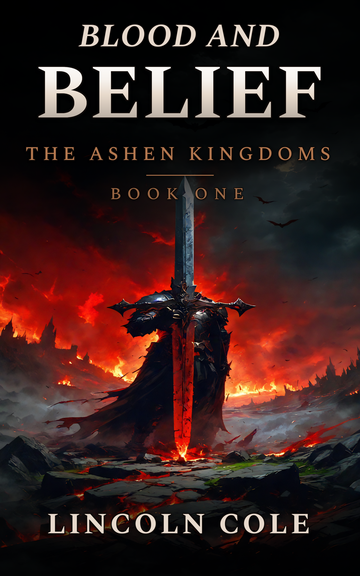
The Ashen Kingdoms
5-book seriesIn a world where everything burns, they build from ashes.Start the series →
World of Shadows
3-book seriesBefore the fire consumed the world, shadows hid the truthStart the series →
World on Fire
3-book seriesFaith is a weapon. Redemption is a sacrifice. Hell is coming.Start the series →
Escape
2-book seriesFour nightmares. Seventeen iterations. No escape. The cycle is eternal.Start the series →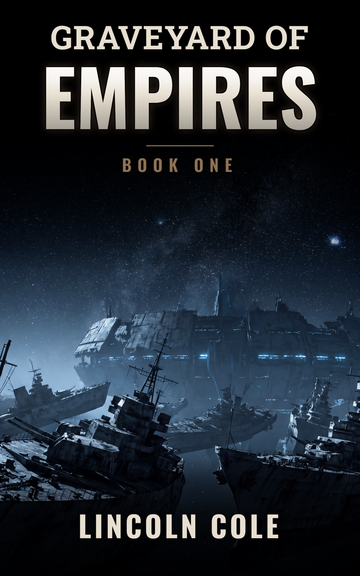
Graveyard of Empires
2-book seriesIn the graveyard of empires, the dead never rest—and neither do the secrets buried with them.Start the series →
Horizons Wake
2-book seriesTechnology doesn't just change the future—it damns itStart the series →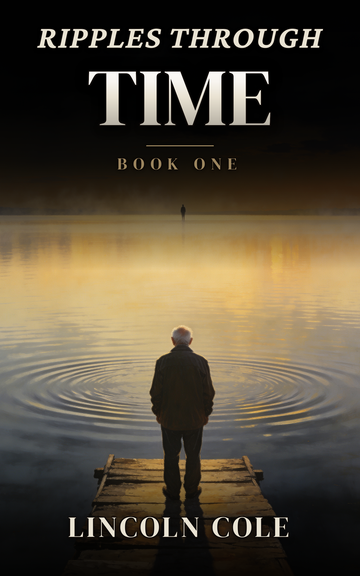
Time
2-book seriesStart the series →
Lincoln Cole also builds voice games for Amazon Alexa. Explore the Alexa games →
Continue the story
A defrocked exorcist discovers his murder victims are angel-human hybrids — and the Church has been exterminating them for centuries. When cosmic factions converge, he becomes the only man all sides trust to mediate, because he has nothing left to lose and no loyalty to sell.