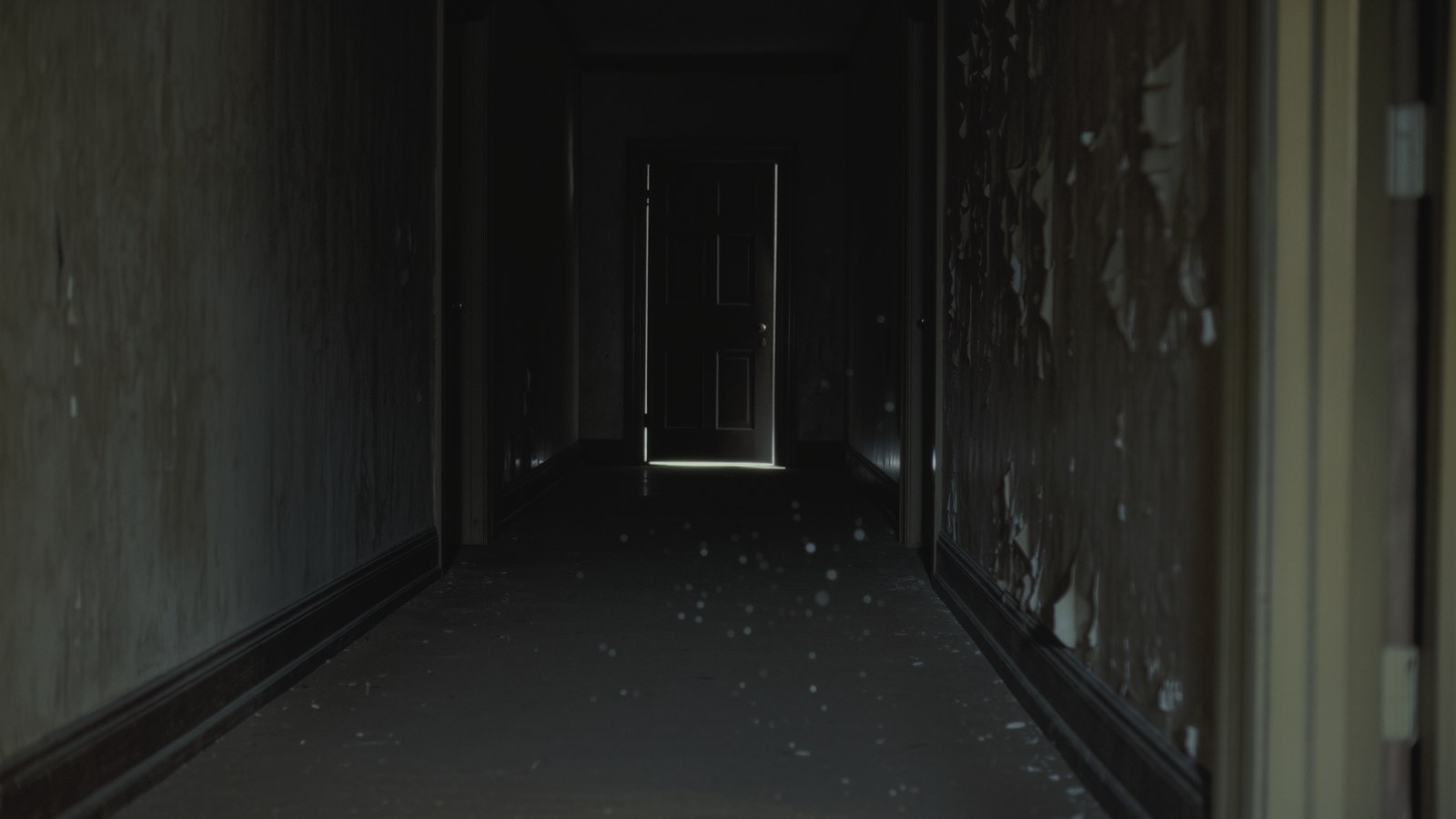

The first time I tried to scare someone through an Alexa game, I failed completely, and the failure taught me more about horror than ten years of writing it on the page.
I'd written what I thought was a chilling scene. A door. A thing behind it. A slow, dread-soaked description of the thing. I loaded it up, said the words, and the little speaker on my counter read my masterpiece aloud in its calm, helpful, customer-service voice.
It was not scary. It was a robot describing a monster. The gap between those two things is the whole craft of writing horror for a voice you can't see, and figuring out how to close it changed how I write fear everywhere, including in my books.
You lose everything you usually lean on
Sit down to scare a reader on the page and you've got a toolkit. Typography. White space. A single short line alone on a page. Chapter breaks that make them turn the paper. The visual rhythm of the prose doing half the work before they've even parsed a word.
Now take a screen-based scare — a horror game, a film. Jump scares. The thing lunging out of the dark. Music that tells your body to be afraid a half-second before your brain knows why. Lighting. The monster, finally shown.
Writing for Alexa, you have none of it. No page to design. No screen to light. No image to reveal. No control over the voice — it's going to read your worst nightmare in the same tone it reads a weather forecast. You can't even use punctuation tricks, because the voice doesn't perform a dramatic ellipsis; it just keeps talking.
For a while that felt like writing with both hands tied. Then I realized it's the oldest, purest form of the genre, and I'd just never been forced to work in it.
It's radio horror, and radio horror is the scariest there is
Before screens, people were terrified by sound alone. Radio dramas in the dark. A creaking door, a held breath, a scream cut off — and the rest built entirely inside the listener's skull. The single most famous mass panic in broadcast history came from people listening to a voice describe an invasion they couldn't see.
That's the tradition you're actually working in with a voice game. Not video games. Radio. And radio understood something the jump-scare crowd forgets: the monster you describe is never as frightening as the one the audience builds for themselves. Show the creature and you've capped the fear at whatever your effects budget allows. Make them imagine it and the fear is calibrated, by their own mind, to exactly what frightens them most.
Alexa can't show the monster. That's not the limitation. That's the weapon. The dark behind the speaker is bigger than any screen, because the player is furnishing it themselves.
Pacing is all you have left, so pacing becomes everything
When you strip away the visuals, what's left to control fear is rhythm. Sentence length. The order of information. When you let the player speak, and when you make them sit in silence.
A long, winding sentence in that calm voice lulls. It's almost soothing. So you use it to build false safety — let the listener settle, let the helpful voice describe the ordinary room, the quiet hall, nothing wrong here.
Then you cut it short.
Three words. Read aloud, in that flat tone, a sudden short line lands like a slap precisely because the voice doesn't dramatize it. The contrast does the work. The calm makes the cut colder. I learned to write the scare as the shortest possible line right after the longest possible one, and to trust the machine's own deadpan to deliver it.
The other tool is the question. A voice game makes the player talk back. Which means you can stop, and ask, and wait. "What do you do?" And then nothing. The speaker goes quiet and the player is alone in a room with a decision and a silence they have to fill. That pause — real, literal silence in their actual kitchen — is more frightening than any sound I could pump into it. You can't get that on the page. The page can't make a reader sit in the dark and wait.
Second person, in your own house
There's one more thing voice does that print can only gesture at. It's happening to you, out loud, in your home.
A book says "she walked down the hall." A voice game says "you walk down the hall," and the device three feet from your bed says it in the dark, and you are the one who has to answer. The second-person present tense, which can feel gimmicky on the page, is just the native grammar of the form here. There's no narrator buffer between the player and the fear. The story is addressing them, by implication using their name, in their space.
I lean on that hard. The horror in my Alexa games — the dread in Darkness Falls, the slow wrongness threaded through Murder Mystery, the things that move at the edges of Dark Citadel — almost never comes from describing something gross. It comes from implicating the listener. Making them choose. Making them the one standing in the hallway. The scariest sentence in a voice game is usually not a description at all. It's a question the player doesn't want to answer.
The machine reads everything, so the writing has to be clean
There's a brutal, literal constraint in writing for Alexa that turned out to be a craft gift in disguise: the voice reads everything, exactly as written, and it cannot perform.
You can't write "HP." It'll spell out the letters, or worse, mangle them. You can't lean on parentheses for an aside; the voice just barrels through them like they aren't there. No slashes, no abbreviations, no clever em-dash timing, no visual shorthand of any kind. Every single thing on the page gets spoken aloud in plain, even sentences by a machine with no sense of drama and no intention of acquiring one.
At first this felt like a straitjacket. Then I noticed what it was doing to my writing. It was forcing me to put all of the meaning into the words themselves, in natural spoken English, because there was nowhere else to put it. No formatting to lean on. No typography to fake a mood I hadn't actually earned in the sentence.
That's a discipline most prose never gets forced into. On the page you can counterfeit atmosphere with line breaks and italics. Spoken flat by a robot, counterfeit atmosphere just evaporates, and you're left with whatever the actual sentence is doing. If the dread isn't in the words and the rhythm, it isn't anywhere at all. Writing under that rule made me a cleaner, plainer, more honest writer, and I didn't go looking for the lesson. The speaker made me learn it.
Choice is the scariest mechanic
The other thing a voice game has that a book doesn't is the player's own decisions, and in horror, choice is a more powerful engine of fear than any description you could write.
Read a scary book and the dread is happening to someone else while you watch. Play a scary voice game and the dread is happening to you, and you caused it. The story stops and asks what you do, and now the fear has your fingerprints on it. Open the door or back away. Go toward the sound or run. Every option is a small commitment, and committing is scarier than observing, because now it's your fault.
I learned to weaponize the menu itself. The worst moment in a horror scene isn't the monster. It's the instant before you choose, when both options feel wrong and the calm voice is just waiting on you. Two bad choices and a patient silence will do more to a player's nerves than a page of gore ever could. So I write toward those forks on purpose — moments where there's no safe answer, only the one you'll have to live with — because dread is mostly anticipation, and a choice is pure anticipation with the player's own hand on the knife.
Even a dead end can be a scare if you build it right. The path that closes behind you. The option that was there a minute ago and is gone now. The slow, dawning sense that the choices are narrowing, and not in your favor. You can't do that to a reader. You can do it to a player, because they're steering — and taking the wheel away one option at a time is its own particular kind of horror.
Anatomy of a voice scare
Let me take one apart, the way I actually build them.
Start with calm. The helpful voice describes an ordinary thing in an ordinary way — a long, unhurried sentence about a quiet room, nothing wrong, the kind of line that lets the player's shoulders come down. The deadpan delivery is your friend here. It sounds like safety.
Then drop in one detail that's slightly off. Not a monster. Just one thing that doesn't fit, stated plainly, with no emphasis, because the voice can't emphasize anyway and that is exactly the point. The player's own brain does the flinching. The robot won't tell you to be afraid, so when the wrong detail lands flat and unremarked, it's the listener who has to decide it matters. They always do.
Then cut the sentences short. Shrink them. Let the rhythm tighten until the lines are almost nothing.
Then stop. Ask what they do. And wait.
That silence is the whole scare. Everything before it was just loading the spring. The player is now standing in their own dark kitchen, addressed directly, holding a choice they don't want, inside a quiet that they are going to have to be the one to break. No image could do that. No jump scare could do that. Only a voice in a room, saying a small true-sounding thing and then, terribly, going still.
The constraints made the writing honest
Here's what I didn't see coming. Working under all those restrictions made me a better horror writer on the page too.
Because Alexa reads everything aloud, you can't hide behind ornamentation. Purple prose that looks atmospheric on paper sounds ridiculous spoken in a flat voice. The form forces you to find the fear in the bones of the sentence — the rhythm, the timing, the implication — instead of dressing it up in adjectives. You learn that a clause too many kills a scare. That the scariest thing is almost always the plainest sentence, placed exactly right.
I started cutting my book prose the same way. Reading horror passages out loud to hear whether the dread survives a deadpan delivery. If it only works because the typography is doing something clever, it doesn't really work. If it still raises the hair on your arms when a robot reads it in a monotone, you've got something real.
It's a test I'd recommend to any horror writer, even ones who'll never go near a voice game. Hand your scariest page to the flattest reader you can find — a phone's text-to-speech will do — and listen. Every cheap effect falls away. What's left, the part that still works without any performance propping it up, is the actual horror. Everything else was decoration, and decoration was never what scared anybody.
That's the gift the constraint gave me. It stripped horror down to its actual mechanism: not the monster, not the gore, not the reveal, but the controlled withholding of information and the dark the audience fills in themselves. A speaker that can't show you anything turns out to be the perfect teacher for a genre that was always, secretly, about what you can't see.
The thing behind the door is still back there. I never did describe it. That's the point. You already have.
Play it: say "Alexa, open Darkness Falls" and stand in the hallway yourself. It's one of several voice games I build — no screen, all dark.
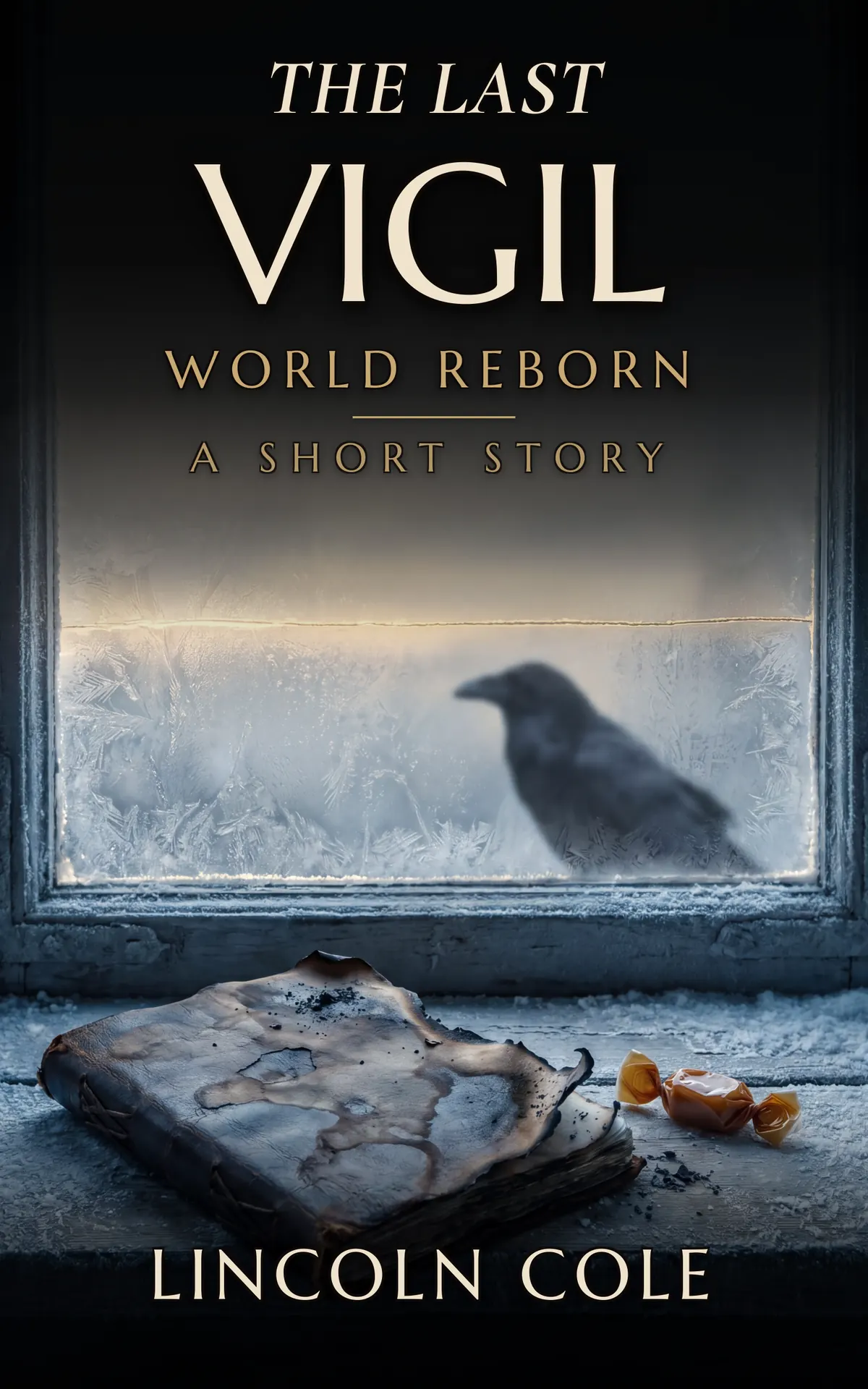
Read it: I also write dark fiction. Start with Raven's Peak, book one of World on Fire, or browse the whole shelf at the books hub.
Join the Discussion