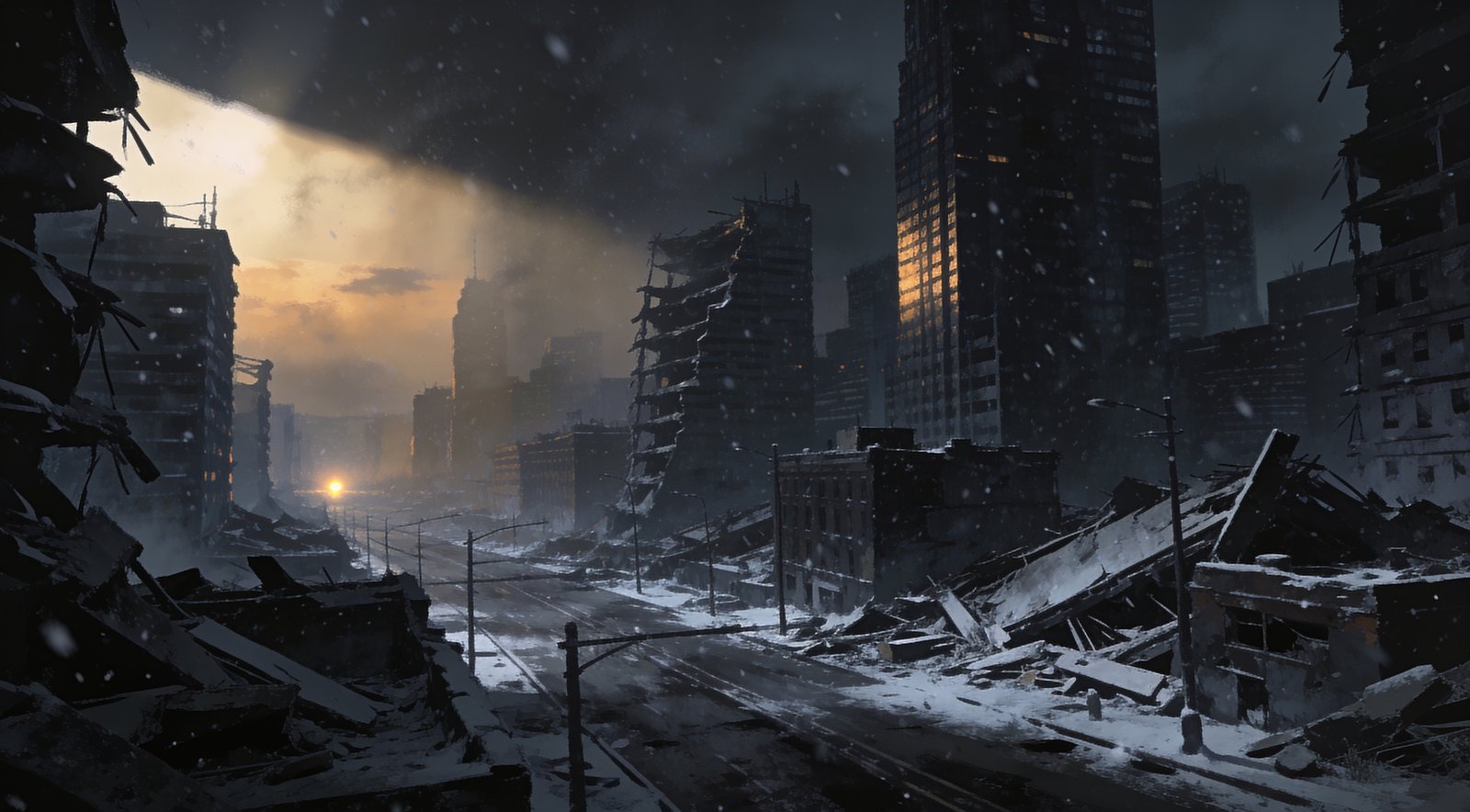

A child file with no good answers
Kate Morrison's official DDI file fits on three screens. Date of birth is approximate — her mother filled out the form by hand, on a dock at Trevatra, three months late. Place of birth is a freighter berth that no longer exists; the freighter does not exist either. Surviving family at intake: none. Behavioural notes: high cooperation, low affect, age-inappropriate vocabulary, persistent humming.
That is the public Kate. This document is the other one.
Before the corruption
Kate's mother was named Diane. She was a freight-route logistics planner who married into a small, mostly Earth-side family and kept moving anyway. There is no father in the file because there was a father, but Kate never met him in any way she remembers. He was a seasonal contractor on the Outer Rim listening posts, and he was reassigned the year Kate was conceived. Diane did not pursue him. Diane was the kind of woman who handled disappointments by walking through them.
The thing the books never quite got onto the page is that Kate had a normal early childhood. She had a small grey cat that lived on the freighter for the first four years of her life. She had a favourite song her mother sang her, which was a freighter-deck work song with most of the verses softened. She liked numbers. She liked the names of stations. She used to make her mother say the names of every Lagrange-point installation in order, and she would correct her mother when her mother got one wrong.
That child existed for eight years. Then she went to Sanctuary with her mother on a routine resupply, and the corruption came down through the venting system, and the child stopped existing in the way she had been existing, and the new child began.
The song
What Kate calls the song is the Hollowing's continuous transmission across whatever it has made readable. Most people cannot hear it at all. The few who can usually do not survive the hearing. Kate is the third documented exception in the modern era, and the only one whose neural development continued past contact.
In the books I describe the song through metaphor — a humming under thought, a low-pressure weather system, a colour she does not have a word for. The metaphor is doing real work, but it is also concealing the literal truth, which is that Kate hears the Hollowing the same way the rest of us hear our own heartbeat. It is constant. It is internal. It is below the threshold of focus until something makes her listen for it, and once she listens, it is the loudest thing in the room.
This is the architecture of every panic attack she has across the series. It is also the architecture of her composure. She has been listening to a continuous transmission since she was eight. The reason she is calm in the situations that break adults around her is that she has been calm during something worse, every minute, since the day her mother died.
Private motivations
Kate's surface motivation, the one Marcus and Chelsea can see and act on, is to be useful enough to stay alive. She figures this out very quickly after Sanctuary. She is not naïve about her position. She knows, by book four at the latest, that she is alive on the strength of being an asset, and that an asset that stops working is reassigned to other categories.
Underneath that is a second motivation, which is harder to articulate and which the books only let her say in pieces. Kate wants the song to stop. Not because it hurts — she has stopped registering the pain as pain — but because she can hear something inside it that is not corruption and not threat. She can hear that the Hollowing is lonely. She has been hearing it since she was eight. She has been carrying that information for almost ten years by the end of the series, alone, because no adult around her would understand what she meant.
The third motivation, the one she only says out loud to Chelsea once, is the motivation that ends up running everything. Kate wants the Hollowing to be allowed to leave. Not destroyed. Not sealed. Allowed to leave. She is the only character in the series who, from book one onward, sees the Hollowing as something that can be talked to. She is the only character who notices that nobody has tried.
The arc of the series is the arc of every other character catching up to her on this point. By book eight, Nigel is there. By book nine, the council is there. Kate has been there the whole time. That is what the song was telling her.
Childhood lost
It is important to be honest about what Kate did not get.
She did not get to grow up. Not in the ways that matter. She did not have school in any normal sense. She did not have friends her age. She had Chelsea, who loved her, and Marcus, who advocated for her until the Hollowing exposure killed him, and a rotating set of analysts and handlers who were professionally obligated to keep their distance.
She did not get to be silly. There is one scene I cut from book five — it is partly the deleted-scene companion piece to this dossier — in which Chelsea takes Kate down to a corridor on the Eclipse flagship that the crew used as an informal music room. There is a guitar. Kate does not play. Chelsea plays badly. Kate laughs for ninety seconds, and the laughing ends because Kate hears the Hollowing get louder for a moment, and she stops, and she does not laugh again for two books.
That is what childhood lost looks like in this series. It is not a montage. It is one corridor and one guitar and the song getting louder.
The transformation
The transformation is the part of the dossier the surveys keep asking about. What is happening to Kate physically? What is she becoming? Is she still her?
The answers, in order:
She is rebuilding. The Hollowing did not change her body so much as it gave her body access to a second set of building instructions. From the Sanctuary incident onward, Kate's cells are running both sets simultaneously — the human one her mother gave her, and the Hollowing one the song wrote into her. The visible effects of this — the iris colour shifts, the temperature anomalies around her, the way photographs of her come out wrong — are second-order consequences. The first-order consequence is that her body is increasingly able to occupy the seam between dimensions without being torn apart by the geometry there.
She is becoming an interface. Not a weapon. Not a seal in the sense that the original closers were seals. An interface — a structure capable of translating between dimensional layers without losing coherence in either. By book seven this is irreversible. She is no longer entirely human in the strict biological sense. She is no longer entirely separable from the Hollowing in the strict cognitive sense. She is becoming the thing that allows the song and a human voice to travel through the same channel without one drowning the other.
She is still her. This is the load-bearing answer of the series, and it is meant to be load-bearing. Kate's selfhood does not survive intact through the transformation; nothing about her survives intact, including her body. But the part of her that wanted to listen to the song, the part of her that wondered what the Hollowing wanted, the part of her that thought it deserved to be allowed to leave — that part is structural to the interface she becomes. The interface is built out of that question. The interface is, in a real sense, that question, expressed in the language of dimensional physics.
So yes. She is still her. She is more her than she has ever been. She is the version of her that can finally do the thing she has wanted to do since she was eight.
Ultimate fate
Book nine ends in a place that is meant to be hard to read in either direction. Kate is in the barrier. The barrier is holding. Signals are coming back. Chelsea is on the other side of the signals, every day, refusing to let her be alone.
What I will say in this dossier that the books do not say: Kate is not in pain. The barrier is not eternal isolation in the sense the council fears. The barrier is the seam, and the seam is, from Kate's side, a place. She has built a place there. It is not a comfortable place. It is not a place you would choose. But it is a place, with weather and light and the song now quiet enough to be background, and Kate is in it, and she is teaching.
She is teaching the Hollowing what it has spent its existence asking to be taught. She is teaching the next generation of sensitives, through Alexis Chen, what to listen for. She is teaching Chelsea that love can survive a dimensional barrier, which is a thing Chelsea already knew and refuses to stop proving.
What she would want her file to say
I think Kate, if she were allowed to write the last line of her own dossier, would write something practical. She has always been practical. She would not write about sacrifice, because she did not feel like she was sacrificing. She would not write about heroism, because she does not believe in it. She would write something like this:
I heard a song nobody else could hear. I listened for nine years. I learned what it was asking. I gave it the answer.
And then she would correct the spelling, and she would hand it in.


Join the Discussion