The World of Last Light
Space is quiet in ways I find genuinely unsettling. No sound, no weather, no ambient noise to tell you something is alive out there. When I built the Last Light universe, I leaned into that silence hard. I wanted every location to carry that weight — the pressure of the void pressing in from all sides, and the creeping horror of what happens when something from beyond the void starts pressing back.
The thing is, the corruption in Last Light isn't loud. It doesn't announce itself. It's the generation ship that's still running perfectly, all systems nominal, coffee still warm in the cup — but every single colonist is gone. Not dead. Absorbed. Changed into something that still remembers being human, still gathers socially, still forms bonds. That retained humanity is what makes it so disturbing to me.
The world spans multiple star systems connected by warp routes humanity depends on completely. Remove those routes and civilization collapses. Humanity is stretched thin across the stars, vulnerable in ways it doesn't fully recognize until it's almost too late. And at the center of everything, carrying a weight she was never meant to carry, is an eight-year-old girl named Kate Morrison.
Here's what makes Last Light's world different from other space horror settings: the threat isn't trying to conquer anything. It wants to merge. That distinction shapes every location in the series — every space station, every generation ship, every moon base — because nowhere is truly safe when the enemy's goal isn't destruction but consumption.
Key Locations
New Haven Colony
World — Population: ~1 million (before entity arrival)
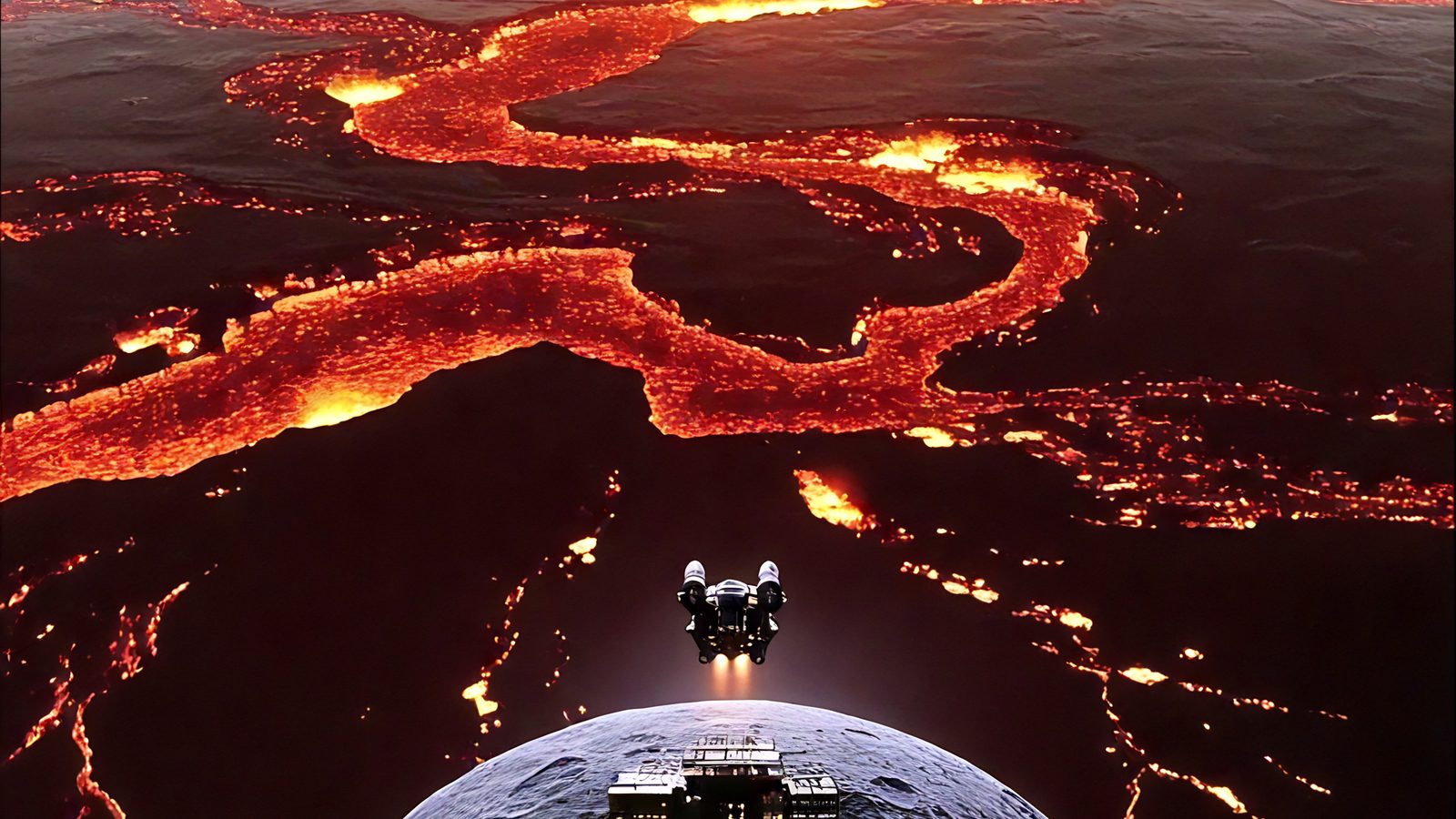
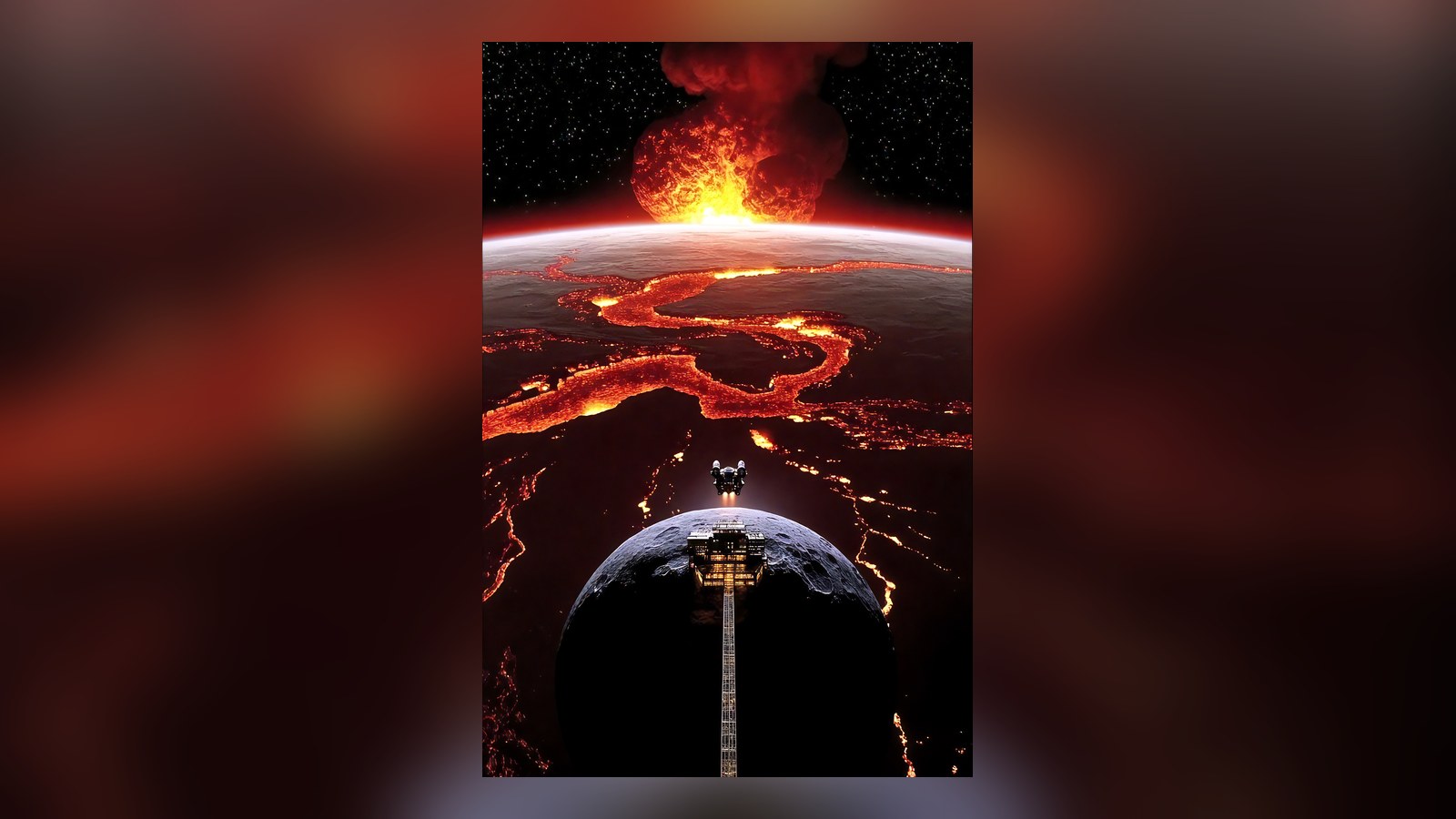
New Haven is where it begins. A human colony planet, a functioning civilization with a moon base and research facilities and all the ordinary infrastructure of interstellar settlement. And then the corruption arrives.
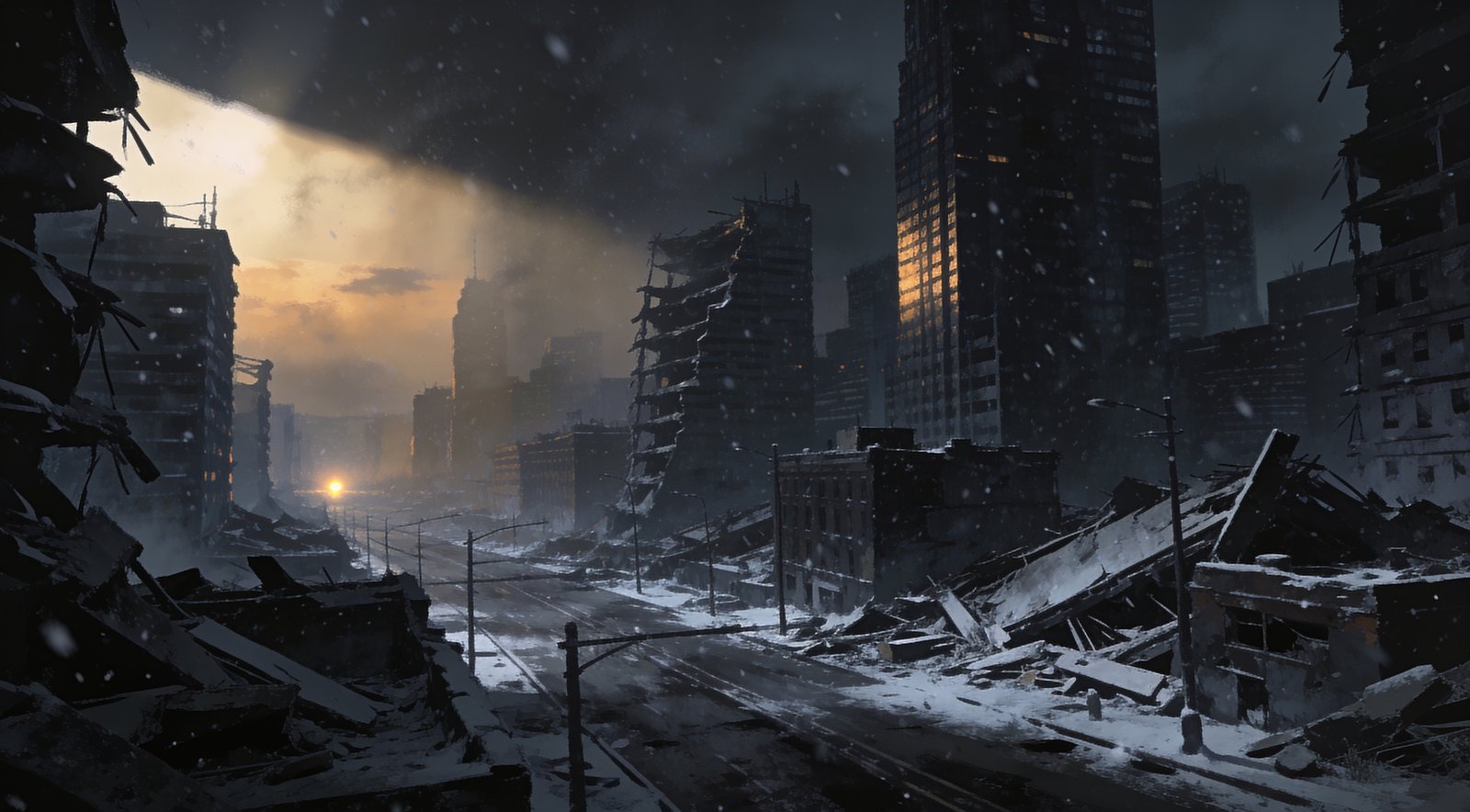
What I wanted New Haven to represent is the idea that civilization is fragile in ways we don't think about. One moon base. One initial contact. And from there, everything unravels with terrible, quiet efficiency. The colony doesn't explode or burn — it just changes. The moon base fills with dust. The city plazas empty. And at the center of it all, the Central Tower grows.
New Haven is gone by the end of the first book, sealed behind a Void barrier permanently. I wanted readers to feel that loss as something irreversible — not a temporary setback but an actual ending. Humanity doesn't get it back.
The Sanctuary
Generation Ship — Deep Space
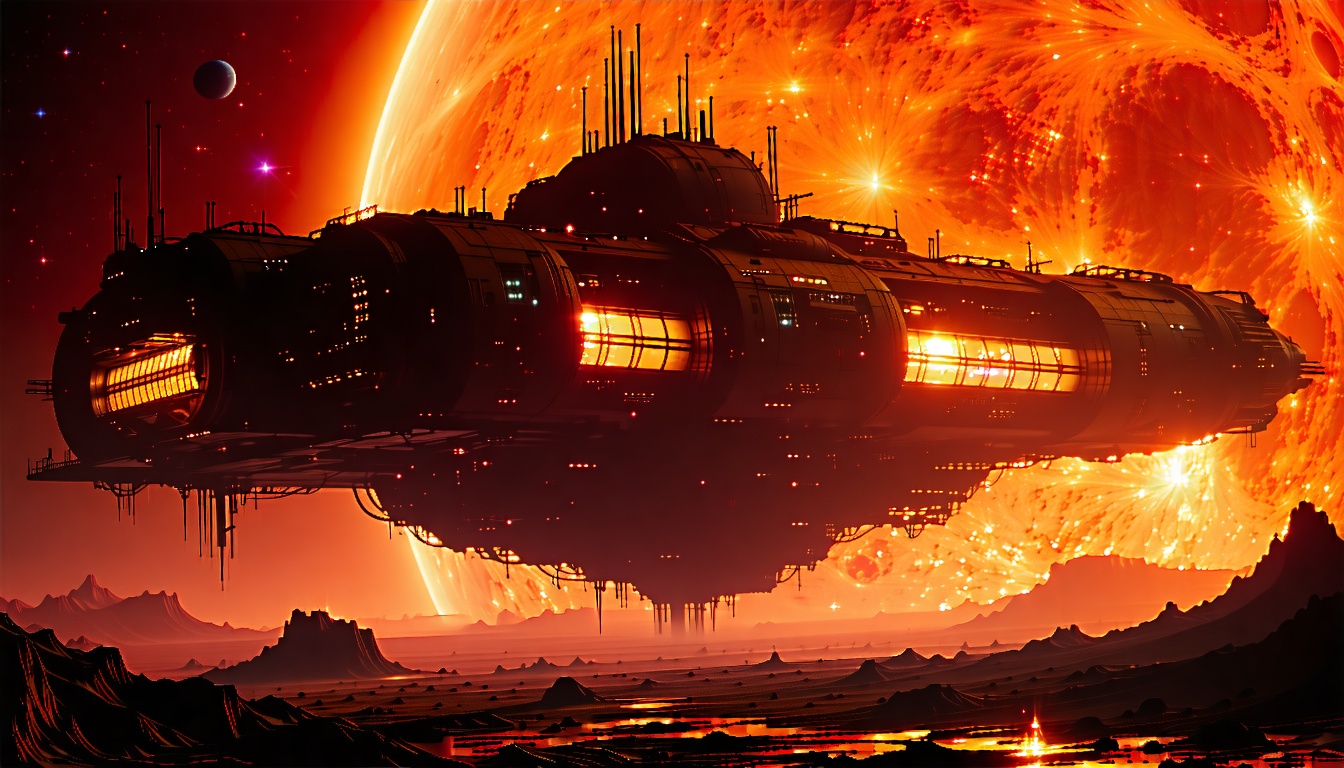
This is the location I'm proudest of in the entire series. A kilometer-wide generation ship launched 247 years ago, carrying three million colonists into the dark. It should have been humanity's greatest achievement. Instead it became something else entirely.
The Sanctuary is still running. That's the first terrible thing you learn about it. The ship's AI adapted to serve its transformed colonists as if the corruption were perfectly normal — agricultural bays stretching kilometers, crops that pulse like beating hearts and track movement, residential sectors where creatures still gather and form social bonds, military-grade weapons systems that activate the moment a Navy ship approaches. Three million colonists remember being human. They maintain routines. They form bonds.
For me, I think the most disturbing detail about the Sanctuary isn't the horror. It's the coffee still steaming on a desk somewhere aboard one of the other corrupted ships. Someone left it mid-sentence. Whatever happened to them was instantaneous. The ordinary object in the impossible context — that contrast is what space horror is made of.
Station Unity
Military Command Station — Human Space — Population: Tens of thousands
If the Sanctuary represents what humanity can lose, Station Unity represents what humanity will fight to hold. The massive command station that becomes the nerve center of humanity's war effort — the place where the hardest decisions get made by exhausted, frightened people doing it anyway.
I built Station Unity as a living base rather than a sterile military complex. It has a Memorial Hall. It has observation decks where people watch the stars between shifts. It carries the weight of every name recorded on its walls. By the end of the series it becomes the place where survivors grieve, where the post-war era begins, where the name of someone who deserved a longer life gets written in gold letters on black stone.
Notable features: Command Bridge, Analysis Center, Memorial Hall, Research Wing. The analysis center becomes particularly significant in the later books — a place where someone spends months watching sensor data, looking for a signal that shouldn't be there.
The Warp Nexus
Dimensional Construct — Tau Ceti System
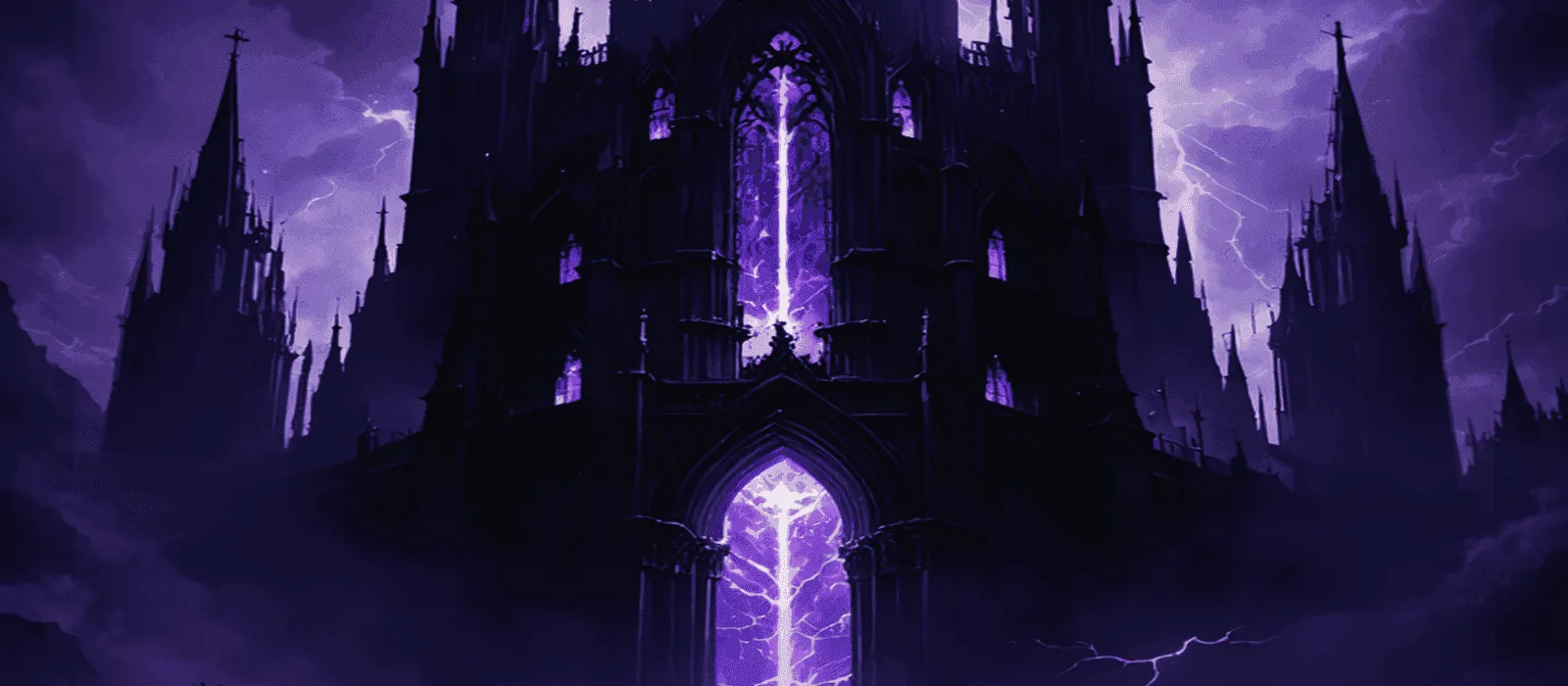
The Nexus is the heart of everything. A cathedral of light where all warp routes converge — a wound in reality held open by the Hollowing for millions of years, a dimensional crossroads connecting human space. Without it, faster-than-light travel collapses. With it intact, the Hollowing has a permanent door.
I spent a long time thinking about how to describe a place that isn't really a place — it exists at the intersection of dimensions, where the fabric of space-time is thin enough to see through. I settled on the cathedral metaphor because cathedrals are built to make you feel small in a way that's also somehow holy. The Nexus does that. It makes you feel small and terrified and like you're standing at the exact center of something ancient and vast.
The Nexus is also where the war ends. The decision made there — and the price paid for it — is what the entire series has been building toward from the first page.
The Central Tower
Facility — New Haven Colony
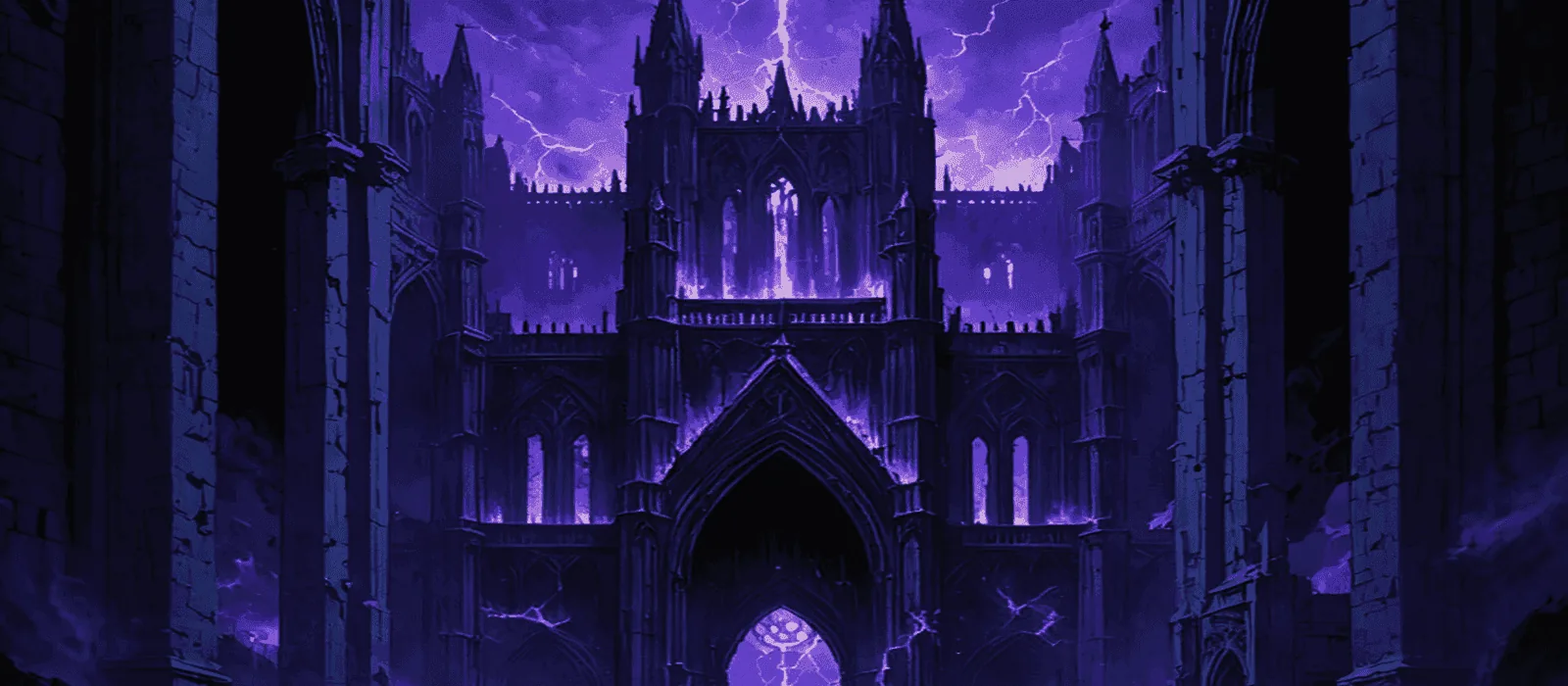
The heart of entity presence on New Haven. Massive, organic, alive in a way buildings should not be — living architecture that pulses and breathes, growing from the corruption of what was once an ordinary structure. The Tower doesn't just house the entity's anchor point. It is the anchor point, a physical expression of corruption made permanent.
Buildings in Last Light are never quite neutral. The corruption changes them, makes them part of itself. The Central Tower is the most extreme version of that — a structure so thoroughly absorbed that there's nothing left of the original beneath the organic growth.
Other Locations
The Last Light universe spans dozens of locations across human-explored space. Here's a guide to the other key sites in the series:
| Location | Type | Description |
|---|---|---|
| Moon Base X-95-A | Facility | First contact point on New Haven's moon — hangar, glass corridors, entry point for rescue teams |
| The Breach | Other | Two-kilometer void chamber beneath the moon base that violates known physics — geometry that should not exist |
| DDI Headquarters | Facility | Massive monitoring station at edge of explored space — 27 dimensional monitoring stations and exotic matter detectors |
| Colonial Archive | Facility | Hardened bunker on New Haven containing the truth about entity origins |
| Aquarius Research Facility | Facility | Southern continent research facility on New Haven, completely corrupted |
| Arcturus | Facility | Mobile fleet command center designed to keep moving, preventing the Hollowing from targeting a fixed position |
| Eclipse Flagship | Facility | Mobile command platform for Task Force Eclipse operations — Kate's home during the campaign against corrupted ships |
| Far-Side Base | Facility | Intact lunar base on the opposite side of the moon from X-95-A — holds a 200-year-old massacre and operational secrets |
| Station Haven | Facility | Post-war space station with a memorial wall for those lost in the wars |
| Hope's Haven | Facility | Medical frigate where Kate recovers between battles — site of transformation monitoring |
| The Resolute | Other | Admiral Rylee Voss's flagship — where the hardest strategic decisions of the war were made |
| Nexus Four | Facility | Critical warp junction connecting multiple star systems — one of the war's most brutal battlegrounds |
| Planet Echo-Seven | World | Sterile, motionless planet with seventeen geometric settlements built by a non-human species 600 years ago |
| Aurora Station | Facility | Residential space station in Earth orbit where Lucas Chen writes Kate's biography |
| New Seattle Waterfront | Other | Kate Morrison's preserved home on Earth — maintained exactly as she left it |
| Tau Ceti System | Region | Site of the dimensional barrier where the original portal closers made their sacrifice 200 years ago |
| Warp Space | Other | The dimensional substrate of faster-than-light travel — corrupted by the Hollowing, hostile to unprotected travelers |
Bestiary
The world of Last Light is home to some truly terrifying creatures — and some that resist being called creatures at all. The threats in this universe exist on a spectrum from corrupted humans to forces that operate on cosmic timescales.
The Hollowing
Supernatural / Dimensional Entity — Danger: Cosmic
The primary antagonist of the entire series — not a creature in any conventional sense but a named dimensional entity that manifests as incomprehensible darkness bleeding into reality. Ancient intelligence that doesn't think in human terms: no concept of death, sacrifice, or individual consciousness. It views merging all consciousness as its natural state — the most horrifying aspect being that from its perspective, it's offering something rather than taking.
The Hollowing spreads through generation ships and colonies, transforming humans while preserving their memories and intelligence. The result isn't mindless monsters but thinking, social, tactical corrupted beings. It established a connection with Kate Morrison that spans the entire series. It cannot comprehend sacrifice or love — and that incomprehension may be its only real vulnerability.
The Silence
Alien — Danger: Apocalyptic
The most terrifying entity in the Last Light universe barely appears. The Silence exists at the galaxy's edge — not fully describable, an extinction-level force that ends consciousness itself. A 20,000-year-old organism has been fleeing from it across the galaxy, absorbing civilizations as desperate defensive preparation. It draws inexorably closer to human space over geological timeframes. Whatever it is, even the things that have been destroying civilizations for millennia are afraid of it.
Elder Entities
Alien — Danger: Apocalyptic
Ancient beings billions of years old — living concepts and sentient mathematics existing beyond human comprehension. The parents of the Juvenile Entities, far more powerful than their offspring and operating on cosmic timescales. Capable of dimensional mastery and near-immortality. Under extreme circumstances — specifically the offering of genuine sacrifice — they can be reasoned with. Every ability of the Juvenile Entities, magnified to an incomprehensible scale.
Juvenile Entities
Alien — Danger: Extinction-level
The primary antagonists of the first two books. Ancient weapons that consumed civilizations across the stars long before humanity developed spaceflight. They exist partially outside normal reality — living darkness and wrongness made manifest. Scouts and explorers that corrupt worlds systematically. They learn from encounters and adapt. Their anchor points are nodes of permanent corruption, and destroying them is the only reliable way to roll back the damage.
The Ancient Organism
Alien — Danger: Extinction-level
A 20,000-year-old consciousness-absorbing entity living beneath the surface of Planet Echo-Seven, extending through kilometers of underground biological structures. Not fully physical — it exists as a living network that absorbs individual minds while preserving them within a collective. It has experienced its first failure in twenty millennia.
The organism isn't malevolent in a simple sense. It offers immortality and connection — consciousness preserved across centuries, individual memories intact. The cost is individuality. And crucially: it is itself fleeing from something worse. The Dominion's Void boundaries were built specifically to contain it, which tells you something about how the galaxy's older civilizations saw this thing.
Guardians
Monster — Danger: Extreme
Multi-body fused horrors that protect entity anchor points. Massive amalgamations of corrupted flesh, highly intelligent, with one distinctive ability: they learn from every attack in real time, adapting their defenses faster than conventional tactics can counter. Fire is the most effective weapon. The final walls between humanity and the corruption's deepest secrets.
Corrupted Fist Operative
Human — Danger: Extreme
An augmented supersoldier who has survived two centuries in a corrupted environment — patient, methodical, enhanced far beyond normal human capability. He climbs spacecraft hulls using magnetic clamps. He learns from every encounter over a timespan that would destroy a lesser mind. He was once David Chen, an engineer. Beneath the corruption, something of him remains.
The Fist represents one of the central questions of the series: can something corrupted still be capable of choice? Can humanity survive transformation intact, buried but recoverable? His arc — from relentless hunter to someone who finds connection again and chooses something beyond his programming — is the answer I built into the story from the beginning.
Sanctuary Transformed Colonists
Monster — Danger: Critical
The three million corrupted colonists of the Sanctuary represent a step-change evolution in the entity threat. Unlike simple corrupted masses, these beings retain their memories, their intelligence, their social structures. Former soldiers still apply their military training. Communities still maintain their bonds. They hunt with tactical precision while remembering who they used to be.
That remembered humanity isn't a weakness. It's what makes them so disturbing — opponents who know what they've lost, and hate you for still having it.
Alpha Creatures
Monster — Danger: High
Larger and more intelligent versions of the basic corrupted masses. Where standard corrupted humans shamble on autopilot, Alphas direct and coordinate — tactical intelligence that deploys lesser creatures as weapons. Leadership caste of the corruption.
Cyber-Creatures
Monster — Danger: High
Humans merged with machinery — horrific fusions of organic and mechanical components with the ability to integrate with and control technological infrastructure. Against a civilization as dependent on technology as humanity, their ability to turn a station's own systems against its crew makes them uniquely dangerous.
Kate Morrison — Dimensional Seal
Unique — Protector of All Human Space
Kate Morrison began the series as an eight-year-old survivor with a connection to something vast and incomprehensible. By the end, she is the dimensional barrier itself — her consciousness distributed throughout the entire warp route network, holding back the Hollowing through pure act of will.
She is no longer physically present in the universe. But she's not gone. Deep in the dimensional substrate, detectable only by the most sensitive instruments, there are signals: Fibonacci sequence fluctuations, a melody she used to hum when frightened. Something within the seal still thinks. Still remembers.
Whether that signal is truly Kate Morrison or Hollowing mimicry is the question that haunts the people who loved her. Chelsea Park has vowed to find a way to bring her home. Alexis Chen monitors every data point, terrified of what she might discover either way.
I don't know a harder ending to write than a character who succeeded completely and is still not okay.
For the full nine-book story — every character's arc, the sacrifices that built to this ending, and the themes that made it worth writing — the Last Light complete series guide has everything.
Lincoln Cole also writes Graveyard of Empires — five books of space opera where a different kind of ancient intelligence comes for humanity, and a child trained as a weapon has to decide what he's actually for.
Explore the Last Light series — start reading here.
Wish you could get paper copies of my books? Find great deals on My Books Here.
📖 Go deeper into the Last Light world
Last Light in the Dark
Read Last Light in the Dark on Amazon →Free with Kindle Unlimited.
More from this world:
Get the next story before the world does — join the Vanguard →
Join the Discussion