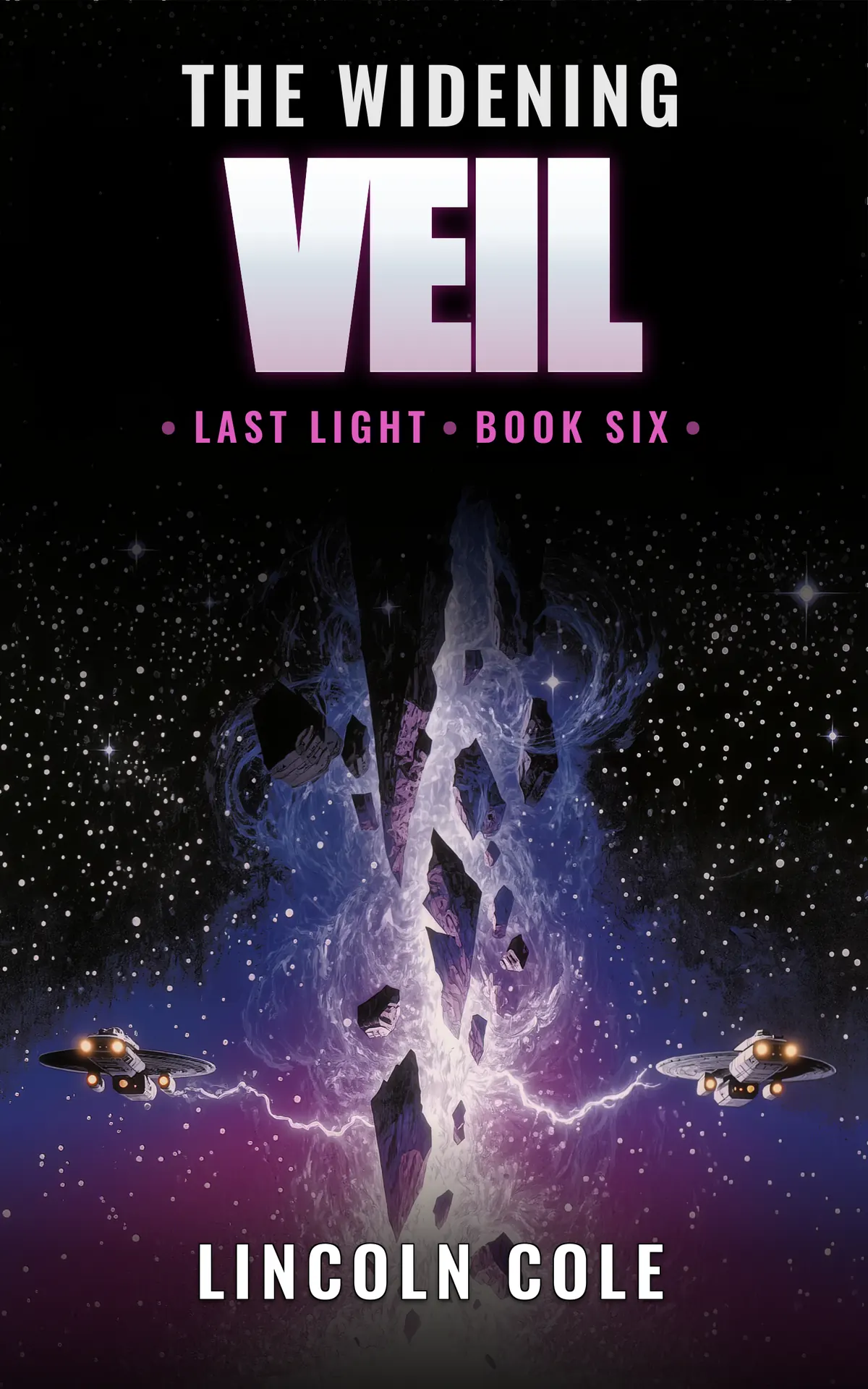
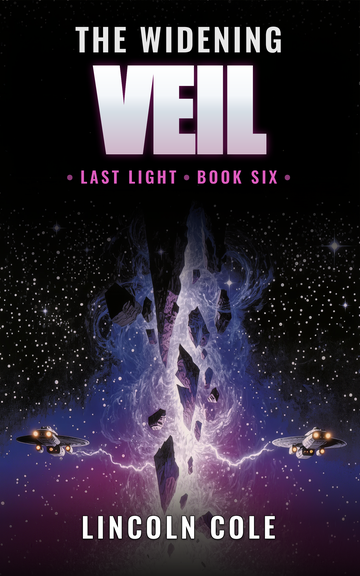
The Widening Veil
A child marked by cosmic horror becomes humanity's only bridge to an entity that does not want to conquer - it wants to merge.
Included with Kindle Unlimited. Also available in paperback and audiobook where noted.
The dimensional seal is failing.
The Dominion fleet is massing. And Kate Morrison, the ten-year-old girl who is humanity's only weapon, has eighteen months before the entity merging with her mind erases everything she is. Every time she uses her powers, she buys humanity time—and loses more of herself. The mathematics of survival demand her sacrifice. But Chelsea Park made a promise to a dying man: she won't let them use Kate up. Now, as three thousand enemy ships wait beyond the thinning veil, one scientist discovers that Kate's desperate fight to stay human might be the key to something no one expected—a new kind of barrier. A door that can choose when to open. If Kate can survive long enough to become it.
This is for you if…
- You love stories that trade comfort for dread and won't flinch from the dark.
- Tight third-person POV keeps you close to the people who matter — and far from the ones who don't.
- You're looking for a world to live in, not a single weekend read. Last Light runs deep.
Start reading
The Epsilon line came back wrong at the top of the middle watch, and Nigel ran the sweep again before he let himself think about it.
The monitoring bay was his at that hour. Officially it belonged to the station — a converted stores compartment with a wall of relay returns, two consoles, and a ceiling of conduit that three generations of techs had taped up three different ways. One of the consoles had its faceplate off and had had it off since before he came. Unofficially it was the quietest room on the outpost, which was why he'd taken the middle watch in the first place and kept taking it. The work asked almost nothing of him. The pickets strung out along the frontier routes swept their stretch of dark, the returns came home, and Nigel confirmed that nothing had changed. He'd been confirming it ever since the directorate decided the crew were worth more working than locked up. The whole job stood on nothing changing.
The place had filled up around them. When the crew first came off the pod it had been a garrison spine and not much else — a few dozen riggers and techs rattling around a forty-year-old ring built for a busier stretch of frontier, and Kate the only child on it. Then the routes began closing, one and then another, and everything that used to move through this sector started arriving instead. Survey crews in off the lanes. Reinforcement drafts, and the families that came with them. The residential ring was opened deck by deck. Somewhere in it a school started. There were forty children on the station now, by the roll the quartermaster read out on Tuesdays. He walked past the school hatch twice a night on his way to the middle watch.
The second sweep matched the first.
He put his cup down and brought the Epsilon returns up side by side — tonight's against last week's, last week's against last month's. The veil out on the Epsilon line was older than the crew's time on this station. A thin place. A smear on a dead route where the signal came through wrong and ships learned not to go. The survey teams had measured its edges the year the empire found it. The edges held through every sweep since. The file on it ran to four pages, six years old.
It read wider than last week.
Not by much, but by enough.
"Do that twice more," he said to the empty bay, "and we'll talk."
He queued a third sweep and made himself work the rest of the board while it ran. That was discipline, and it lasted four minutes. The Tau line read clean and the near routes read clean. Then the long route toward the coreward relays came up, and Nigel went still. That lane had never carried a veil in the life of the watch. There was a smear on it now, small and new. It sat in the middle of a stretch that read empty every night for two years.
He checked the picket's diagnostics first, because he wanted it to be the picket. The picket was healthy. He checked the relay chain behind it. Healthy. He checked his own consoles, which he'd rebuilt with his own hands and trusted further than he trusted most people.
Everything worked. That was the bad news.
He stood up, walked the length of the bay, came back, and sat down again. The cup was cold. He drank it and set the empty back on the console shelf, on the ring already there.
***
By the end of the watch the count was six.
Two known veils, wider. Four new ones, on routes that had been clean — one so faint he'd have called it noise a year ago and slept fine. He didn't call it noise. He'd spent two years learning exactly what nothing looked like, and none of this was nothing.
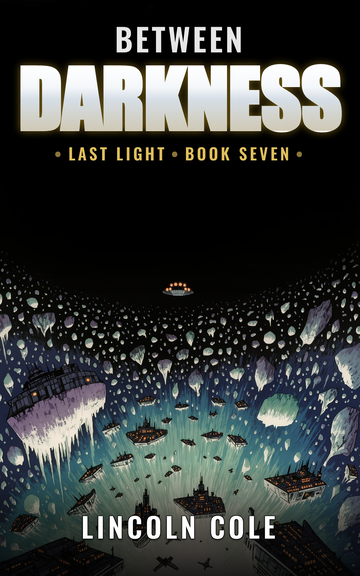
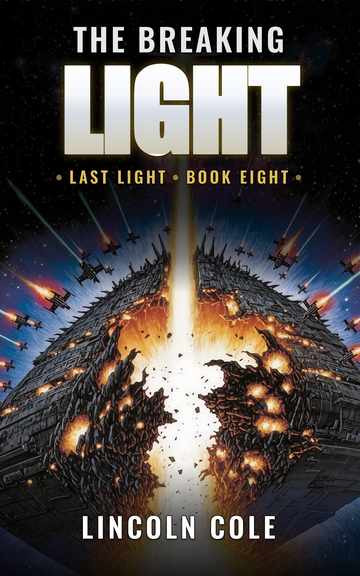
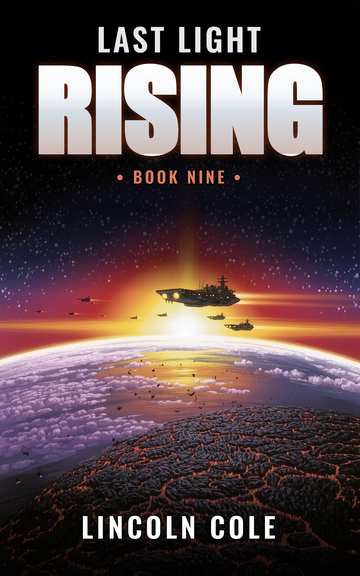
Finished with Last Light?More worlds by Lincoln Cole
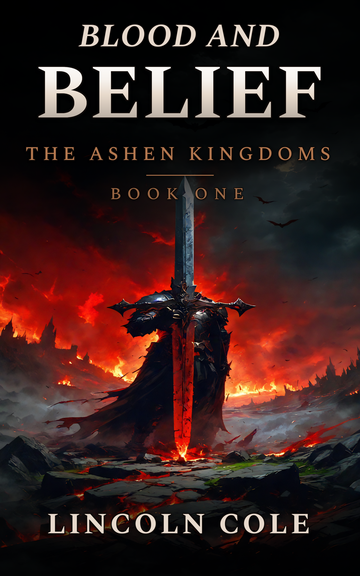
The Ashen Kingdoms
5-book seriesIn a world where everything burns, they build from ashes.Start the series →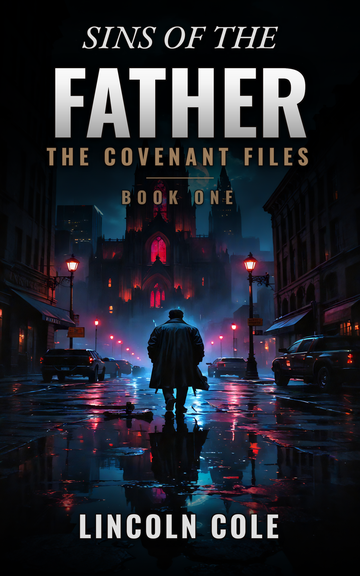
The Covenant Files
5-book seriesWhen faith fails, only the fallen remain to save us all.Start the series →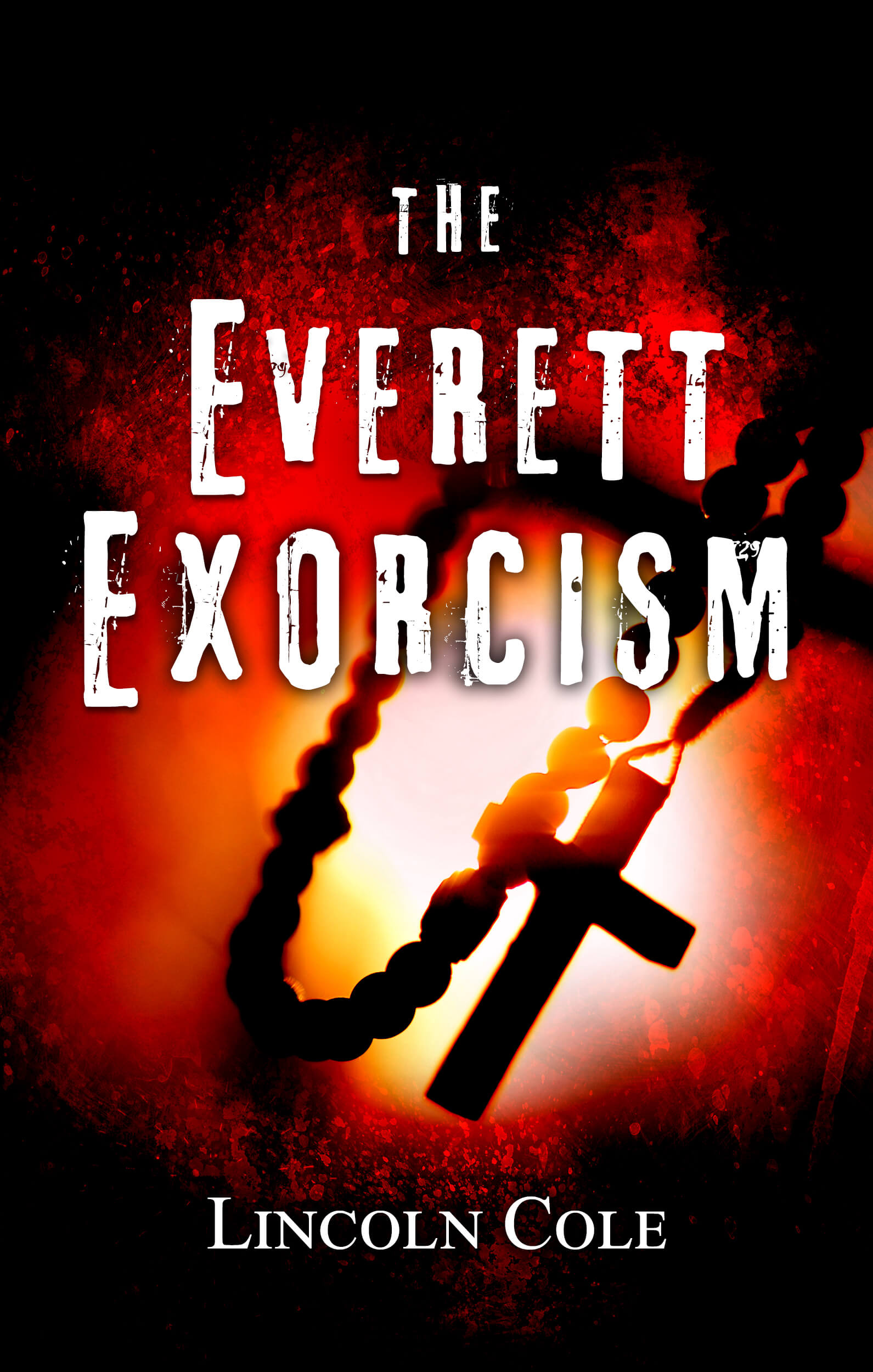
World of Shadows
3-book seriesBefore the fire consumed the world, shadows hid the truthStart the series →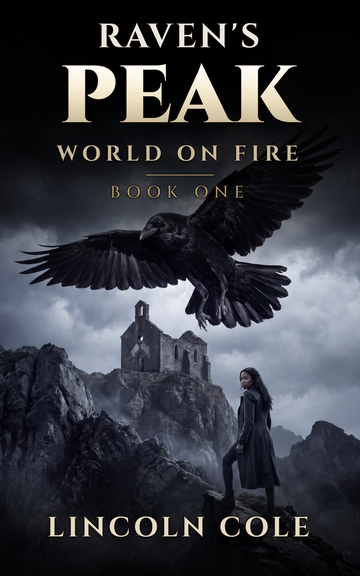
World on Fire
3-book seriesFaith is a weapon. Redemption is a sacrifice. Hell is coming.Start the series →
Escape
2-book seriesFour nightmares. Seventeen iterations. No escape. The cycle is eternal.Start the series →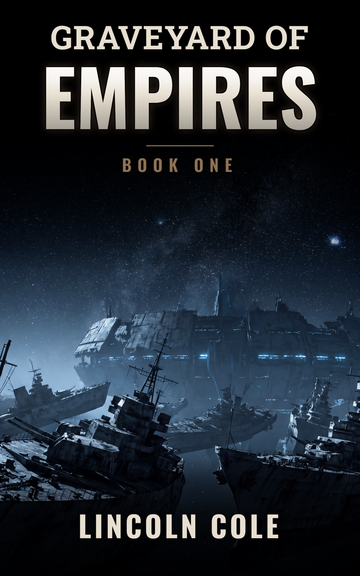
Graveyard of Empires
2-book seriesIn the graveyard of empires, the dead never rest—and neither do the secrets buried with them.Start the series →
Horizons Wake
2-book seriesTechnology doesn't just change the future—it damns itStart the series →
Time
2-book seriesStart the series →
Lincoln Cole also builds voice games for Amazon Alexa. Explore the Alexa games →
Continue the story
Kate's progression from survivor age 8 to sacrifice age 17-18, connection to dimensional entity, and ultimate integration to teach it how to die peacefully.