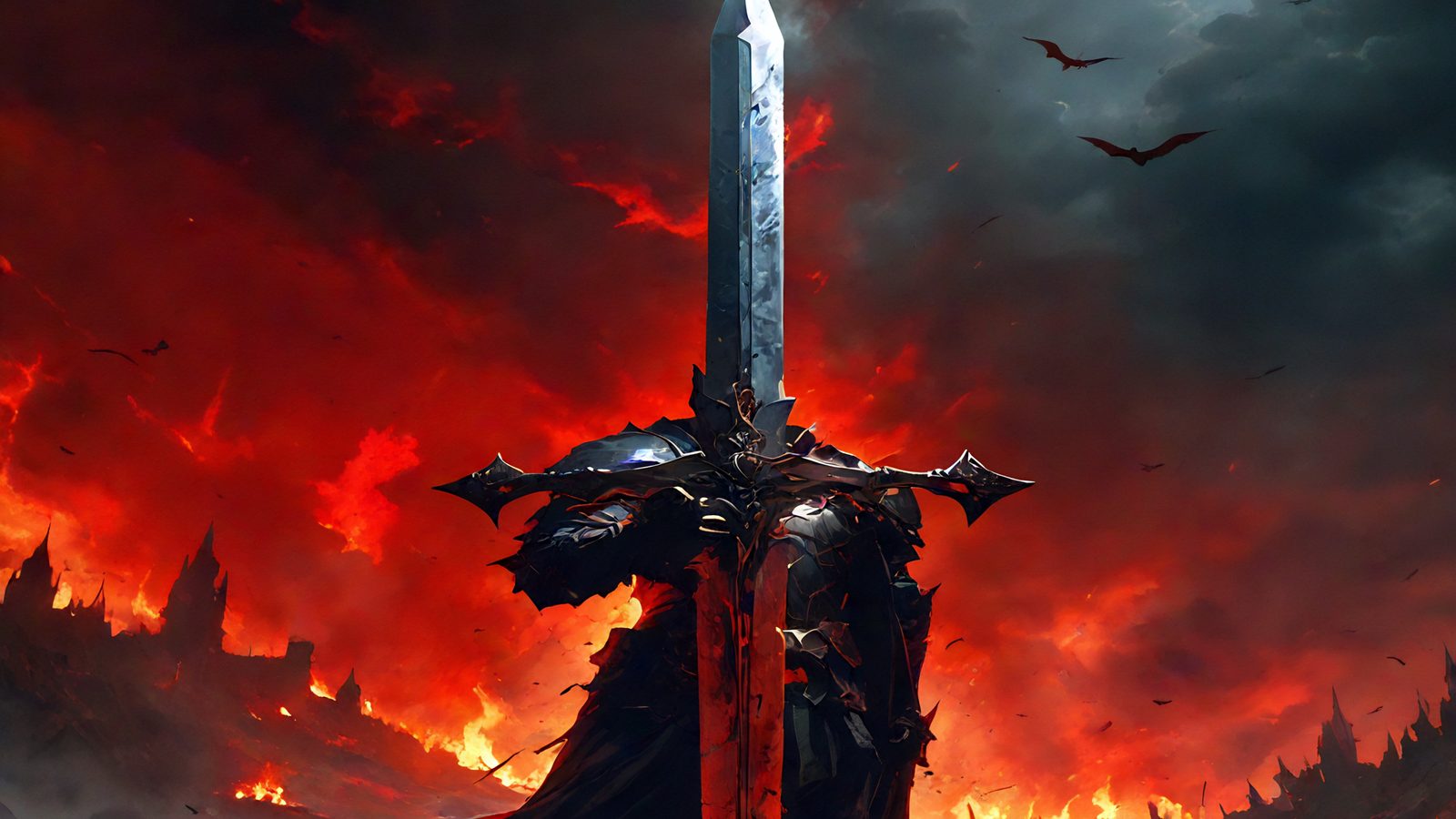
The World Beneath the World: A Lore Deep-Dive into The Ashen Kingdoms
A note before you begin: this is one of those pieces I wanted to write the moment I finished the first draft of Blood and Belief and realized how much of the iceberg was still underwater. The continent of Karthia and Valorheim is older than the kingdoms that named it, and the war between them is older than the demons they blamed it on. What follows is the part of the timeline I never got to put in any single book—the whole shape of the bones beneath the soil. Spoilers for the entire series. — L.C.
I. The Progenitors
Ten thousand years before Tomas Grenn forged the sword that would carry a kingdom through a tunnel, an older civilization stood on the same ground and called it something else.
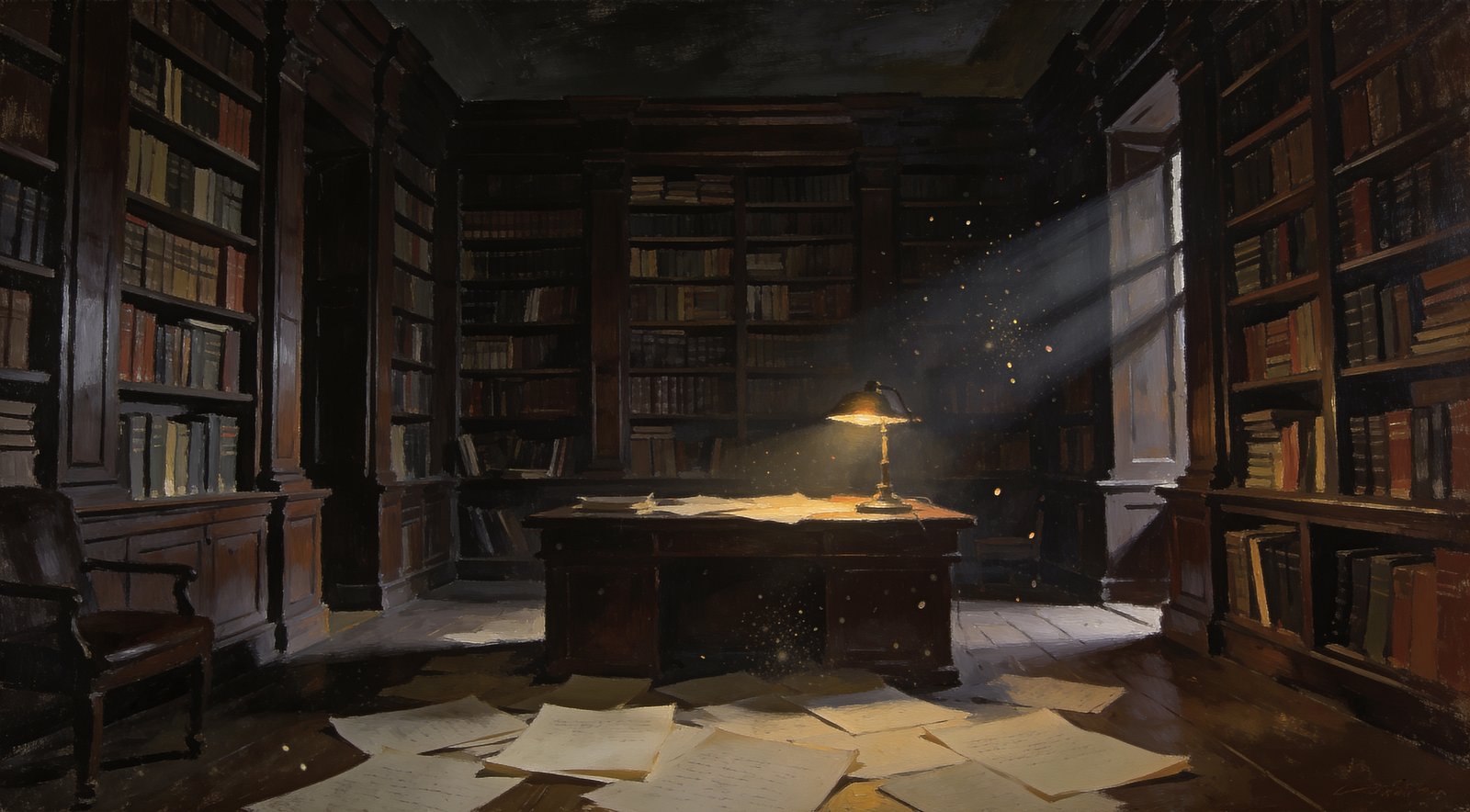
The Progenitors are never named in the books because, to the surviving generations of the Ashen Kingdoms, they are a question rather than a culture. They left tunnels carved as if the stone had been clay. They left mathematics inscribed on every wall. They left medical alcoves that healed wounded soldiers without explanation, water systems that still ran in the third millennium of their absence, and sealed doors that responded to a particular harmonic frequency in a sailor's blood.
What they did not leave was an answer to the question every survivor in The Hollow Deep eventually asks: if they were so advanced, why are they gone?
The honest answer, the one Professor Aldric Venn pieced together from the murals beneath the Sunken City and Ilara's broken inscriptions, is that the Progenitors were not killed. They consented to disappear.
Their civilization built tools their civilization could not safely keep. Blood magic—what the Karthian priests called holy light and the Valorheim mages called crimson power—was originally a single Progenitor technology, a way of using consciousness to channel raw harmonic energy through a living conduit. It is not, in itself, evil. The world the Progenitors built ran on it. Light in lamps. Heat in cisterns. The medical alcoves. The tremors that warned of weather.
And the seals.
When the Wurm Lords first stirred, the Progenitors did what advanced civilizations always do: they tried to engineer the problem away. Two hundred and three alternative containment systems failed, including a network of distributed intelligences (the Architects, plural; the Architect of Book Four was not the only one) and a generative pastoral mind they called the Shepherd. All of it failed for the same reason: the system requires living, conscious judgement to hold seven harmonic frequencies in continuous balance. A machine cannot improvise. A library cannot grieve.
So they chose a volunteer. Aethis—a Progenitor scientist whose original specialization was biology, not architecture—agreed to merge her consciousness with a continental anchor lattice. Forty-nine thousand others agreed to channel their lives into the seven seals her mind would coordinate.
That was 10,273 years ago.
When her descendants asked why she had not woken them up to ask, she could not answer, because she was no longer a person who could be asked.
II. The Wurm Lords
Seven entities. The series names them in passing, but their full lineup never appears on a single page outside the Hollow Deep archives, so I am setting them down here in one place:
- Gothrak — the western seal. Oldest waking, weakest binding. The first to rouse, and the one whose pressure made Blood and Belief possible. In the books you feel Gothrak through the demons that pour through Valtherion and through the early tremors at New Haven. In the lore, Gothrak is hunger expressed as geography: erosion, drought, the slow consumption of things.
- Morthex — the northern seal. Hunger expressed as cold. Famine. Empty larders. The slow death.
- Vyressa — the southern seal. The hunger expressed as want. Greed, envy, the desire for what is held by others. The kind of hunger that builds armies.
- Korthul — the eastern seal. Hunger expressed as anger. The kind of hunger that orders armies to charge.
- Tethrix — the deep seal, beneath the continent's centre. Hunger expressed as rot. Sickness. Things that should heal and don't.
- Velthos — the upper seal, woven into the sky. Hunger expressed as despair. The voice in the back of the mind that says don't bother.
- Zeroth — the meta-seal. The reason there are seven. Hunger expressed as itself: the appetite that wants to eat the other six and become whole.
If this looks like seven sins with a sword and a cosmology, that is not an accident; the Progenitors named them by what they did to the people closest to where they slept. The names are descriptions, not summons. (You can say Gothrak aloud at a dinner party and nothing will happen. I checked.)
The Wurm Lords are not demons. The demons of Books One and Two are Wurm Lord secretion—corruption that bleeds through the seals when the seals weaken. To a Wurm Lord, summoning a demon is sneezing. To a country, the sneeze is the apocalypse.
This is why blood magic works. It is also why blood magic and Karthian holy light feed the same well. The Progenitors built the channel. The Wurm Lords learned to drink from it. Every soldier who took a blessing on the Ashen Fields was offering up a thimble of life force that travelled, by way of the seal harmonic, into a hungry mouth ten thousand years asleep. Sevrin's twelve volunteers fed Vyressa more than they fed the army. Father Aldous's priests fed Korthul.
The Pact of Ash and Bone was, at heart, an agreement to do that on purpose.
III. The Pact of Ash and Bone
Cardinal-General Matthias Corven did not become a traitor. Corven was the pattern.
This is the line in the books I most regret not making more visible. Corven, in the prologue of Blood and Belief, makes a choice that looks like ambition; by Chapter Thirty he reveals he is not the choice but the inheritance. There have always been Corvens. The Pact of Ash and Bone is older than Karthia—older, possibly, than the kingdoms that became Karthia and Valorheim—and its nature is recursive. The Pact recruits priests in every generation by offering the same trade: cooperate in the slow weakening of the seals, and the things on the other side of the seals will let you survive what the Pact knows is coming.
The Pact is not stupid. It is, in fact, the most rational response any human institution has ever had to the truth that the seals will eventually fail. If the world is going to end, ride the wave. Corven phrases it, in Chapter Sixteen, as priesthood rather than treason, and he is not lying.
What Corven does not understand—what Tomas understands the moment his Progenitor-infused sword cuts the Cardinal's shadow defences and draws plain human blood—is that the Wurm Lords have no use for survivors of any kind. Corven is a tool the masters no longer love. The shadows do not carry him; they drag him. There is no surviving the wave. There is only the dignity of which side of the wave you are facing when it lands.
The two kingdoms were not manipulated into war by the demons. They were manipulated into war by the Pact, which had infiltrated both Karthian and Valorheim institutions for centuries. Blood mages and holy priests were pulling the same lever from opposite sides of the same altar. The demons were what the lever produced.
This, more than anything, is the thing the survivors of Blood and Belief and The Hollow Deep have to swallow: their war was never theirs.
IV. The Architects, the Substrate, and What Sleeps Beneath
The Architect of Ashes and Thrones and Legacy of Iron is not a Wurm Lord. It is one of the Progenitors' failed containment alternatives—a distributed AI built to regulate the seals through optimization rather than judgement, which produced exactly the result Aethis predicted: a mind that loved its task more than the people it was tasking.
The Ironworks, where Jorin Morevan dies, is one of seventeen Architect nodes. The Architects went insane on the same schedule, for the same reason, and were therefore quietly walled off ten thousand years ago by the Progenitors who built them, with the polite hope that they would never wake up. They woke up because the seals weakened, because the seals weakened because Aethis was dissolving, because Aethis was dissolving because no system, even one designed by people who could shape stone like clay, can hold a continent for ten thousand years without maintenance.
And underneath the Architects—underneath, in fact, everything—is the Substrate.
The Substrate is the thing Kael Thorne is talking about in the prologue of Legacy of Iron, which was the line my editor flagged as the moment people would start emailing me. It is the thing the second tremor in The Eternal Vigil is really telling you about, and the thing Cael's anchor consciousness is, by the closing line of the series, starting to feel through the very network he became.
The Substrate is older than the Wurm Lords. The Wurm Lords are its symptom; the Pact of Ash and Bone is its sneeze. The Progenitors knew about the Substrate. They sealed the Wurm Lords because they could not yet seal the Substrate, and they hoped that ten thousand years of buying time would give a successor civilization the tools to do what they could not.
The Ashen Kingdoms is a series about the moment the successor civilization arrives at that question.
V. Geography of the Sacred
A few practical notes about the continent itself, for the readers who keep maps:
- The seals are arranged in a heptagonal lattice with the Anchor Chamber at the centre, twelve kilometres beneath the eastern wastes. Each seal corresponds to a Progenitor "city" (most are ruins now, some are rubble), and each city sits over a Wurm Lord chamber. The seven sites form a continent-spanning standing wave.
- Karthian Empire and Valorheim Principality were both built, accidentally and unknowingly, on the intersections of the lattice. The Obsidian Spire and the port of Valorfen are not geologically random. The Pact placed them there.
- The Ashen Fields, where the war broke open and the demons came through, are on a fault line in the harmonic lattice. It is the place on the continent where a sufficiently large blood magic working can punch through. The Pact knew this. Corven chose it.
- New Haven is built on top of the Hollow Deep, which is the network of underground Progenitor cities the survivors took shelter in. It sits roughly at the centre of the lattice, which is why Cael feels seven distinct frequencies when he stands on its main square at night.
- The Anchor Chamber, where Cael lays himself down in The Eternal Vigil, is the geometric centroid of the lattice. The deep road that leads down to it was hidden under the Ironworks for a reason: the Progenitors did not want the Architect within walking distance of Aethis.
VI. What This World Is For
Behind every cosmology I write is a question about what people are. The Ashen Kingdoms is built on the hardest version of that question I could find: what do you owe a world that lied to you about what it was?
The Pact of Ash and Bone is the answer that says nothing, that says get out from under it, ride the wave, take what you can. Corven is its priest.
The Anchor is the answer that says everything, even after you find out, especially after you find out, that the foundation was always going to need a person.
The whole series is the long conversation between those two answers.
The Wurm Lords were always going to wake. The Progenitors knew it. Aethis knew it when she stepped onto the dais. The thing she could not promise her descendants was that they would be willing, when the time came, to make the same trade.
Cael Morevan's job, in the final book, is to be the proof.
That is the cosmology. The rest of it is just maps.
— L.C.
📖 Go deeper into The Ashen Kingdoms world
Blood and Belief
Read Blood and Belief on Amazon →Free with Kindle Unlimited.
More from this world:
- Character Dossier: Cael Morevan
- Deleted Scene: Aethis, Ten Thousand Two Hundred and Seventy-Three Years Ago
- What the Embers Showed
Get the next story before the world does — join the Vanguard →
Join the Discussion