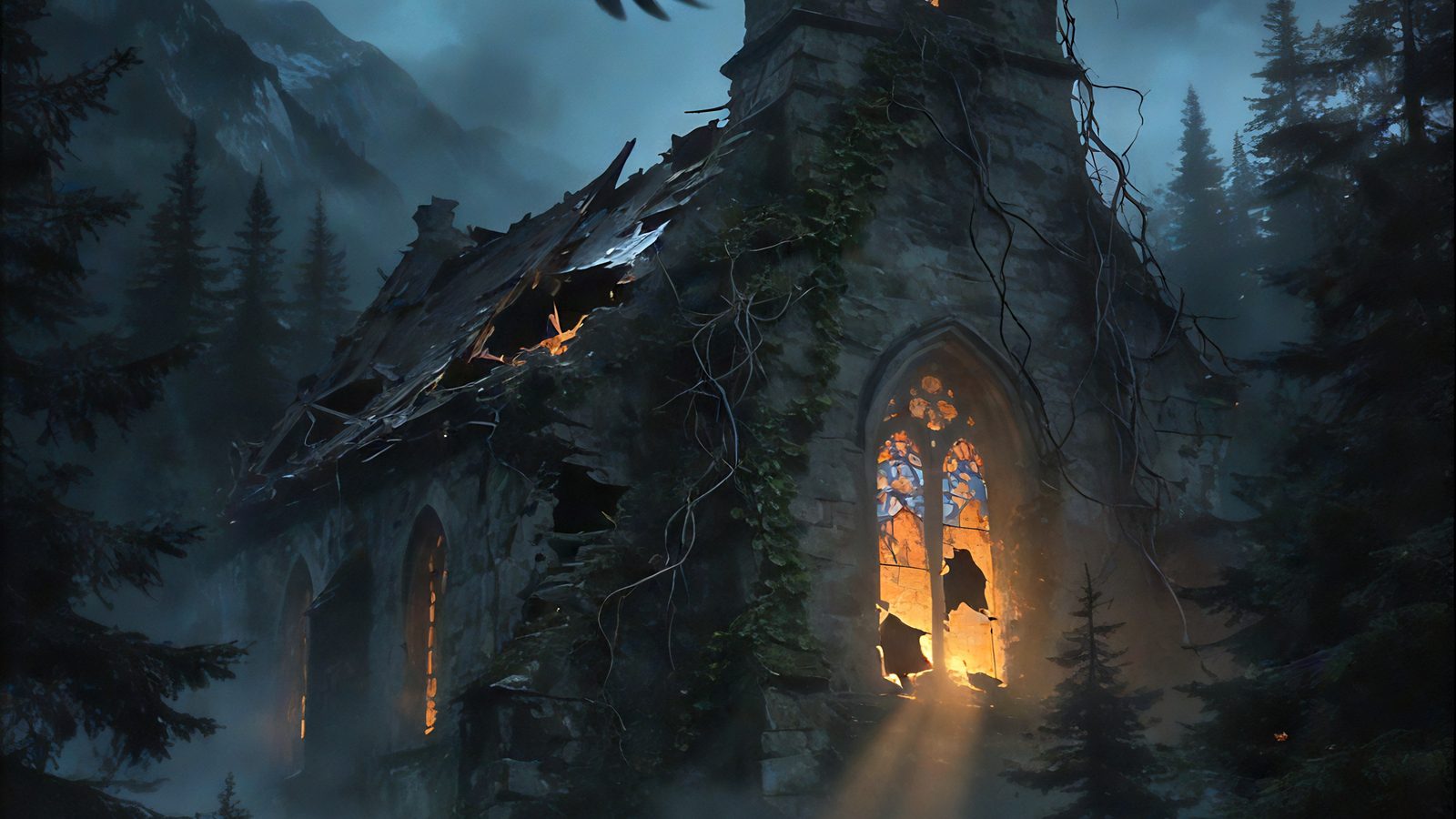
The Raven Saga is not a fantasy series. There are no chosen ones, no prophecies, no benevolent old wizards waiting to explain the rules. The world Arthur Vangeest moves through is our own, with one terrible amendment: Hell is real, demons walk among us, and the small society of people who know it has been losing the war for a very long time.
This post is the kind of wiki entry I never put in the books — partly because the characters living through it would never sit down and explain their world this neatly, and partly because horror loses its teeth when you stop and lecture about it. But for those of you who finished the trilogy and want the full architecture under the floorboards, here it is.
The Hunters
The Hunters are not an order, a guild, or a church. They are a habit that humanity keeps relearning every couple of centuries, when the demonic incursions get bad enough that someone has to do the work nobody else will.
What we call "the Hunters" in the modern era is a loose international community of perhaps two thousand individuals at any given time, knit together by mentor-apprentice lineages, regional fellowships, and the Council. There is no recruitment office. You are found by a Hunter who is willing to teach you, or you are killed by something that you stumbled into by accident. There is no third path. Arthur Vangeest came up under a Belgian Hunter named Mathilde Aerts who pulled him out of an exorcism that should have killed him at nineteen. He never told that story to Abigail. He told it to Frieda once, drunk, and she remembered every word.
Hunters operate on a principle that is closer to triage than war. You cannot save the world. You can save this town, this child, this priest. The math is grim and the burnout rate is catastrophic — most Hunters who survive their first decade do so by becoming the thing that frightens them, which is why Arthur's slow self-destruction across the trilogy is so familiar to the older Hunters who watch him do it. They have all walked some version of that road.
Tools of the trade are deliberately unglamorous: hallowed iron, salt blessed in a working church, holy water from any source that still carries the intent of belief, ritual chalk, knives consecrated by the Hunter who carries them, and — for those who have earned the privilege and the price — names. A demon's true name, spoken correctly, is a cudgel. Almost no one speaks them correctly.
The Council
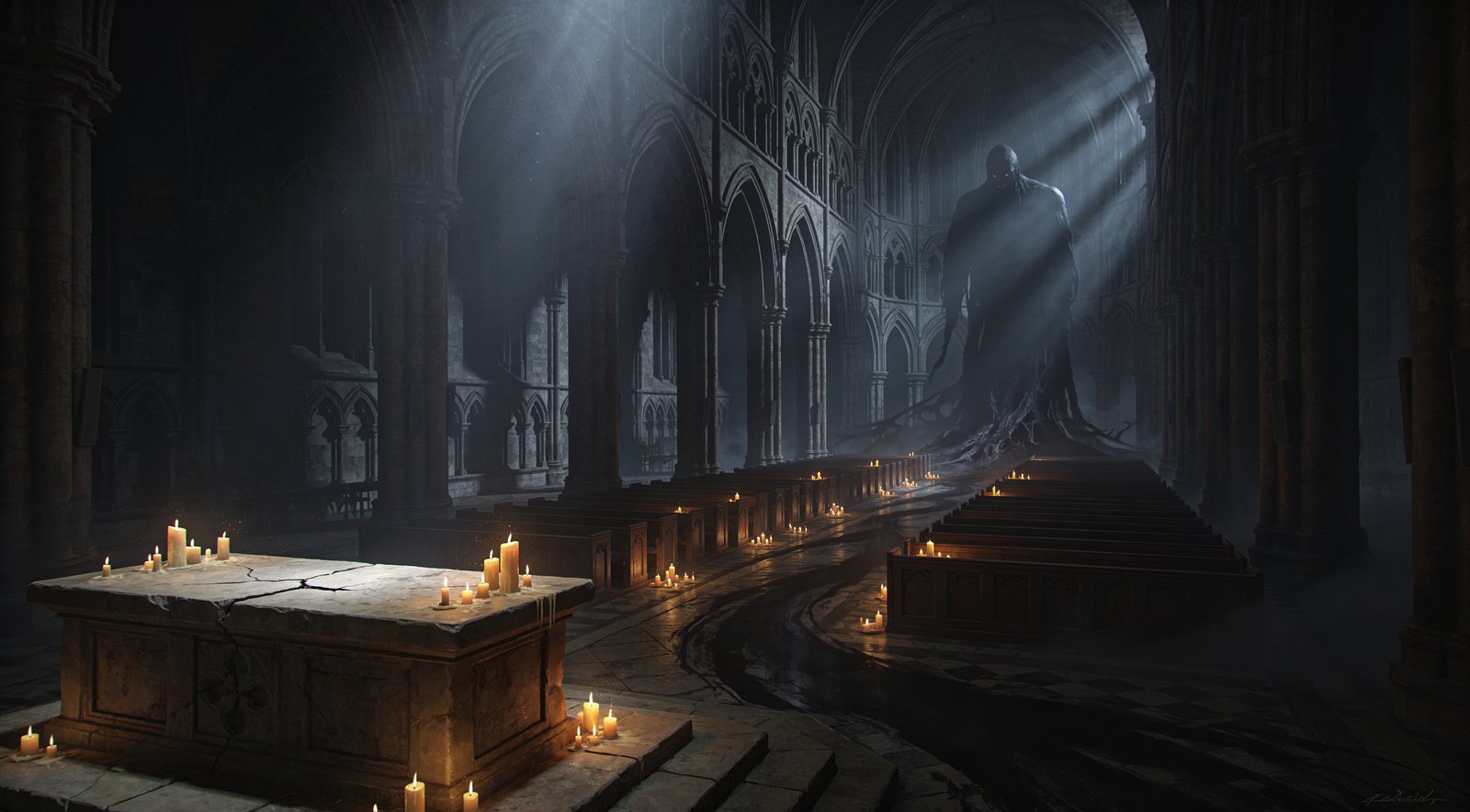
The Council was founded in 1573 in the wake of the third demonic incursion of the Wars of Religion, when Catholic and Protestant Hunters who had spent thirty years killing each other realized they were going to lose the actual war if they did not stop. The original charter — a copy of which still hangs in the Switzerland headquarters and which Frieda reads sometimes when she cannot sleep — describes the Council as "a watch over the watchers, that no man's hand may turn what God's gift has wrought."
In 1573, that meant something. By the time Arthur Vangeest stops being an active member, the Council is the kind of institution that always grows around heroic work: bureaucratic, factional, and — by the events of Raven's Fall — riddled with people whose loyalties have quietly migrated to the other side.
The Switzerland headquarters sits in a valley that does not appear on any tourist map, in a building that was a Cistercian abbey before it was anything else. There are seventeen voting members at full strength, and the Council operates on a tradition of consensus that has been weaponized by anyone willing to filibuster a vote. The factional lines that matter most:
- The Old Guard. Hunters who came up before the Council had any real institutional power, who treat it as a coordinating body and resent every piece of paperwork it has accreted. Arthur was Old Guard before he stopped being anything at all. Frieda is Old Guard in temperament and Council-bred in vocabulary, which is why she fights so well in committee.
- The Reformers. A younger faction that believes the Hunters need to professionalize, share intelligence with sympathetic governments, and treat the work as something that can be funded, regulated, and survived. They are not wrong. They are also exactly the demographic the conspiracy infiltrates first, because reformist optimism is easy to weaponize against people who have spent their whole career being told they are dinosaurs.
- The Penitents. A small, intense subculture of Hunters who treat the work as religious atonement. Father Niccolo Paladina is not formally a Penitent, but he reads like one. Penitents are useful in extremis and exhausting in committee.
The Council does not control the Hunters. It coordinates them, certifies them, and — when necessary — kills them. The Censure, the Council's internal enforcement arm, is the part of the institution every Hunter pretends does not exist until it knocks on their door.
Surgat and the Hierarchy
Surgat is real. He is not a metaphor. He is not a Jungian shadow. He is a thing with a name, a court, and goals that have been ground out across millennia of patient work. The trilogy tells you what he wants — to come through into our world bodily, with his legions, and finish the work he started before he was bound. What the trilogy does not always pause to explain is the structure he sits at the top of.
Surgat is one of seventy-two named entities catalogued in the working tradition the Hunters inherited from the late medieval grimoire compilers. Of those seventy-two, perhaps a dozen are active in any given century. Most of the rest are sealed, dormant, or — in three cases that Frieda's archive can document — actually dead. Demons can die. It takes more than any single Hunter has ever managed alone, but they can die.
Beneath the named entities is a much larger population of unnamed minor demons — what the older texts call the indistinct host — and beneath that the possessed: human beings whose identities have been overwritten in part or in whole. The possessed are the part of the work civilians sometimes survive. Anything above the possessed will kill an unprepared Hunter in seconds.
A few specific points the books reference but never quite lecture on:
- The Ninth Circle is not Hell. It is one of nine layered spaces beneath what the working tradition calls the Threshold. Surgat's dimension is not "Hell" in any Dantean sense; it is one of the more populated layers, and Surgat's court is its political center. When Arthur and the team go through in Raven's Rise, they go through into Surgat's specific holding, not into some metaphysical inferno. This matters because it means there are other places, with other rules, that the Hunters have not yet had to fight in.
- Possession is reversible up to a point. The point is sooner than most people think. The Everett Exorcism happens because the Reverend understands that point and is willing to do what most Hunters cannot.
- A demon's true name is its leash and also its key. Knowing it gives you power over it; speaking it summons it. Hunters who learn names spend the rest of their lives carrying ammunition that can also kill them.
Faith as a Weapon
The single piece of cosmology readers most often ask me about is the role of belief.
Faith is not magical thinking in this world. It is not interchangeable across traditions, not metaphor, not "all gods are one god." It is a specific operational substance, and it costs the user something to wield. A priest who has not been to confession in a year cannot perform a clean exorcism, not because some divine bureaucracy is auditing him, but because the working itself runs on the operator's interior coherence and a man at war with himself is a porous tool.
This is why Niccolo Paladina is the most dangerous human being in the supernatural-thriller arc. Not because he is the strongest fighter. Because he has never lied to himself about why he is there. The Reverend can reach further than men who have hunted three times as long, because the Reverend has paid the interior price.
Arthur Vangeest, by the time we meet him, cannot do most of what he used to do. The trilogy is, among other things, a slow re-acquisition. By the gates of Surgat's court he is again something close to what Mathilde Aerts trained — for one specific morning of work, and not for any morning after.
The Conspiracy
The trilogy's central reveal — that the Council has been infiltrated, and that the infiltration is older than anyone wants to admit — is the part of the worldbuilding I worked the hardest to keep honest. There is no shadow cabal who orchestrates everything from a smoke-filled room. There are people who sold one decision, twenty years ago, for one good reason, and were then asked for one more decision, and then one more, until they were not the people they used to be. Then there were their apprentices. Then there were their apprentices' apprentices.
The Surgat conspiracy works because it is patient and because most of its operatives do not know they are operatives. They know they have a friend who needs a favor, an interpretation of a vote that is just barely defensible, an old loyalty that asks one specific thing they would have done anyway. By the time anyone in the Council notices the pattern, the pattern is the institution.
This is the part of the worldbuilding that I get the most letters about, because readers recognize it. Real institutions die this way. The supernatural overlay just makes the dying visible.
The Cost
A last note for readers who want the load-bearing axiom under all of this: the world of the Raven Saga is not a world where good triumphs. It is a world where good is paid for. Every victory in the trilogy costs something — a relationship, a body, a piece of someone's interior life — that does not grow back. Abigail's transformation is the most visible price, but it is not the largest. The largest price is borne by the surviving Hunters who go on after the credits, who have to live in a world where they remember, in detail, what it took.
That is the worldbuilding. That is the rule. Everything else — the geography, the demons, the institutions — is in service to that one axiom. If a scene in the trilogy did not honor the cost, I cut it. If a scene that worked otherwise still wanted to give victory away cheap, I rewrote it until it did not.
The world is on fire. The Hunters are who we have. They will lose more than they save. And it is still worth doing.
Welcome to the wiki entry I would never have written inside the books. If you are a paid member reading this, thank you for going further in than the story alone asks. The next four posts in this Behind the Scenes set go deeper still.
— Lincoln Cole
📖 Go deeper into the World on Fire world
Raven's Peak
Read Raven's Peak on Amazon →Free with Kindle Unlimited.
More from this world:
Get the next story before the world does — join the Vanguard →
Join the Discussion