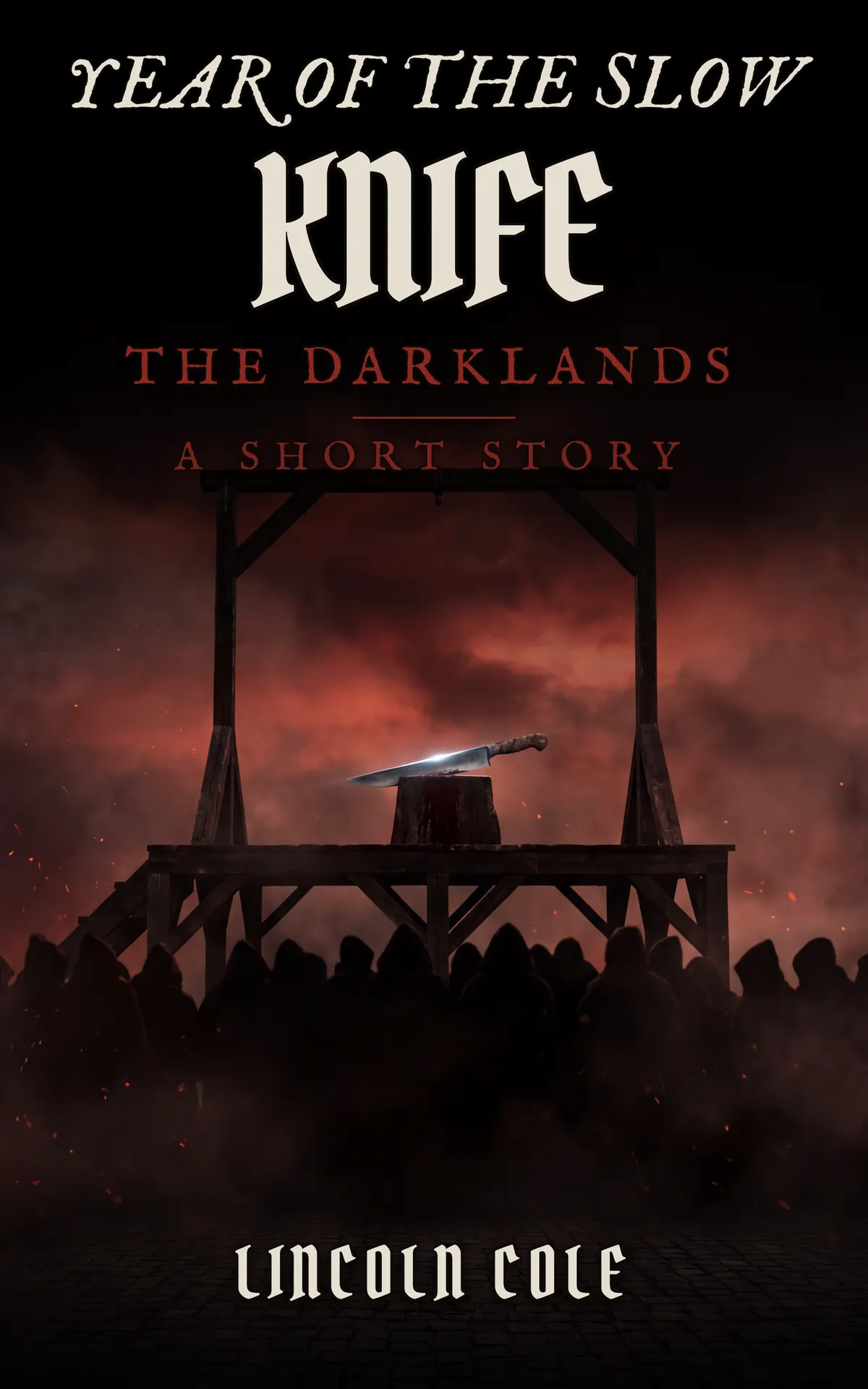
A 4,000-word side story from the world of Verada Requiem. Set in the country chapels east of the war, where the Army of the Immaculate brings its dying home and the seal of confession is the only place truth is still allowed. This one stands alone — you don't need to have read the novels.
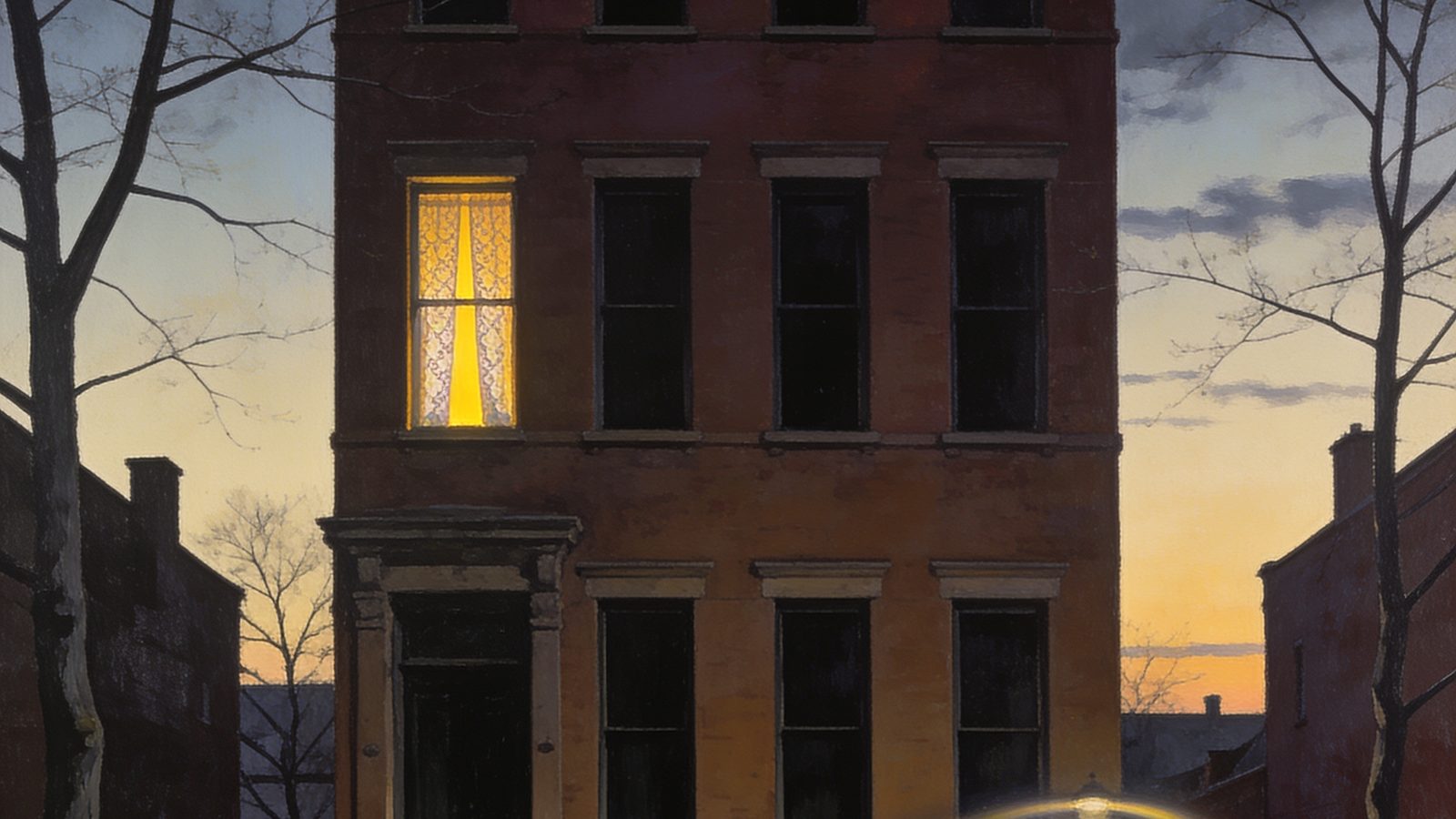
The chapel bell at Alderbridge was cast in the year of the first brand, and every morning for thirty-one years Sister Milda had climbed the bell tower and drawn the rope with both hands to wake it. The bell hated the cold. In winter, the first three tolls came out cracked, like a man clearing his throat of soot, and only by the fourth did the note open into something that could carry down the road. She had learned to pull harder on those mornings, to let her full weight hang from the rope, and to count the seconds of silence between strikes so that even if the sound was rough, the rhythm would still be holy.
She was counting when she saw the wagon.
It came from the west, where the road bent out of the pinewood and crossed the little stone bridge the village was named for. Four men walked beside it. A fifth rode a low, unhappy horse. Even at that distance, in the grey pre-dawn, she could see the color of his robes. The red was not bright. The army dyed its inquisition in a darker shade, a red that lived closer to dried liver than to the blood of saints, and at a quarter-mile it looked almost brown against the trees.
Milda pulled the rope through the final toll and let the bell come to rest against its padded clapper. Her hands were shaking. She told herself it was the cold.
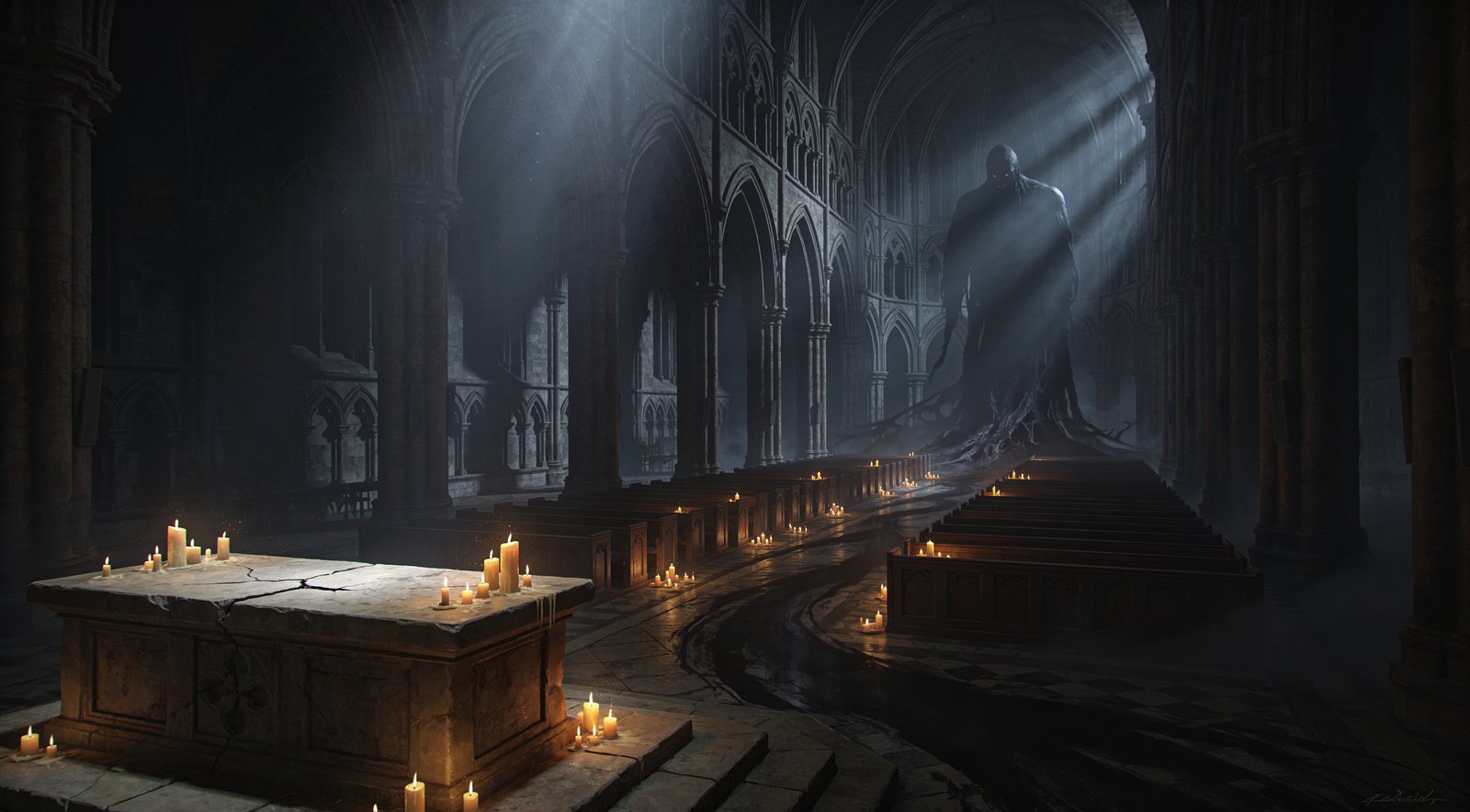
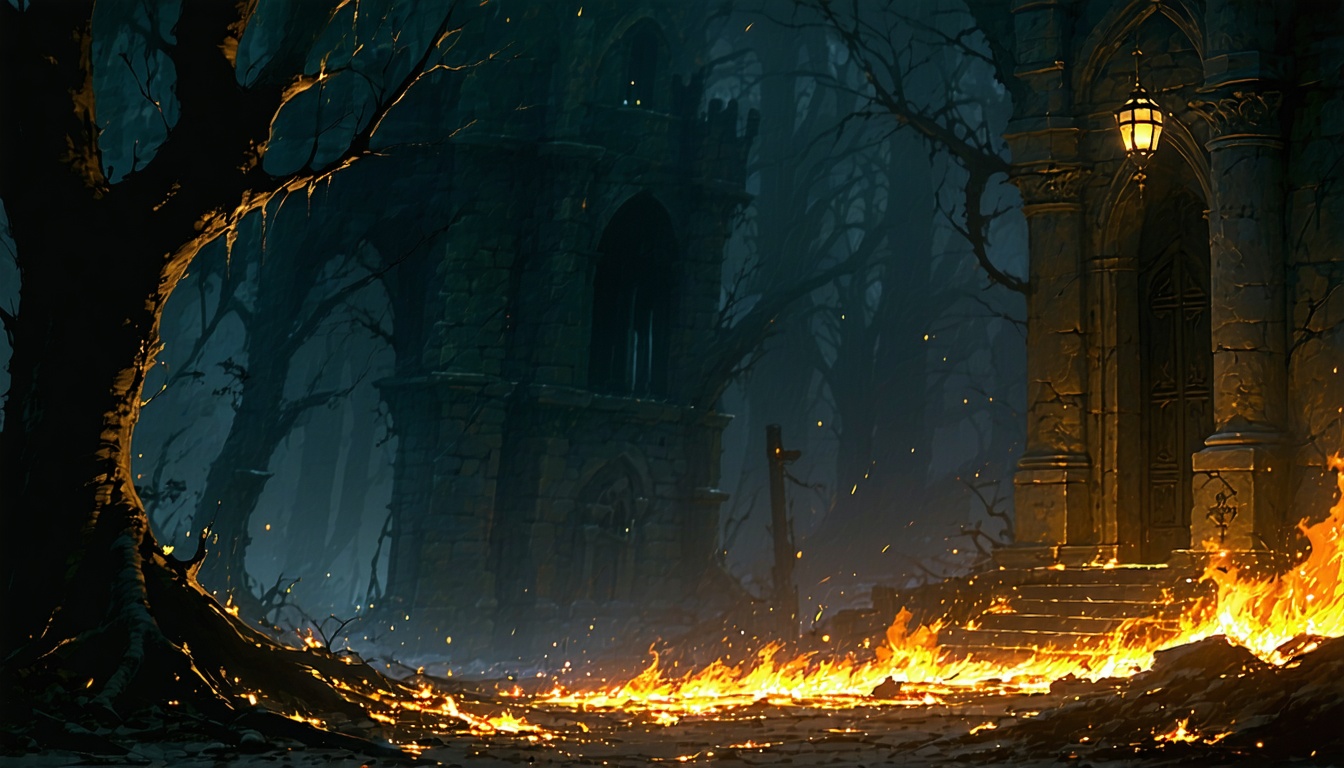
She came down from the tower in the dark. She lit the chancel tapers one by one, not because the office required it yet but because she wanted her hands to have something to do. The little chapel smelled of beeswax and damp stone and the juniper she had hung to dry in the rafters last month. The saint on the east wall, Saint Verada of the First Mercy, looked at the far end of the nave with her carved wooden eyes and her painted hands open in the posture of a woman offering bread. Milda had prayed to the statue every morning of her working life.
This morning, she stood in front of it for a long time and said nothing at all.
The inquisitor's name was Vellen. He gave it at the door like he was handing her a coin.
"Sister. We have a man who will not last the hour. He has asked for confession. The protocol has been observed. The escort has sworn."
He had a soft voice, a court voice, the kind of voice a man uses when he wants other people to raise theirs and reveal themselves. He was perhaps forty, beardless, with a priest's fine fingers and a soldier's shoulders. His stole was the red of his robe. The silver pin on his collar was the two-barred cross of the Office.
"Bring him," Milda said, and was proud that her voice did not do what her hands had done at the bell.
They carried the soldier in on a canvas stretcher and laid him on the floor at the foot of the chancel steps. He was young. Twenty, maybe. His hair was the color of new straw and wet with the sweat of a long fever, and his lips were white and cracked. They had wrapped his middle in linen that had been white once and was now the color of an old bruise. His eyes were open. He saw her.
She had seen men die before. A dozen at least. Not in the great campaigns, which never came this far east, but in the slow, plain dying of farmhouse and flood and the long winter of '82. She knew the look of a man who was still inside his body and the look of a man whose body had already begun to release him. This one was still inside.
Vellen stood by the door. He did not come closer. He folded his hands into the sleeves of his robe.
"Sister," he said, "I will observe the seal from this threshold. The men will be outside. You will take his confession. You will give him absolution if, in your judgment, he is fit to receive it." He inclined his head a fraction. "If in the course of what he says he speaks against the doctrine of the boneglass, or against the brand, or against the persons of the Hierophant and his officers, you will of course keep what he says under seal. But you will inform me, privately, of the fact of such speech. Not the content. The fact." He smiled, very small. "I know the seal, Sister. I was a confessor once myself."
She stared at him.
"A fact of speech is not content," he said gently. "It is a fact. The Office distinguishes. So does the synod. So does our Lady of the First Mercy." He looked past her to the statue, then back. "I will be outside."
He went out. The door closed. She was alone with the dying soldier and the sound of the bell still quieting in the tower above her and the small, glassy pop of a taper burning through a knot of wax.
She knelt beside him.
She drew the stole from around her neck, the violet one reserved for the grave offices, and laid it across his chest. Her knees creaked. She bent her head to his mouth because it was easier for him than for her to speak.
"I am Sister Milda," she said. "I serve at this altar. What do you bring to confession, brother?"
His mouth worked. For a moment, nothing came. Then, in the formula, thick with the accent of the northern valleys:
"I have sinned against the breath of Verada, and against her body, and against the body of my brothers."
"I will hear you, brother."
"I can't—" He swallowed. A tremor went through him from the shoulders down. "I can't remember the rest."
"You don't need the rest. Only what is true. Tell me what is true."
He closed his eyes. When he opened them, they were wet.
"My name is Haran," he said. "Haran Tellick. Third Regiment of the Fourth Standard. I have been branded four years. I am twenty-three years old. I think I am dying."
"Yes, brother."
"I don't want to die with it in my mouth."
"With what, brother?"
He turned his head toward the door, very slowly, and then back to her.
"The thing the brand hears," he said. "The thing I saw. The names. The names are the worst of it. They sit on my tongue like coins and I can't spit them and I can't swallow them and I can't say them to anyone without being—" He lifted his wrapped hand a little and let it fall. "Without being what he is. Out there."
She did not look at the door.
"Say them to me," she said. "The seal is between us and God."
He laughed, a terrible dry sound that became a cough and then a red bloom on the linen at his stomach.
"God," he whispered.
"Yes."
"Sister. I don't know if he hears. I used to. I was a chorister in the village of Mardalin when I was small and I sang to him every week and I was sure he was listening because the light came through the coloured glass and moved across the floor like a hand." He was crying now in the slow way of men who have forgotten how. "I am not sure anymore. I am telling you anyway because my mother is dead and my sisters are dead and the only other person who knows what I know is in that doorway and he will not forgive me for knowing it."
"What do you know, Haran?"
He drew in a long breath. He seemed to take it from the air of the chapel itself, the juniper and the wax and the cold of the stone flags, and when he let it out it was words.
"At Stonevale in the autumn," he said, "my squad found a boneglass child in a cellar. She was nine years old. She had the plague in her arms and her hair was white with it and her eyes were the color of river ice. She had a knife. A kitchen knife. When she saw us she put it down on the floor and she lay down next to it and she put her hands on her head the way the smugglers do when the patrol catches them in the reeds. She laid down, Sister. She surrendered. My sergeant was a man named Coln Brask. He walked over to her and he stepped on her wrist so that the bones broke, and then he put his sword through her mouth. I was behind him. I watched him. I did nothing."
Milda did not move.
"Write that name," he said. "Coln Brask. Third Regiment. Stonevale. Autumn."
"I cannot write while I am hearing you."
"Then keep it. Keep the name."
"I will keep it."
"There are others."
"Tell me."
He told her. He told her for what felt like a long time and was in fact very little time, because dying men do not have breath for extra words. He named a town called Greythorn where a hedge-priest had laid an offering of bread and salt at the foot of a boneglass cairn and the army had burned him and the cairn together, though the cairn had never moved against them. He named a valley called the Creft where a column of boneglass had stood on a ridge at dusk and sung, not attacked, sung, in a sound he said was like glass being drawn across water, and the brand in his collar had sung back, and he had felt it in his teeth, and the officers had ordered the archers to volley the ridge anyway. He named a pass whose name she did not know, where a boneglass man had carried a boneglass woman out of a burning village and laid her down and stayed with her while she died, and not one of the soldiers watching had lifted a bow. He named seven towns and three valleys and one mountain pass, and at each one he named a thing the army had done that contradicted what she had been told in every sermon she had ever heard about the boneglass and the war.
He told her that when he slept, the brand on his neck spoke to him in a voice he had come to recognize as his own. He told her that it told him to stop. He told her that he had woken up once with his knife in his hand and his sergeant in his tent and had not known for a full minute which of them he had meant to open. He told her that the other men in his squad had begun to wake up the same way, and that two of them had been sent home as melancholics and one had hanged himself from a supply cart and one was still in the ranks and was very, very quiet, and the sergeant was fine.
He told her that he did not know what the brand was, or what the boneglass was, or what Verada was, or whether any of it meant anything. But he knew, he said — and here his voice cleared for a moment into something steady, almost young — that what he had been told and what he had seen did not match, and that at the end of his life he would rather have said the one true thing to a woman in a country chapel than have lived another twenty years saying nothing.
"That is my confession," he said. "I am sorry for what I did at Stonevale. I am sorry for what I did not do at the Creft. I am sorry I sang the wrong hymn for ten years. Give me what you can."
She could not see his face anymore. There was too much water in her eyes. She blinked it away, because he deserved a witness with open eyes.
"Haran Tellick," she said, "son of Mardalin, brother of the Fourth Standard. I hear you. By the authority given me by the Church of Verada and by the First Mercy, I offer you absolution for those sins you have confessed in truth and with sorrow. Go, brother." She paused. She had never changed the words. She changed them now. "Go, and be honestly remembered."
"Honestly remembered," he repeated, and the smile he tried to make did not entirely arrive. "That is better than the other thing."
He died a few breaths later. He did not rattle. He simply stopped, the way a lantern stops when the oil has gone, and his face, freed of whatever he had been carrying, looked younger by five years.
She sat with him for the span of a psalm. Then she closed his eyes with her fingers. Then she stood up, and her knees hurt, and the hurt was a gift because it gave her something to do with her body while her mind did what it had to do.
The breviary lived on a small shelf to the left of the altar, wrapped in a linen that had been her mother's. It was not her personal book. It was the parish book, and it rotated through seven chapels on a slow circuit that a lay brother named Pell walked every spring and autumn with a donkey. A priest at Thornford read it in the summer. A priest at Low Kessel read it in the winter. Milda had it in the shoulder seasons. The book was older than any priest she had ever served under, and its margins were crowded with the small private marks of forty confessors, in forty different hands.
She took it down. She set it on the altar. She opened it to the office for the burial of the faithful. She found the page she wanted, which had space along the outer edge, and she took from her sleeve the stick of red chalk she used to mark the day's office, and she did not use the red chalk.
She used a piece of graphite she had taken from a dead cobbler's toolbox the year before and never thrown away.
She wrote down, in the cradle cipher her Aunt Nen had taught her from a slate in the kitchen when she was six years old — a cipher no priest used, a cipher that was not in any catechism, a cipher that to a casual glance looked like the nervous doodles of a bored country confessor — every name and every place and every act that Haran Tellick had given her.
It took her longer than it should have because her hand was unsteady. She had to breathe and count and start again twice. When she was finished, she closed the breviary and wrapped it in the linen and put it back on the shelf.
Then she walked to the door and opened it.
Vellen was sitting on the stone bench outside with his face turned up to catch what sun had finally come over the pines. He did not move when she opened the door. He did not open his eyes.
"He is gone," she said.
"Yes," he said. "I heard the change in the room."
He stood up in one slow motion. He was taller than her by a head. He came into the chapel and knelt briefly at the soldier's side and made the sign of the First Mercy over the body, and the gesture was so practiced and so gentle that for a moment Milda could not entirely hate him.
Then he stood and turned to her.
"Did he speak," he said, "against the doctrine of the boneglass, or against the brand, or against the persons of the Hierophant and his officers."
She met his eyes. They were pale, nearly colorless. She had once helped pull a drowned boy out of the Alder, and his eyes, in the moment before they closed them for him, had looked like this.
"He confessed the sins of a soldier," she said. "He named acts of war. He spoke of fear. He spoke of grief. He was afraid of dying unshriven. I have shriven him."
"That is not the question I asked, Sister."
"It is the only one I can answer."
The pale eyes studied her for a long time.
"The seal is a sacred thing," he said finally. "The Office respects it. The Office has always respected it." He looked past her to the altar, and then to the little shelf with the linen-wrapped book, and then back to her. "May I see the breviary, Sister."
"Of course," she said. She walked to the shelf and took it down and unwrapped it and handed it to him open on the office of the day, because a refusal would have been an accusation and she did not wish to make one she could not prove.
He took it. He held it in the fine long fingers of a man who had been trained to handle books. He turned a page. He turned another. He paused on the page she had used, and his pale eyes moved across her marks, across the cradle cipher that had lived in kitchens and never in chapels, across forty years of other confessors' marks, and for a second — she was nearly certain of it — the very edge of his mouth did something that was not quite a smile.
He closed the book. He handed it back.
"Be well, Sister," he said. "The Church thanks you for your service."
"The Church is welcome to it," she said.
He went out into the yard. He lifted the soldier's body with the help of two of his men. They laid him in the wagon. Vellen did not look back at her as they went. Before he rode out, he raised one gloved hand at the bell tower, as though saluting the bell.
Then they were gone down the road toward Thornford, and the pines swallowed them, and it was morning.
She stood on the chapel step for a long time.
It was a clear day. A late frost had touched the grass at the edge of the road, and the sun was melting it out of the blades in long bright streaks. A wren was making its small brave work in the yew by the gate. Somewhere on the other side of the hedge, a cow was being argued with.
She understood several things at once, and she understood them the way a person understands the shape of a room in the dark after the candle has gone out — not by seeing, but by having the walls fixed in memory.
Vellen could read the cradle cipher.
He had read it. He had read it and closed the book and given it back. He had not denounced her. He had not taken the breviary, which he could have taken, which he could have burned, which he could have carried off to his Office in a leather case and read at his leisure.
He had left it with her.
She did not know what that meant. She could think of three things it could mean, and two of them were merciful and one was not, and she would not know which for a long time, possibly not ever. The first was that he was on the side of the truth and had let her do her small terrible thing because she was doing it better than he could have done it himself. The second was that he was on the side of the Office and wanted a second witness, because one confessor's testimony was a heresy but two was a conspiracy and conspiracies were easier to burn. The third was that he was tired. That he was an old confessor, once, who had heard his own Haran Tellick in some other year and had chosen wrong, and he had let her choose and wanted to see what she would do with it.
Any of those three was possible. Two of them ended with her alive.
She went back inside.
She took the breviary down again. She wrapped it in the linen. She added a fold of oilcloth from the candle chest against the weather. She wrote, on a scrap of parchment in a hand not her own, a short note to the next confessor on the circuit at Thornford: Read the margins of the burial office before the Feast of Lanterns. Ask the sisters at Low Kessel about Aunt Nen. Pell the brother passes at the solstice; send word to him only of the weather.
She put the scrap inside the linen.
A boy came at the third hour to trim the candles, as he did every week. His name was Ewin, and he was ten years old, and his father had died of a boneglass that no one had been able to explain two winters earlier, and he was as honest as a small hard stone. She gave him the bundle.
"Take this to Pell the lay brother at the Thornford chapel," she said. "Put it in his hand. Tell him it is the rota book come early. Do not give it to the priest. Do not open it. Do not tell anyone you carried it. When you come home I will give you a copper and I will not ask where you went. Do you understand?"
He looked at her very steadily. He was a boy who already understood that the world contained people who did not need to be told twice.
"Yes, Sister."
"Go, Ewin."
He went. She watched him until the bend in the road took him past the bridge and out of sight. A wren was still working in the yew.
She went back into the chapel. She closed the door. She knelt at the altar, in front of the statue of Saint Verada of the First Mercy, with her painted hands open in the posture of a woman offering bread, and she bowed her head.
She had no prayers left that she believed in. She had no prayers, if she was honest with herself, that she had believed in since Vellen had taken her breviary into his hands and given it back to her whole.
So she said, instead, the names.
Haran Tellick. Coln Brask. Stonevale, in the autumn. The hedge-priest at Greythorn. The Creft, at dusk, and the ridge that sang, and the volley that answered. The pass whose name she did not know. Seven towns. Three valleys. One mountain.
She said them until she had them by heart, the way she had had the office by heart once, the way a woman remembers the words to a lullaby even after the child is grown and gone.
Then she stood up.
She put on her travelling cloak. She took the small copper bell that hung from the inside of the door, the one that rang when someone entered, and she put it in her pocket. She left the violet stole across the altar, folded, where the next confessor would find it. She did not take the silver rosary. She did not need it where she was going, and where she was going, a silver rosary on the body of a dead woman in a ditch would be the only evidence the Office needed that the country confessor of Alderbridge had been a faithful daughter of the Church to the end.
At the door, she turned back once.
The saint on the east wall, with her carved wooden eyes, looked as she had always looked.
"First Mercy," Milda said, "I am not sure you are listening. I am going to speak anyway."
She spoke the names aloud, one more time, into the empty chapel.
Then she went out and pulled the door shut behind her, and the little copper bell in her pocket gave one muffled ring against her thigh as she walked, and the wren in the yew tree watched her go.
📖 Want more of this world?
This story lives in the world of Verada Requiem. If you liked it, the novel goes deeper.
Read more about Verada Requiem → (coming soon to Amazon)

Join the Discussion